






A full polishing range.
From cutting and one-step correction to final finishing.
Specialist chemistry. Expert application.
 QUARTZ99 / CERAMIC BASE COAT
The foundation of your coating system.
A layerable quartz base coat designed for mechanical protection. Pair it with a suitable top coat to create the final finish.
For application by NANOLAB certified installers only.
Four formulas. Extended working time. Find the coating for your finish.
Explore the BEAST family of ceramic coatings.
Find the coating for each exterior surface.
 PPF & VINYLGLOSSProtection for glossy films and wraps.Discover
 MATTE & SATINMATTEProtection that respects the finish.Discover
 GLASSWINDOWSExplore dedicated glass protection.Discover
 WHEEL PROTECTIONWHEELSA dedicated coating for your wheels.Discover
 TRIM PROTECTIONPLASTICProtection for plastic surfaces.Discover
Dedicated care for the surfaces inside.
 LEATHER SURFACESLEATHERDiscover NANOLAB leather protection.Discover PLASTIC SURFACESPLASTICProtection for interior plastic surfaces.Discover TEXTILE SURFACESFABRICExplore the latest fabric formulation.Discover
Spray protection, maintenance and upcoming wash products.
 MAINTENANCEBEAST 365Explore the BEAST maintenance range.Discover
Next in washing, cleaning & care.
Ceramic protection for boats and yachts.
An easy-to-apply ceramic coating with an established track record on boats and yachts around the world.
Results vary with surface preparation, exposure and maintenance.
Read 50 MARINE guides →Explore MARINEProtection for the surfaces you live with.
A look at what we’re developing.
From cutting and one-step correction to final finishing.
A wider range for professional vehicle care.
Taking shape alongside BEAST & MATRIX.
Practical guidance for your next coating project.
Explore all guides →
Understand heavy cut compound, fine cut and finishing polish, then choose a paint correction process that fits your paint, machine and intended result.
Updated · NANOLAB Knowledge
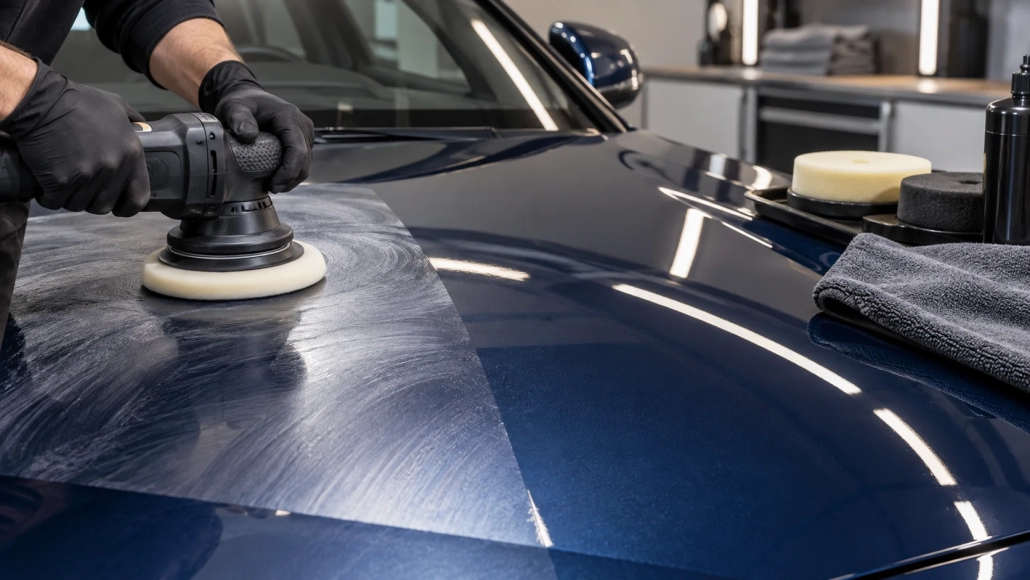
Car polish selection starts with a question: what needs to change on the paint? A dull reflection, a field of wash swirls and a deep isolated scratch are different problems. Buying the strongest compound before identifying the problem makes the process harder to control.
Wash and assess the vehicle first. Establish whether the working area is glossy automotive paint, a film, a matte finish or exposed plastic. Conventional abrasive paint correction belongs on suitable glossy finishes; it is not a general cleaning method for every exterior surface.
On clear-coated paint, abrasive correction removes a small amount of the finish to reduce defects. That makes preservation part of the decision. A remaining scratch can be a better outcome than excessive material removal. Review repair history and the limits of any thickness measurements before planning substantial correction.
Heavy cut compound is intended for stronger defect removal. Fine cut polish occupies a more moderate position, potentially correcting lighter defects or refining a previous stage. Finishing polish prioritises the clarity of the final surface. These are useful descriptions, but the same words do not establish equivalent performance across different brands.
The liquid is only one part of the system. A different pad, machine movement or paint response can change both correction and finish. A product described as a one-step polish may work in a single stage on one car and need refinement on another.
Start with a suitable conservative combination on a representative test area. Inspect after the specified residue removal. If the improvement meets the objective and the finish is clear, there is no automatic reason to add another abrasive stage. If correction is insufficient, adjust the system deliberately. If defects improve but haze remains, evaluate a separate finishing stage.
Do not copy a universal machine speed, pressure or pass count from an unrelated product. Follow the instructions for the actual machine, pad and liquid, then use inspection to decide the next step. Keep a record so the result is repeatable across the vehicle.
Agree the finish before applying a protective product. Coating is not a substitute for removing compound residue or resolving polishing haze. Check the selected protection system’s preparation requirements, especially after an all-in-one polish that deposits wax or sealant.
NANOLAB’s current website identifies its polishing range as in development. These guides explain selection and technique; they do not announce unconfirmed polish specifications or availability. For protection after correction, compare the documented roles of MATRIX, BEAST, BEAST PRO, BEAST 365 and QUARTZ99 rather than assuming one coating suits every job.
Use the topic directory below to move from the fundamentals to a specific workshop decision.
| Role | Typical question | What the test must establish |
|---|---|---|
| Heavy cut compound | Is stronger correction justified? | Target defects improve within the finish’s limits. |
| Fine cut polish | Can a moderate stage meet the objective? | Useful correction with an acceptable finish. |
| Finishing polish | What process marks still need refining? | Greater clarity after compatible residue removal. |
| All-in-one polish | Is deposited protection part of this service? | The combined result and compatibility with any next step. |
Choose a topic below. The directory covers product selection, machine technique, diagnosis and the transition to protection.
These references illustrate named product systems. Use the current instructions for the exact product, pad and machine in your own process.
For NANOLAB protection selection and application requirements, consult the technical documentation or contact NANOLAB with the intended surface and process.
For controlled comparisons of compounds, fine cut and finishing polishes, use the practical car polish testing reference. It links measurement methods, pad checks, finish acceptance, packaging trials and customer feedback to a repeatable workshop decision.
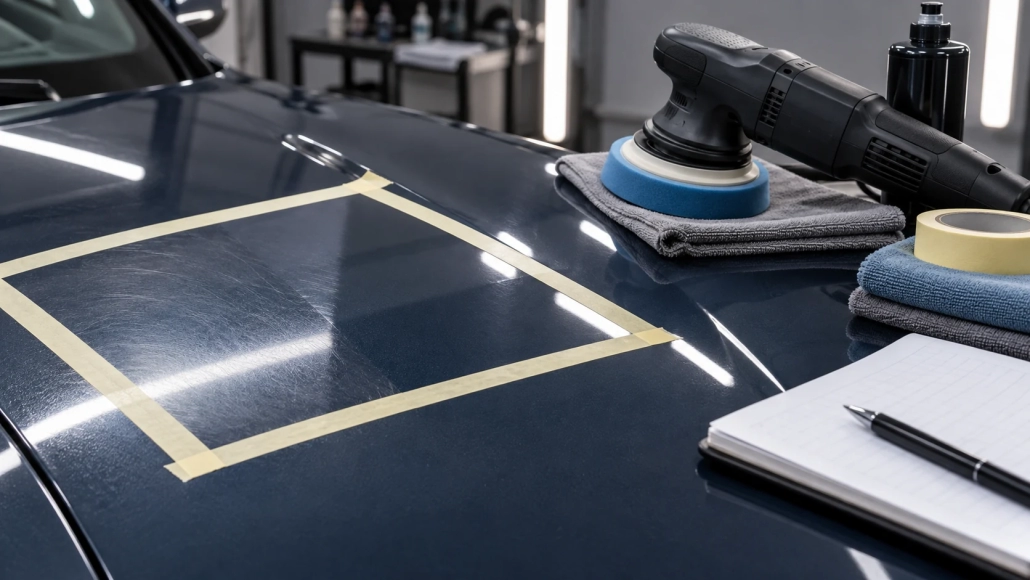
Compare cutting compound and car polish by correction strength, finishing quality and purpose, with a practical test for choosing between them.
Choose a polishing process by testing defect removal, finishing quality and clear-coat preservation rather than counting steps alone.

 Compound vs Polish: What Changes on Car Paint?