






A full polishing range.
From cutting and one-step correction to final finishing.
Specialist chemistry. Expert application.
 QUARTZ99 / CERAMIC BASE COAT
The foundation of your coating system.
A layerable quartz base coat designed for mechanical protection. Pair it with a suitable top coat to create the final finish.
For application by NANOLAB certified installers only.
Four formulas. Extended working time. Find the coating for your finish.
Explore the BEAST family of ceramic coatings.
Find the coating for each exterior surface.
 PPF & VINYLGLOSSProtection for glossy films and wraps.Discover
 MATTE & SATINMATTEProtection that respects the finish.Discover
 GLASSWINDOWSExplore dedicated glass protection.Discover
 WHEEL PROTECTIONWHEELSA dedicated coating for your wheels.Discover
 TRIM PROTECTIONPLASTICProtection for plastic surfaces.Discover
Dedicated care for the surfaces inside.
 LEATHER SURFACESLEATHERDiscover NANOLAB leather protection.Discover PLASTIC SURFACESPLASTICProtection for interior plastic surfaces.Discover TEXTILE SURFACESFABRICExplore the latest fabric formulation.Discover
Spray protection, maintenance and upcoming wash products.
 MAINTENANCEBEAST 365Explore the BEAST maintenance range.Discover
Next in washing, cleaning & care.
Ceramic protection for boats and yachts.
An easy-to-apply ceramic coating with an established track record on boats and yachts around the world.
Results vary with surface preparation, exposure and maintenance.
Read 50 MARINE guides →Explore MARINEProtection for the surfaces you live with.
A look at what we’re developing.
From cutting and one-step correction to final finishing.
A wider range for professional vehicle care.
Taking shape alongside BEAST & MATRIX.
Practical guidance for your next coating project.
Explore all guides →
Diagnose fine haze after DA polishing and isolate pad, residue-removal and finishing variables before repeating correction.
Updated · NANOLAB Knowledge
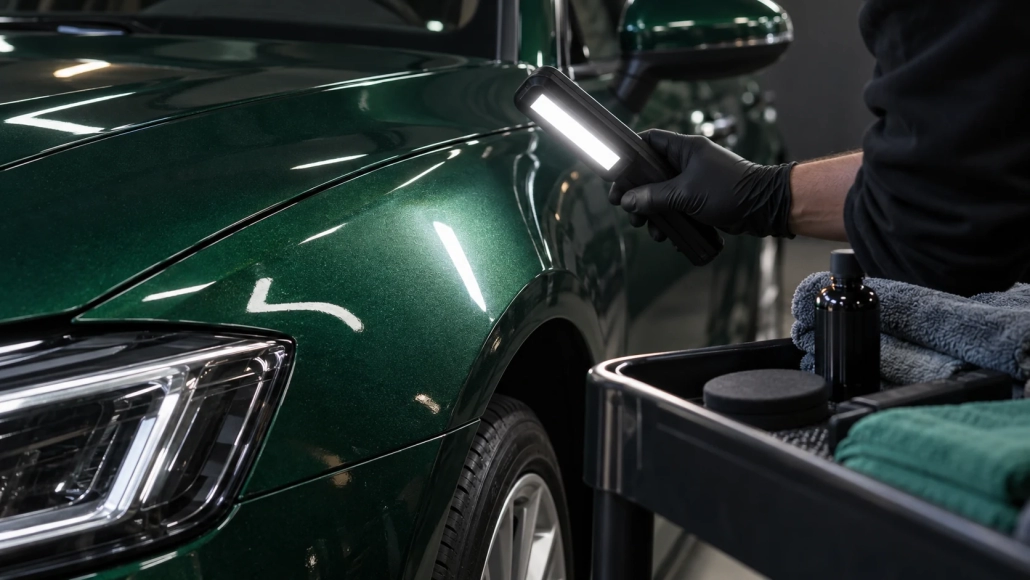
DA haze often describes fine uniform marring visible after dual-action correction. First establish whether it is a surface defect rather than residue, lighting or a wiping problem. A hazy panel does not automatically need another heavy cutting cycle.
Remove residue with a compatible method and inspect using directional light. View the area from several angles. Note whether the haze follows the worked section and whether the original defects have improved.
If the appearance changes mainly during wiping, test a clean towel and suitable removal method on a small area before changing the machine process.
Record pad material and condition, compound, machine movement and contact. A cutting system can remove target defects while leaving a pattern that requires refinement. Pad loading or contamination can make the result more pronounced or uneven.
Use a separate clean pad for the finishing test. A pad carrying cutting residue cannot fairly demonstrate what the finer liquid is capable of.
Choose a supported fine or finishing combination and work part of the hazy section as directed. Remove residue and compare with the untreated part of the cutting result.
If clarity improves, confirm the method on another representative area. If it does not, reassess whether the issue is actually fine marring or something outside the polish’s role. Deep remaining defects and inherent texture should not be mistaken for DA haze.
Monitor pad cleanliness and removal technique throughout the vehicle. Results can deteriorate as pads become loaded or towels collect residue, even when the successful liquid remains unchanged.
Document the combination and inspection condition used to accept the finish. Do not apply coating in the hope that it will correct unresolved haze. The polished surface should meet the agreed standard independently before the protection stage begins.
Understand where fine cut polish fits between stronger compounding and final finishing, and use the paint's response to decide its role.
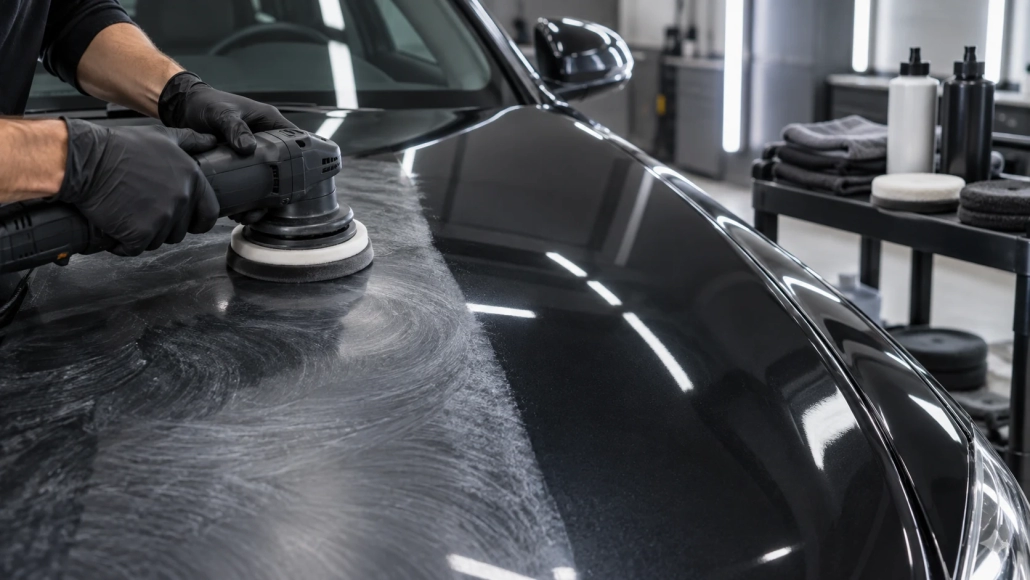
Select a finishing pad by approved use, construction, contact and demonstrated result rather than relying on colour or softness alone.
Use complementary lighting and viewing angles to reveal scratches, haze and coating residue without relying on one bright reflection.

 Choosing a Pad for Finishing Polish: Softness Is Only One Factor