






A full polishing range.
From cutting and one-step correction to final finishing.
Specialist chemistry. Expert application.
 QUARTZ99 / CERAMIC BASE COAT
The foundation of your coating system.
A layerable quartz base coat designed for mechanical protection. Pair it with a suitable top coat to create the final finish.
For application by NANOLAB certified installers only.
Four formulas. Extended working time. Find the coating for your finish.
Explore the BEAST family of ceramic coatings.
Find the coating for each exterior surface.
 PPF & VINYLGLOSSProtection for glossy films and wraps.Discover
 MATTE & SATINMATTEProtection that respects the finish.Discover
 GLASSWINDOWSExplore dedicated glass protection.Discover
 WHEEL PROTECTIONWHEELSA dedicated coating for your wheels.Discover
 TRIM PROTECTIONPLASTICProtection for plastic surfaces.Discover
Dedicated care for the surfaces inside.
 LEATHER SURFACESLEATHERDiscover NANOLAB leather protection.Discover PLASTIC SURFACESPLASTICProtection for interior plastic surfaces.Discover TEXTILE SURFACESFABRICExplore the latest fabric formulation.Discover
Spray protection, maintenance and upcoming wash products.
 MAINTENANCEBEAST 365Explore the BEAST maintenance range.Discover
Next in washing, cleaning & care.
Ceramic protection for boats and yachts.
An easy-to-apply ceramic coating with an established track record on boats and yachts around the world.
Results vary with surface preparation, exposure and maintenance.
Read 50 MARINE guides →Explore MARINEProtection for the surfaces you live with.
A look at what we’re developing.
From cutting and one-step correction to final finishing.
A wider range for professional vehicle care.
Taking shape alongside BEAST & MATRIX.
Practical guidance for your next coating project.
Explore all guides →
Protect sensitive trim during polishing and remove residue using a compatible method without treating unpainted plastic like the adjacent paint.
Updated · NANOLAB Knowledge
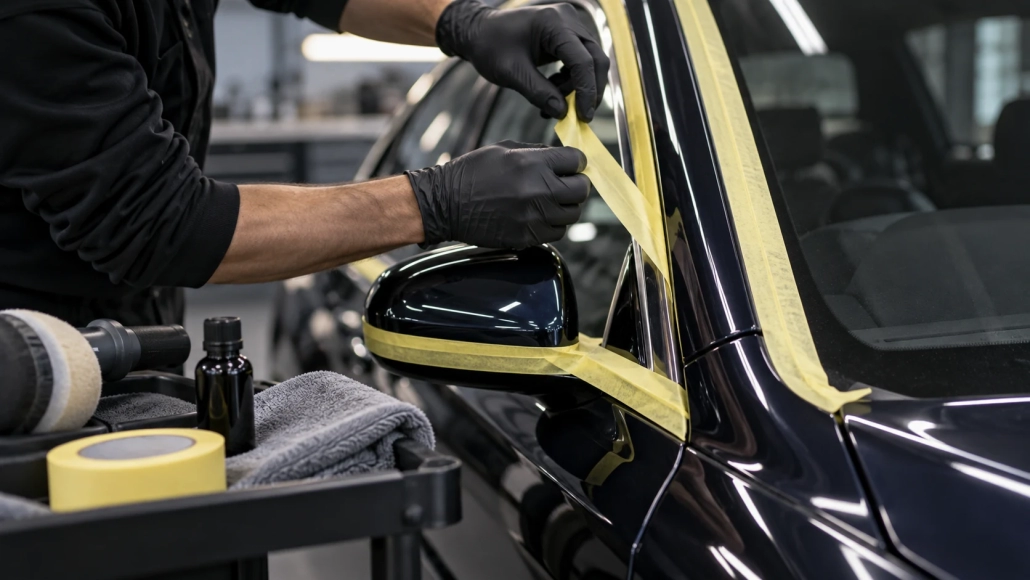
Compound residue can collect on textured plastic and in trim boundaries. Cleanup may be more difficult than wiping a smooth painted panel. The best plan begins by identifying sensitive materials and controlling exposure before machine work.
Separate painted trim from unpainted textured plastic, rubber, film and metal finishes. Similar colours do not establish the same material or chemical tolerance.
Protect appropriate boundaries with a compatible masking method. Check that adhesive and removal technique suit the surface, particularly on aged or repaired parts.
Use the specified loading and spreading method. Avoid directing a loaded pad into trim or relying on tape to absorb excessive product.
Inspect nearby surfaces while moving between sections. Early identification gives a better opportunity for compatible cleanup than discovering widespread dried residue at the end.
Follow the trim or product supplier’s approved cleaning guidance. Test a discreet area where appropriate and avoid aggressive rubbing that changes texture or sheen.
Do not use a paint compound on unpainted plastic to remove compound staining. Strong solvents and stiff abrasive tools can create a second problem while attempting to solve the first.
A dressing may darken the surface and conceal residue temporarily without removing it. Do not present that appearance change as verified cleanup.
Inspect after the appropriate cleaning and drying condition. If residue or discolouration remains, explain the limitation and seek specialist guidance instead of escalating blindly.
Include trim inspection in final acceptance. A glossy bonnet surrounded by white residue is not a completed polishing service. Controlling the boundary and selecting compatible cleanup are part of the same professional process as correcting the paint.
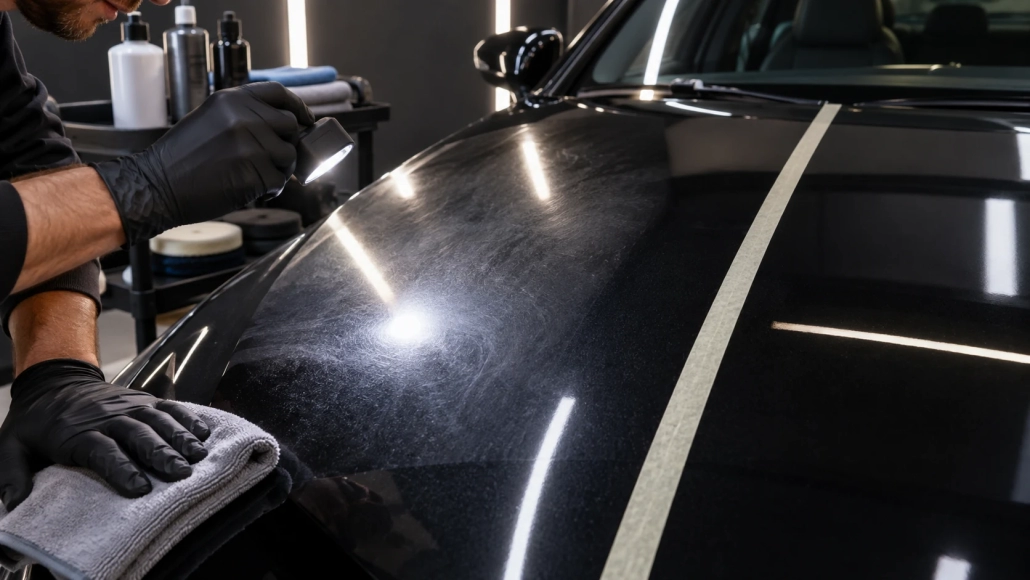
Check defect identity, pad condition, machine movement and correction limits in a useful order before choosing a stronger compound.
Protect sensitive trim and edges during preparation, and remove masking at the right stage so residue and moisture do not interfere with coating.

 Polishing a White Car: Finding Defects That Bright Paint Hides