






A full polishing range.
From cutting and one-step correction to final finishing.
Specialist chemistry. Expert application.
 QUARTZ99 / CERAMIC BASE COAT
The foundation of your coating system.
A layerable quartz base coat designed for mechanical protection. Pair it with a suitable top coat to create the final finish.
For application by NANOLAB certified installers only.
Four formulas. Extended working time. Find the coating for your finish.
Explore the BEAST family of ceramic coatings.
Find the coating for each exterior surface.
 PPF & VINYLGLOSSProtection for glossy films and wraps.Discover
 MATTE & SATINMATTEProtection that respects the finish.Discover
 GLASSWINDOWSExplore dedicated glass protection.Discover
 WHEEL PROTECTIONWHEELSA dedicated coating for your wheels.Discover
 TRIM PROTECTIONPLASTICProtection for plastic surfaces.Discover
Dedicated care for the surfaces inside.
 LEATHER SURFACESLEATHERDiscover NANOLAB leather protection.Discover PLASTIC SURFACESPLASTICProtection for interior plastic surfaces.Discover TEXTILE SURFACESFABRICExplore the latest fabric formulation.Discover
Spray protection, maintenance and upcoming wash products.
 MAINTENANCEBEAST 365Explore the BEAST maintenance range.Discover
Next in washing, cleaning & care.
Ceramic protection for boats and yachts.
An easy-to-apply ceramic coating with an established track record on boats and yachts around the world.
Results vary with surface preparation, exposure and maintenance.
Read 50 MARINE guides →Explore MARINEProtection for the surfaces you live with.
A look at what we’re developing.
From cutting and one-step correction to final finishing.
A wider range for professional vehicle care.
Taking shape alongside BEAST & MATRIX.
Practical guidance for your next coating project.
Explore all guides →
Diagnose resistant compound residue through product loading, working cycle, pad condition and compatible removal methods without forcing the finish.
Updated · NANOLAB Knowledge
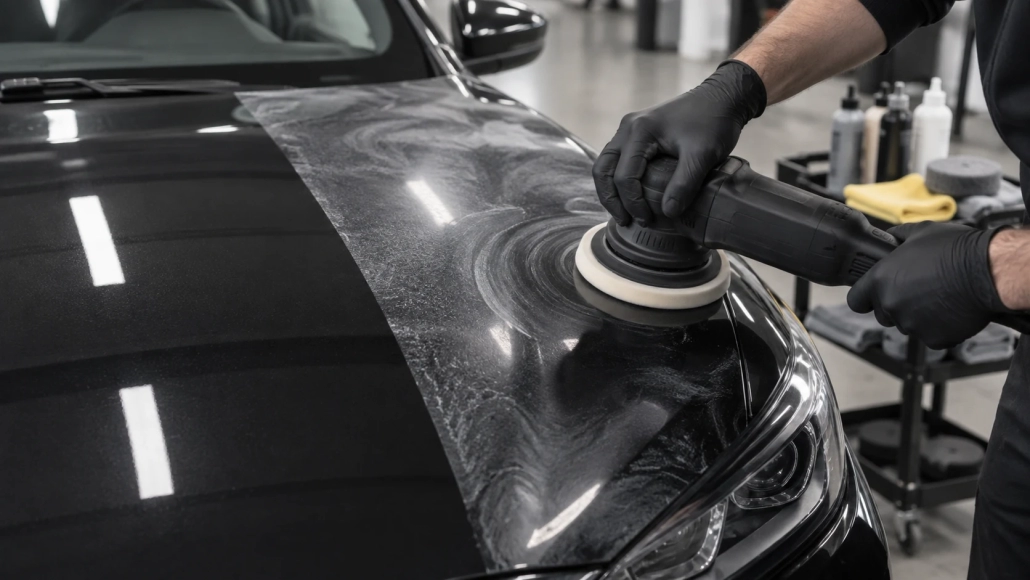
Resistant compound residue can turn a successful correction stage into a frustrating cleanup problem. Repeated forceful wiping risks new marks and makes it difficult to judge the underlying result. Investigate why removal became difficult before repeating the same process.
Some products specify a particular timing or inspection cleaner. Follow the actual directions and verify compatibility with the surface.
Do not choose a stronger solvent by trial and error. Removing visible residue is not the only requirement; the paint and any surrounding materials must tolerate the method.
Excessive loading, unsuitable surface conditions or working beyond the recommended cycle can contribute to difficult removal. Inspect the pad as well as the panel.
A saturated face can carry more residue into each section. Adding further compound because wiping is hard may worsen the situation.
Use a clean appropriate towel and the supported removal process on a small area. If the residue cannot be managed predictably, seek product-specific guidance before treating the whole vehicle.
For the next polishing test, change a relevant cause such as pad condition or section size within the instructions. Compare removal and the cleaned finish, not just how the polish looks while working.
If fine lines appear after wiping, distinguish newly introduced contact marks from defects previously concealed by residue. Use a fresh towel face and consistent lighting.
Keep cleanup towels separate from finishing materials. Residue collected around trim or seams should not be dragged across an accepted paint surface.
A good process includes manageable removal. Selecting a compound only for cutting speed while ignoring the effort needed to reveal the true finish gives an incomplete picture of its practical performance. Solve the removal issue before scaling the process across the car.
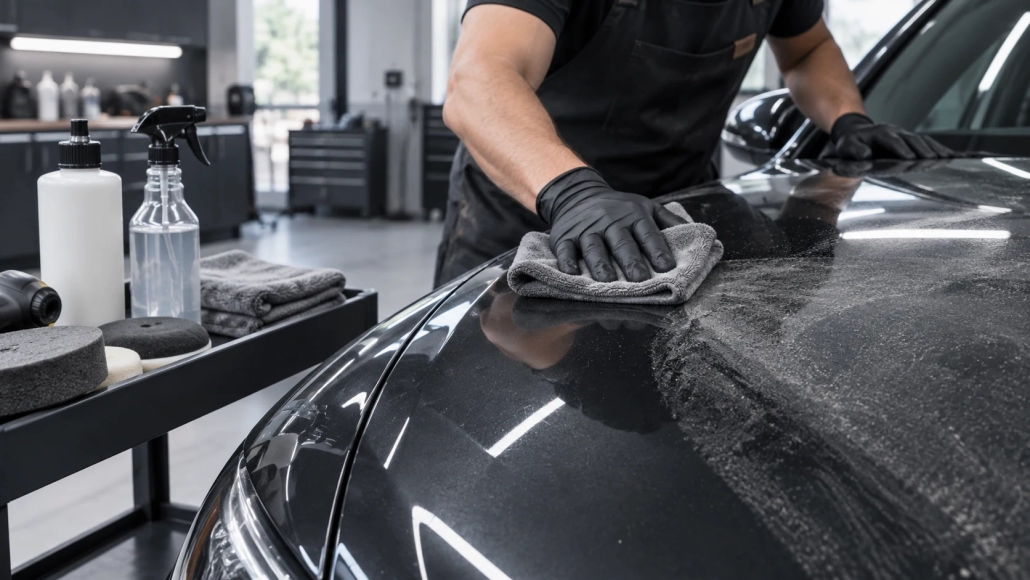
Organise a polishing job into clear decision points for surface assessment, correction, refinement and preparation for protection.
Investigate dusting through working conditions, pad loading and cycle length, and include cleanup in the evaluation of a compound system.
Investigate grabbing pads and difficult polish removal by reviewing surface temperature, product loading, paint history and section size.

 Reducing Compound Dusting During Paint Correction