






A full polishing range.
From cutting and one-step correction to final finishing.
Specialist chemistry. Expert application.
 QUARTZ99 / CERAMIC BASE COAT
The foundation of your coating system.
A layerable quartz base coat designed for mechanical protection. Pair it with a suitable top coat to create the final finish.
For application by NANOLAB certified installers only.
Four formulas. Extended working time. Find the coating for your finish.
Explore the BEAST family of ceramic coatings.
Find the coating for each exterior surface.
 PPF & VINYLGLOSSProtection for glossy films and wraps.Discover
 MATTE & SATINMATTEProtection that respects the finish.Discover
 GLASSWINDOWSExplore dedicated glass protection.Discover
 WHEEL PROTECTIONWHEELSA dedicated coating for your wheels.Discover
 TRIM PROTECTIONPLASTICProtection for plastic surfaces.Discover
Dedicated care for the surfaces inside.
 LEATHER SURFACESLEATHERDiscover NANOLAB leather protection.Discover PLASTIC SURFACESPLASTICProtection for interior plastic surfaces.Discover TEXTILE SURFACESFABRICExplore the latest fabric formulation.Discover
Spray protection, maintenance and upcoming wash products.
 MAINTENANCEBEAST 365Explore the BEAST maintenance range.Discover
Next in washing, cleaning & care.
Ceramic protection for boats and yachts.
An easy-to-apply ceramic coating with an established track record on boats and yachts around the world.
Results vary with surface preparation, exposure and maintenance.
Read 50 MARINE guides →Explore MARINEProtection for the surfaces you live with.
A look at what we’re developing.
From cutting and one-step correction to final finishing.
A wider range for professional vehicle care.
Taking shape alongside BEAST & MATRIX.
Practical guidance for your next coating project.
Explore all guides →
Identify curved scratch patterns that can remain from abrasive preparation and avoid trying to hide incomplete refinement beneath further polishing residue.
Updated · NANOLAB Knowledge
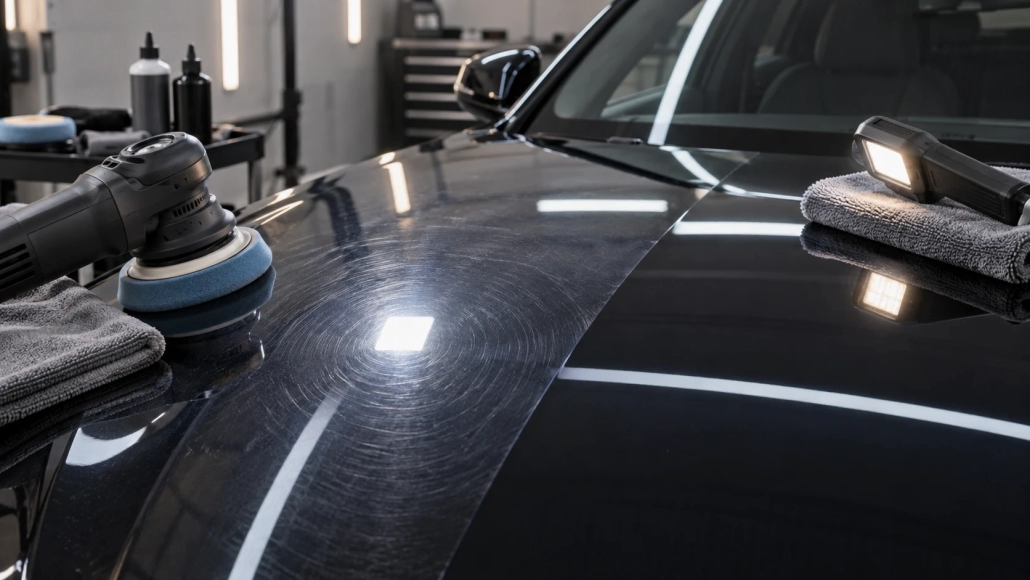
Pigtails are small curved or spiral-like scratches often associated with abrasive preparation. They can become more obvious after polishing clears the surrounding surface. Their appearance does not automatically mean the final polish created them.
Ask whether the area was sanded or repaired and what process was used. Inspect the cleaned surface with suitable directional light and document the pattern.
Do not classify every curved mark as a sanding pigtail from shape alone. Contamination or other mechanical contact can also create scratches requiring investigation.
Manufacturer refinishing guidance identifies loaded abrasives, contamination and inappropriate technique among causes of unwanted scratch patterns. The important workshop lesson is to inspect the preparation stage before relying on compound to finish the repair.
An isolated deep mark may survive after the surrounding finer pattern has improved. More broad compounding can then remove additional material around the defect without solving it efficiently.
Where a professional refinishing process requires scratch refinement, follow the relevant paint and abrasive system procedure. Do not introduce sanding to unknown factory paint simply because a pigtail remains.
Assess available finish, repair history and the visual requirement. Some marks should be documented and retained or referred for refinishing.
Inspect after compatible residue removal between stages. An attractive oily reflection is not proof that the unwanted scratch pattern has been eliminated.
Photograph the accepted area and note remaining limitations before protection. If the issue reappears later, that record helps distinguish incomplete original refinement from new damage.
The goal is to identify the stage that created or left the pattern, then use an appropriate documented response. Repeating increasingly fine polish over a deeper preparation defect is not a substitute for that diagnosis.
Browse the complete car polish and compound guide.
These references illustrate named product systems. Use the current instructions for the exact product, pad and machine in your own process.
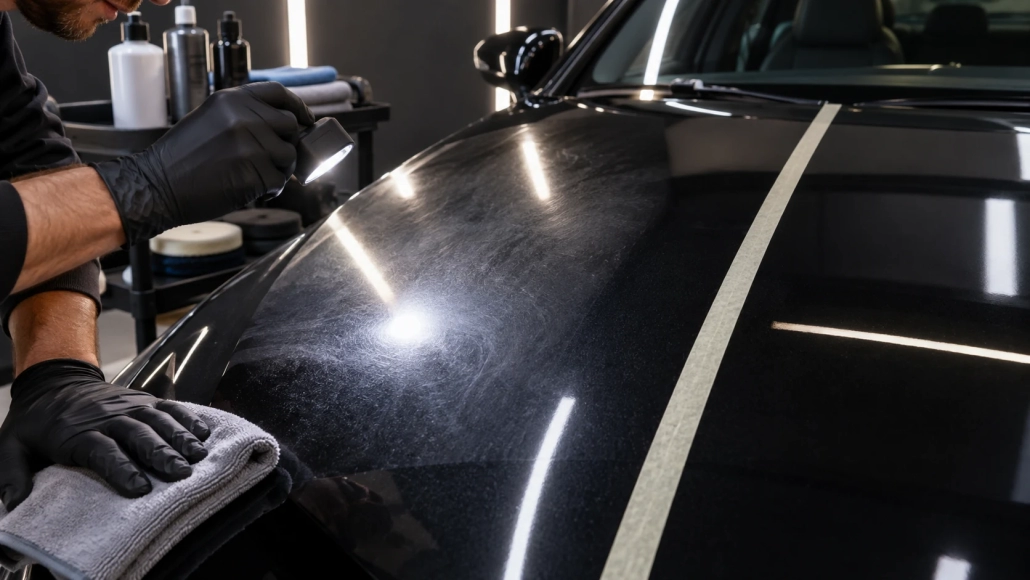
Check defect identity, pad condition, machine movement and correction limits in a useful order before choosing a stronger compound.
Compare common paint-defect patterns and use lighting, process history and cleanup to choose the right diagnostic next step.
Set a paint-correction stopping point that balances appearance, remaining defects, paint condition and the customer's intended use.

 Swirls, Holograms and DA Haze: What Are You Looking At?