






A full polishing range.
From cutting and one-step correction to final finishing.
Specialist chemistry. Expert application.
 QUARTZ99 / CERAMIC BASE COAT
The foundation of your coating system.
A layerable quartz base coat designed for mechanical protection. Pair it with a suitable top coat to create the final finish.
For application by NANOLAB certified installers only.
Four formulas. Extended working time. Find the coating for your finish.
Explore the BEAST family of ceramic coatings.
Find the coating for each exterior surface.
 PPF & VINYLGLOSSProtection for glossy films and wraps.Discover
 MATTE & SATINMATTEProtection that respects the finish.Discover
 GLASSWINDOWSExplore dedicated glass protection.Discover
 WHEEL PROTECTIONWHEELSA dedicated coating for your wheels.Discover
 TRIM PROTECTIONPLASTICProtection for plastic surfaces.Discover
Dedicated care for the surfaces inside.
 LEATHER SURFACESLEATHERDiscover NANOLAB leather protection.Discover PLASTIC SURFACESPLASTICProtection for interior plastic surfaces.Discover TEXTILE SURFACESFABRICExplore the latest fabric formulation.Discover
Spray protection, maintenance and upcoming wash products.
 MAINTENANCEBEAST 365Explore the BEAST maintenance range.Discover
Next in washing, cleaning & care.
Ceramic protection for boats and yachts.
An easy-to-apply ceramic coating with an established track record on boats and yachts around the world.
Results vary with surface preparation, exposure and maintenance.
Read 50 MARINE guides →Explore MARINEProtection for the surfaces you live with.
A look at what we’re developing.
From cutting and one-step correction to final finishing.
A wider range for professional vehicle care.
Taking shape alongside BEAST & MATRIX.
Practical guidance for your next coating project.
Explore all guides →
Distinguish residue masking, changed lighting and newly introduced wash marks when defects become visible again after a polishing service.
Updated · NANOLAB Knowledge
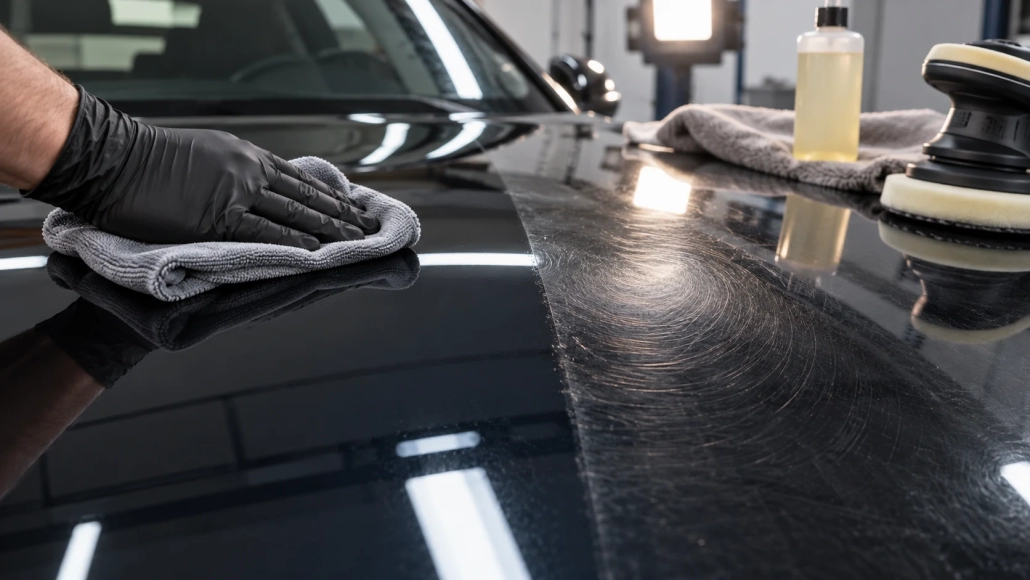
Scratches do not usually disappear physically and then regrow. When marks seem to return, investigate whether residue had concealed them, viewing conditions changed, or new contact introduced fresh defects. Each explanation calls for a different response.
Review before-and-after records under comparable light and angles. A panel inspected under diffuse workshop light may reveal more defects in direct directional illumination later.
Use clean dry paint for comparison. Differences in water, residue or protective films can change visibility without proving a change in the underlying scratch pattern.
If defects become visible after a compatible cleaning step, they may have remained beneath polishing residue. That is why correction should be evaluated after the appropriate inspection process.
Do not respond by claiming every polish contains fillers. Formulations differ, and any residue capable of affecting appearance should be assessed through the named system’s instructions.
Ask how the vehicle was washed, dried and handled. New marks may follow towel contact or a different contamination pattern. Photographs and a panel map can help distinguish them from documented retained defects.
Avoid assigning blame from one image. Compare location, direction and the original service record.
If correction was incomplete, reassess the affected area within its paint limits. If new contact caused the marks, improve maintenance before considering more abrasion.
For a coated car, polishing can alter the protective system, so plan any repair with the coating supplier’s requirements in mind.
A strong handover record states what was achieved, what remained and how it was inspected. That makes later diagnosis more accurate and reduces the temptation to repeat full correction whenever a defect becomes visible under a new light.
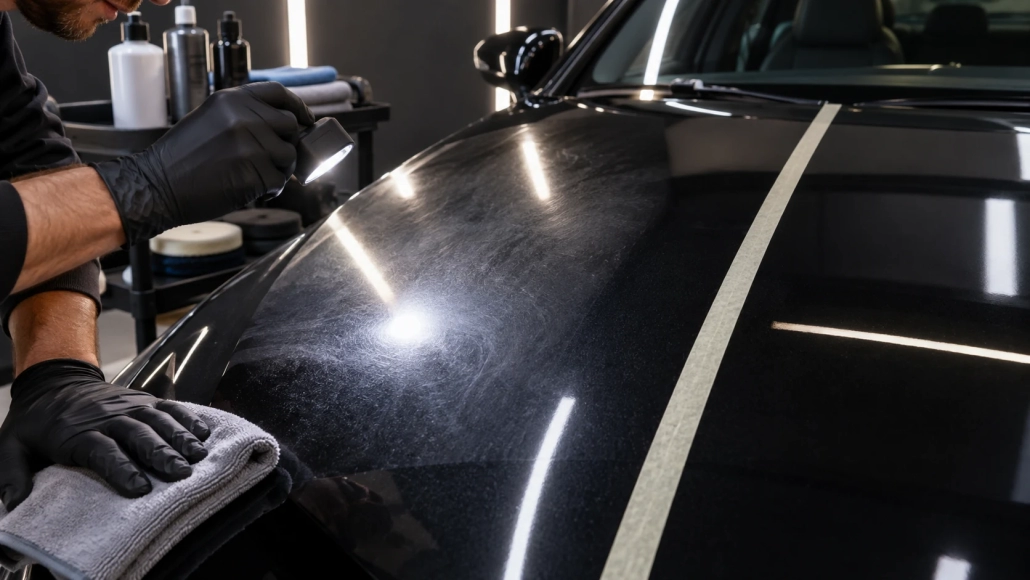
Check defect identity, pad condition, machine movement and correction limits in a useful order before choosing a stronger compound.
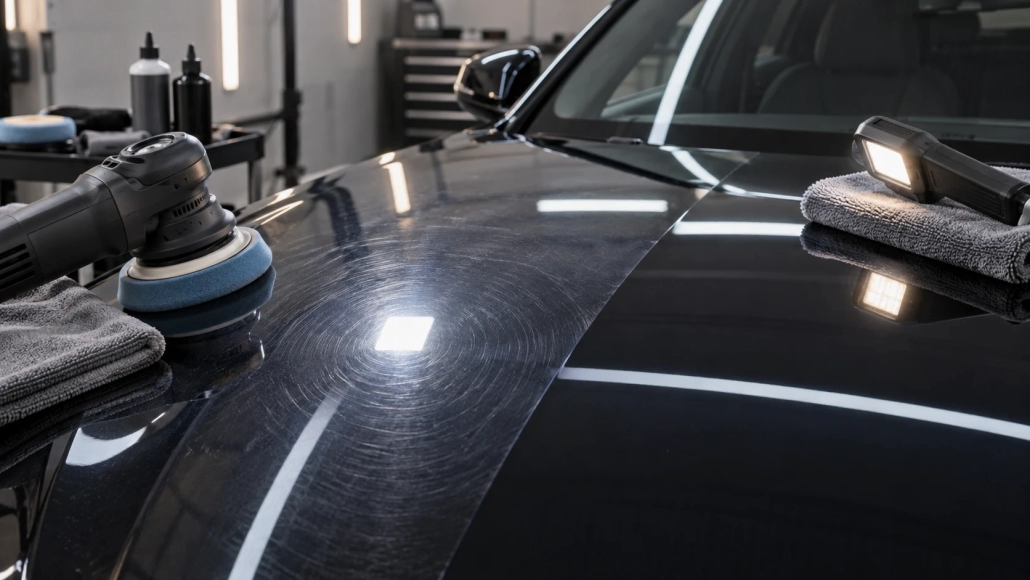
Identify curved scratch patterns that can remain from abrasive preparation and avoid trying to hide incomplete refinement beneath further polishing residue.
Inspect corrected paint after suitable residue removal to distinguish lasting defect improvement from temporary masking by polishing residue.

 Pigtail Scratches After Polishing: Trace the Earlier Process