






A full polishing range.
From cutting and one-step correction to final finishing.
Specialist chemistry. Expert application.
 QUARTZ99 / CERAMIC BASE COAT
The foundation of your coating system.
A layerable quartz base coat designed for mechanical protection. Pair it with a suitable top coat to create the final finish.
For application by NANOLAB certified installers only.
Four formulas. Extended working time. Find the coating for your finish.
Explore the BEAST family of ceramic coatings.
Find the coating for each exterior surface.
 PPF & VINYLGLOSSProtection for glossy films and wraps.Discover
 MATTE & SATINMATTEProtection that respects the finish.Discover
 GLASSWINDOWSExplore dedicated glass protection.Discover
 WHEEL PROTECTIONWHEELSA dedicated coating for your wheels.Discover
 TRIM PROTECTIONPLASTICProtection for plastic surfaces.Discover
Dedicated care for the surfaces inside.
 LEATHER SURFACESLEATHERDiscover NANOLAB leather protection.Discover PLASTIC SURFACESPLASTICProtection for interior plastic surfaces.Discover TEXTILE SURFACESFABRICExplore the latest fabric formulation.Discover
Spray protection, maintenance and upcoming wash products.
 MAINTENANCEBEAST 365Explore the BEAST maintenance range.Discover
Next in washing, cleaning & care.
Ceramic protection for boats and yachts.
An easy-to-apply ceramic coating with an established track record on boats and yachts around the world.
Results vary with surface preparation, exposure and maintenance.
Read 50 MARINE guides →Explore MARINEProtection for the surfaces you live with.
A look at what we’re developing.
From cutting and one-step correction to final finishing.
A wider range for professional vehicle care.
Taking shape alongside BEAST & MATRIX.
Practical guidance for your next coating project.
Explore all guides →
Compare common paint-defect patterns and use lighting, process history and cleanup to choose the right diagnostic next step.
Updated · NANOLAB Knowledge
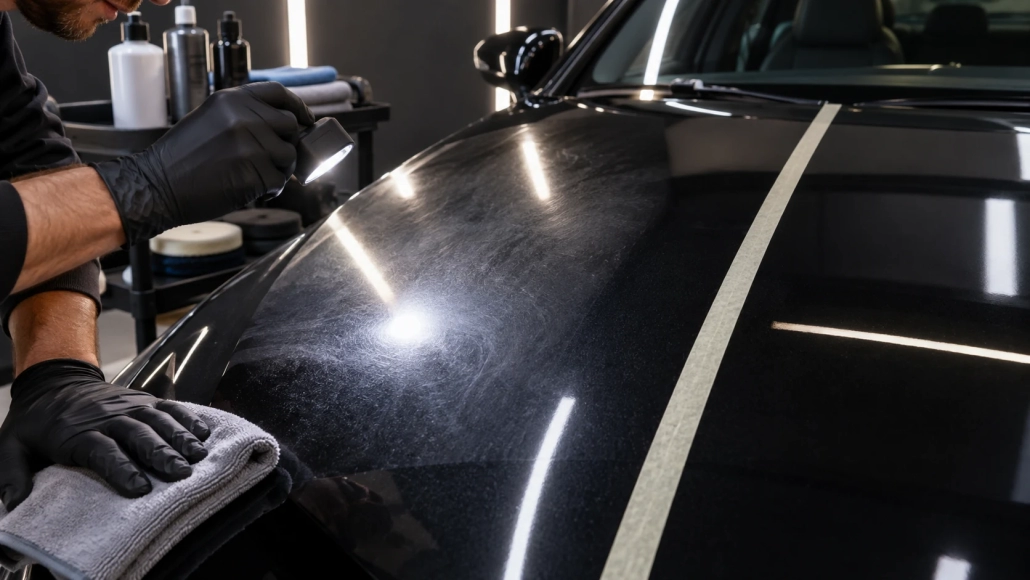
Swirls, holograms and DA haze describe different visual patterns, but the words are sometimes used loosely. Treat them as clues that guide inspection rather than diagnoses made from one photograph.
Wash-related swirls often appear as many fine scratches revealed around a light source. Holograms commonly appear as directional trails that change visibility with angle. DA haze often describes a fine uniform veil following a correction stage.
These appearances can overlap. Residue and reflections can imitate defects, so inspect a properly cleaned surface before selecting a corrective process.
Ask what happened before the marks appeared: washing, sanding, rotary cutting, DA correction or wipe-off. Compare the pattern with the worked area and the direction of contact.
A mark that follows towel movement may require a removal-method investigation. A pattern visible throughout untouched paint may predate the polishing service.
Fine process marks may respond to a supported refining combination. Deeper original scratches may need a separate correction assessment. Deposits need compatible cleaning rather than automatic abrasion.
Test a small representative area and inspect after residue removal. Record both useful improvement and any new haze.
Do not promise a specific repair based only on a customer-supplied image. Ask for a clean inspection under more than one light angle, and examine the actual finish where possible.
The objective is a bounded decision: clean, refine, reassess stronger correction, retain the defect or refer for repair. Terminology is useful only when it helps make that choice.
A consistent inspection record also improves communication. Instead of saying the car is swirled, show which pattern appears on which panels and which test supports the proposed treatment. That gives the owner a clearer expectation of what polishing can and cannot change.
Check defect identity, pad condition, machine movement and correction limits in a useful order before choosing a stronger compound.
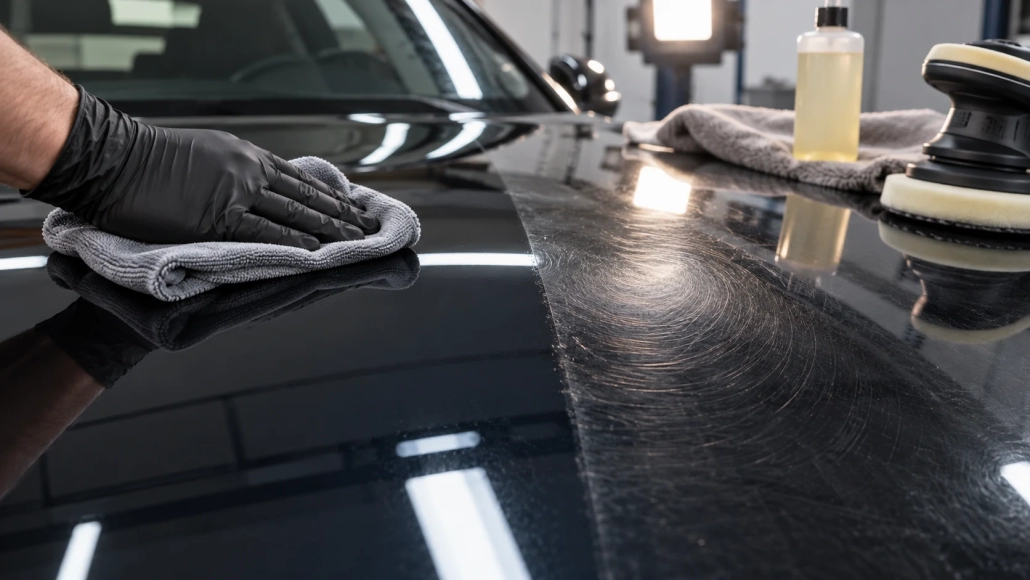
Distinguish surface deposits from etched damage before choosing abrasion and avoid treating every visible water mark as a polishing problem.
Separate polishing haze, coating residue and wash contamination so the correction process addresses the right layer of the finish.

 Water Spots: Should You Use Compound or a Cleaner?