






A full polishing range.
From cutting and one-step correction to final finishing.
Specialist chemistry. Expert application.
 QUARTZ99 / CERAMIC BASE COAT
The foundation of your coating system.
A layerable quartz base coat designed for mechanical protection. Pair it with a suitable top coat to create the final finish.
For application by NANOLAB certified installers only.
Four formulas. Extended working time. Find the coating for your finish.
Explore the BEAST family of ceramic coatings.
Find the coating for each exterior surface.
 PPF & VINYLGLOSSProtection for glossy films and wraps.Discover
 MATTE & SATINMATTEProtection that respects the finish.Discover
 GLASSWINDOWSExplore dedicated glass protection.Discover
 WHEEL PROTECTIONWHEELSA dedicated coating for your wheels.Discover
 TRIM PROTECTIONPLASTICProtection for plastic surfaces.Discover
Dedicated care for the surfaces inside.
 LEATHER SURFACESLEATHERDiscover NANOLAB leather protection.Discover PLASTIC SURFACESPLASTICProtection for interior plastic surfaces.Discover TEXTILE SURFACESFABRICExplore the latest fabric formulation.Discover
Spray protection, maintenance and upcoming wash products.
 MAINTENANCEBEAST 365Explore the BEAST maintenance range.Discover
Next in washing, cleaning & care.
Ceramic protection for boats and yachts.
An easy-to-apply ceramic coating with an established track record on boats and yachts around the world.
Results vary with surface preparation, exposure and maintenance.
Read 50 MARINE guides →Explore MARINEProtection for the surfaces you live with.
A look at what we’re developing.
From cutting and one-step correction to final finishing.
A wider range for professional vehicle care.
Taking shape alongside BEAST & MATRIX.
Practical guidance for your next coating project.
Explore all guides →
Build beginner DA skills on an appropriate practice surface with a limited objective, supported equipment and an inspected test section.
Updated · NANOLAB Knowledge
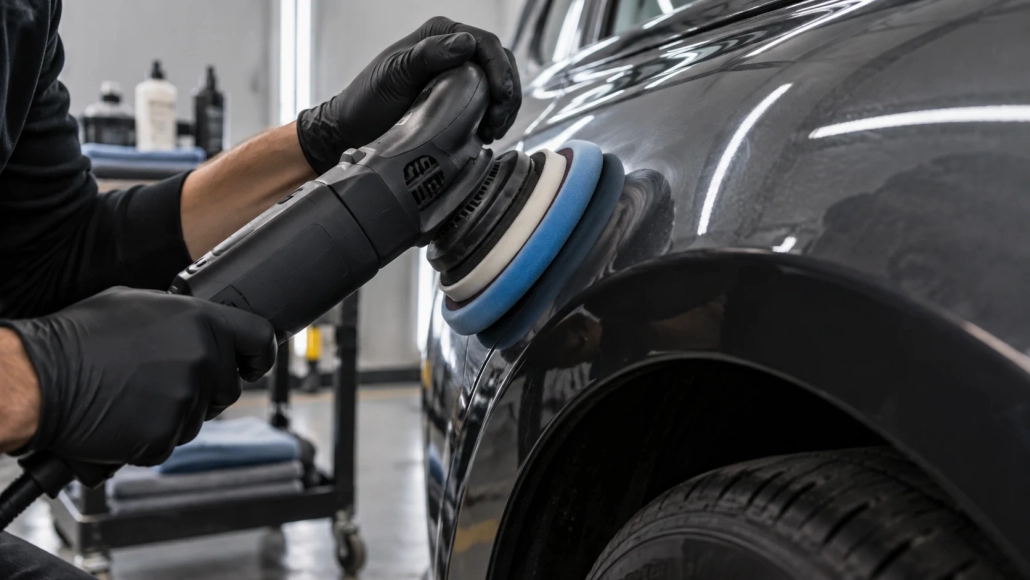
A first DA polishing session should teach control and observation, not chase maximum correction. Use a suitable practice panel or a low-risk training surface whose finish is understood. An unknown valuable vehicle is a poor place to learn by trial and error.
Choose a modest goal such as improving light wash marks on suitable glossy paint. Identify the starting defects under a consistent light and record the condition.
Exclude matte finishes, uncertain films, failing paint and vulnerable repairs from a generic beginner exercise. If the substrate is unclear, identification comes before practice.
Read the tool and product instructions. Use the approved plate and pad, inspect attachment and prepare the pad as directed. Arrange the cable and working position so they do not interfere with control.
Have clean removal towels, the specified cleaner and suitable lighting ready before machine work begins. Inspection is part of the lesson, not something postponed until the end.
Use the recommended operating method and a clearly bounded area. Concentrate on stable contact and orderly coverage. Stop when the system calls for inspection or if behaviour becomes unexpected.
Do not react to a remaining scratch by immediately increasing pressure, speed and compound strength together. First examine what improved and whether the pad and film remained in suitable condition.
Compare the clean surface with the baseline. Note remaining defects, new haze, missed strips and removal difficulty. These observations reveal which skill or setup variable needs attention.
A successful first exercise may be a controlled partial improvement with no new damage. Build repeatability before attempting stronger correction or difficult contours.
Training with an experienced instructor can shorten the learning process and help identify errors that are difficult to recognise alone. The objective is to understand why the result occurred, not merely to produce one glossy photograph.
Choose a dual-action polish by machine movement, defect level and pad system, then validate correction and finish before working around the vehicle.
Diagnose inconsistent rotation on free-spinning dual-action polishers by checking pressure, pad contact, curves and the approved setup.

 Foam, Microfiber and Wool Polishing Pads: A Selection Guide