






A full polishing range.
From cutting and one-step correction to final finishing.
Specialist chemistry. Expert application.
 QUARTZ99 / CERAMIC BASE COAT
The foundation of your coating system.
A layerable quartz base coat designed for mechanical protection. Pair it with a suitable top coat to create the final finish.
For application by NANOLAB certified installers only.
Four formulas. Extended working time. Find the coating for your finish.
Explore the BEAST family of ceramic coatings.
Find the coating for each exterior surface.
 PPF & VINYLGLOSSProtection for glossy films and wraps.Discover
 MATTE & SATINMATTEProtection that respects the finish.Discover
 GLASSWINDOWSExplore dedicated glass protection.Discover
 WHEEL PROTECTIONWHEELSA dedicated coating for your wheels.Discover
 TRIM PROTECTIONPLASTICProtection for plastic surfaces.Discover
Dedicated care for the surfaces inside.
 LEATHER SURFACESLEATHERDiscover NANOLAB leather protection.Discover PLASTIC SURFACESPLASTICProtection for interior plastic surfaces.Discover TEXTILE SURFACESFABRICExplore the latest fabric formulation.Discover
Spray protection, maintenance and upcoming wash products.
 MAINTENANCEBEAST 365Explore the BEAST maintenance range.Discover
Next in washing, cleaning & care.
Ceramic protection for boats and yachts.
An easy-to-apply ceramic coating with an established track record on boats and yachts around the world.
Results vary with surface preparation, exposure and maintenance.
Read 50 MARINE guides →Explore MARINEProtection for the surfaces you live with.
A look at what we’re developing.
From cutting and one-step correction to final finishing.
A wider range for professional vehicle care.
Taking shape alongside BEAST & MATRIX.
Practical guidance for your next coating project.
Explore all guides →
Avoid cross-brand mistakes by identifying polishing pads through manufacturer and model rather than assuming colour always means cutting or finishing.
Updated · NANOLAB Knowledge
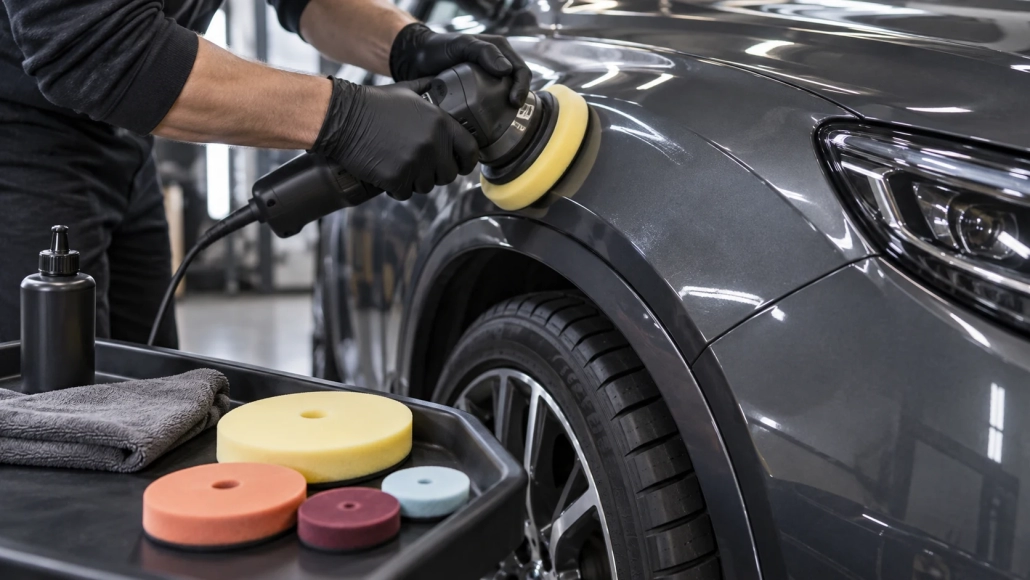
Pad colours are identification systems chosen by manufacturers. They are not a universal industry code. A yellow pad may occupy a different role from another brand’s yellow pad, and a familiar colour can encourage the wrong selection during a busy job.
Read the maker’s chart and record the model, material, size and supported machine movement. Treat colour as a quick visual aid only after that identity is established.
Keep packaging information or a stock label accessible. Once a pad is separated from its wrapper, appearance alone may not distinguish it from another product.
A useful pad chart lists exact model, intended stage, compatible liquid and machine, and the local storage location. Include a photograph if similar pads are easy to confuse.
Do not create a universal cut score by merging unrelated manufacturers’ ratings. Record tested roles instead: for example, the specific finishing combination accepted on a documented job.
Separate cutting and finishing supplies clearly. A pad that was originally intended for finishing may carry stronger compound after being used in a different test.
Label used pads according to their last product and cleaning status. A clean-looking colour does not establish freedom from residue.
Verify the pad against the work order, inspect attachment and confirm the correct backing plate. This small check is especially useful when several technicians share machines or clean consumables.
If an unfamiliar pad is found without reliable identification, do not assign its role by colour and proceed on a customer’s finish. Resolve its identity or choose a documented alternative.
The best colour system is one that helps technicians locate an already-defined product quickly. It should support a clear specification, not replace it. That distinction prevents accidental changes to an otherwise successful polishing process.
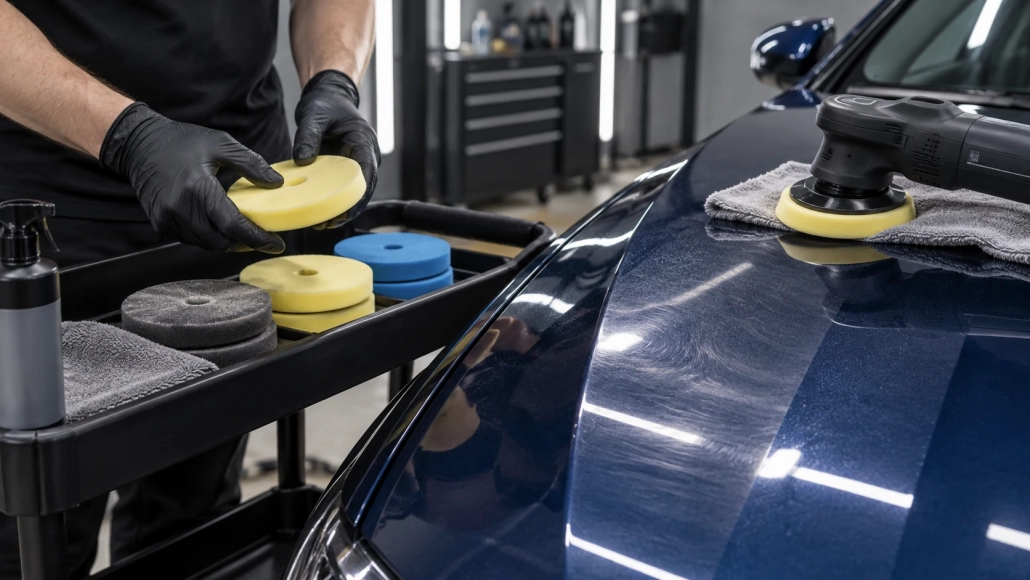
Compare polishing pad materials by their intended role, machine compatibility and maintenance needs before choosing a complete correction system.
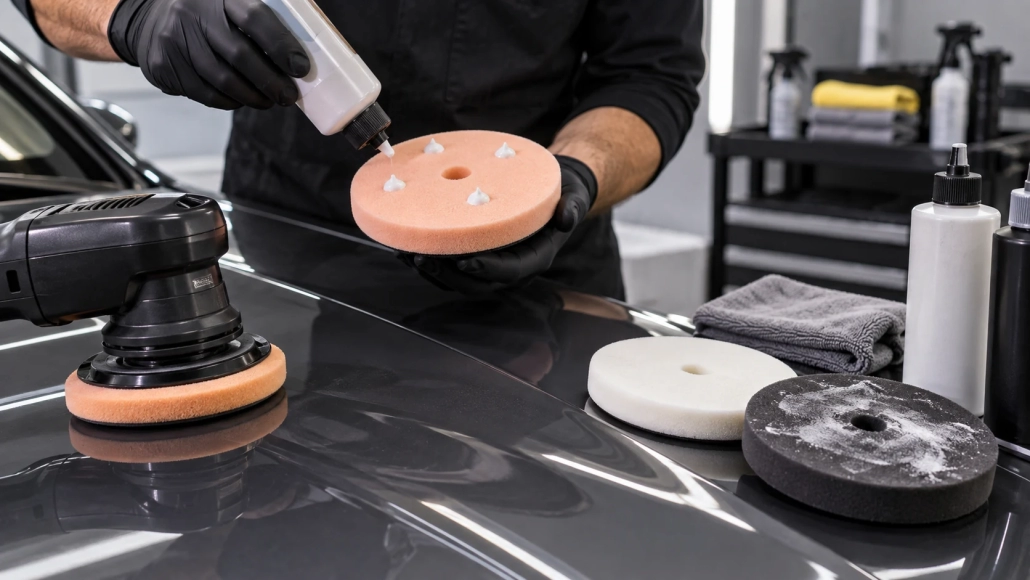
Build an in-process pad-cleaning routine that preserves useful correction and separates face maintenance from adding more liquid.
Match pad size and approved tools to panel geometry so curved areas can be corrected with controlled contact and clear inspection.

 Cleaning Polishing Pads During Work: Keep the Test Result Consistent