






A full polishing range.
From cutting and one-step correction to final finishing.
Specialist chemistry. Expert application.
 QUARTZ99 / CERAMIC BASE COAT
The foundation of your coating system.
A layerable quartz base coat designed for mechanical protection. Pair it with a suitable top coat to create the final finish.
For application by NANOLAB certified installers only.
Four formulas. Extended working time. Find the coating for your finish.
Explore the BEAST family of ceramic coatings.
Find the coating for each exterior surface.
 PPF & VINYLGLOSSProtection for glossy films and wraps.Discover
 MATTE & SATINMATTEProtection that respects the finish.Discover
 GLASSWINDOWSExplore dedicated glass protection.Discover
 WHEEL PROTECTIONWHEELSA dedicated coating for your wheels.Discover
 TRIM PROTECTIONPLASTICProtection for plastic surfaces.Discover
Dedicated care for the surfaces inside.
 LEATHER SURFACESLEATHERDiscover NANOLAB leather protection.Discover PLASTIC SURFACESPLASTICProtection for interior plastic surfaces.Discover TEXTILE SURFACESFABRICExplore the latest fabric formulation.Discover
Spray protection, maintenance and upcoming wash products.
 MAINTENANCEBEAST 365Explore the BEAST maintenance range.Discover
Next in washing, cleaning & care.
Ceramic protection for boats and yachts.
An easy-to-apply ceramic coating with an established track record on boats and yachts around the world.
Results vary with surface preparation, exposure and maintenance.
Read 50 MARINE guides →Explore MARINEProtection for the surfaces you live with.
A look at what we’re developing.
From cutting and one-step correction to final finishing.
A wider range for professional vehicle care.
Taking shape alongside BEAST & MATRIX.
Practical guidance for your next coating project.
Explore all guides →
Assess swirls, haze and reflection clarity on metallic or pearl finishes without confusing pigment effects with the condition of the clear coat.
Updated · NANOLAB Knowledge
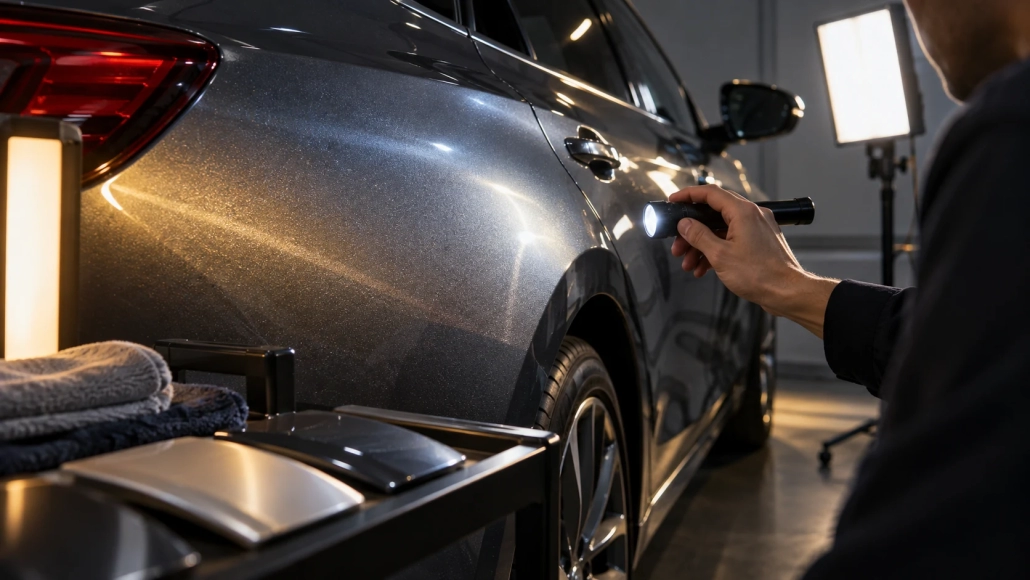
Metallic and pearl finishes can complicate inspection. Sparkle, colour effects and reflections change with viewing angle, while fine defects disappear from one position and appear from another. On a conventional basecoat/clear-coat system, polishing addresses the clear finish above the colour layer.
Not every metallic-looking surface is conventional glossy clear coat. Films, matte finishes and specialist systems need their own assessment. Repairs may also respond differently from neighbouring original panels.
Where the finish is suitable for polishing, document condition and repair history. Do not use the visible colour effect as a substitute for identifying what you are actually touching.
A concentrated light reveals wash marks that can be difficult to distinguish through the visual activity of metallic flake. Broader reflections show consistency and clarity. Use both and inspect from several positions.
Keep before-and-after images at comparable angles and exposure. Moving the camera until the colour looks richer can exaggerate the apparent effect of the polish.
After cutting, distinguish fine haze from normal pigment appearance and factory texture. Test a suitable finishing combination where refinement is needed. Do not pursue every reflection difference as though it were a removable scratch.
An appearance issue originating beneath sound clear coat will not necessarily improve through removing more clear coat. Suspected colour-layer or repair problems need a paint specialist’s assessment.
Look across adjacent panels and locally corrected sections after residue removal. The aim is a consistent accepted finish, not a polished patch that photographs well from one position.
Complete the same preparation and final inspection used for the successful test before protection. Record what improved and what belongs to the paint’s inherent appearance. This prevents metallic sparkle from concealing incomplete refinement or encouraging abrasion that has no useful target.
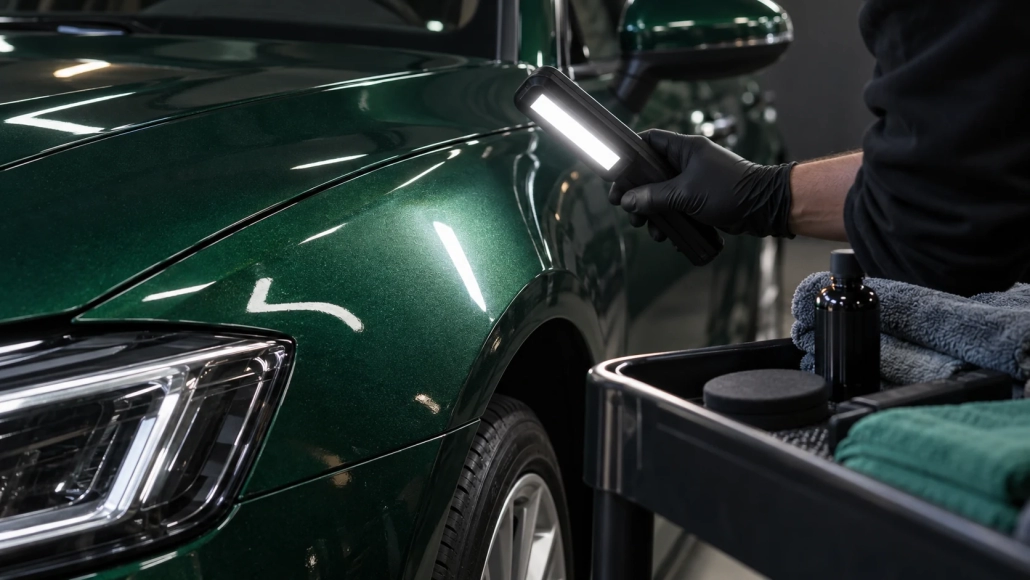
Understand where fine cut polish fits between stronger compounding and final finishing, and use the paint's response to decide its role.
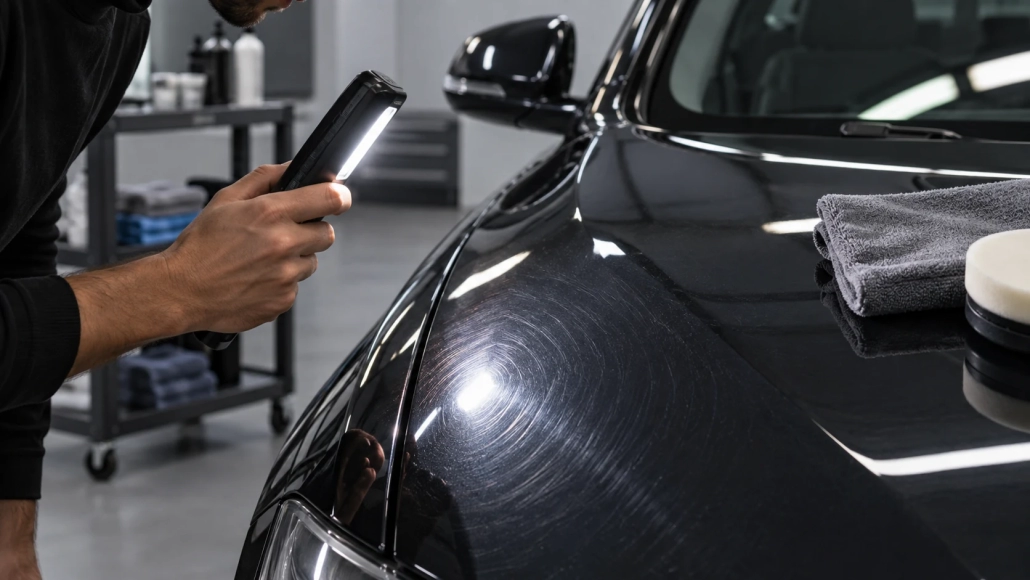
Evaluate jeweling as an optional refinement process and use a controlled comparison to decide whether it adds visible value to the finish.
Use varied lighting and viewing angles to check metallic and pearl paint for coating residue without confusing effects with defects.

 Paint Jeweling: Is Another Final Polishing Pass Worthwhile?