






A full polishing range.
From cutting and one-step correction to final finishing.
Specialist chemistry. Expert application.
 QUARTZ99 / CERAMIC BASE COAT
The foundation of your coating system.
A layerable quartz base coat designed for mechanical protection. Pair it with a suitable top coat to create the final finish.
For application by NANOLAB certified installers only.
Four formulas. Extended working time. Find the coating for your finish.
Explore the BEAST family of ceramic coatings.
Find the coating for each exterior surface.
 PPF & VINYLGLOSSProtection for glossy films and wraps.Discover
 MATTE & SATINMATTEProtection that respects the finish.Discover
 GLASSWINDOWSExplore dedicated glass protection.Discover
 WHEEL PROTECTIONWHEELSA dedicated coating for your wheels.Discover
 TRIM PROTECTIONPLASTICProtection for plastic surfaces.Discover
Dedicated care for the surfaces inside.
 LEATHER SURFACESLEATHERDiscover NANOLAB leather protection.Discover PLASTIC SURFACESPLASTICProtection for interior plastic surfaces.Discover TEXTILE SURFACESFABRICExplore the latest fabric formulation.Discover
Spray protection, maintenance and upcoming wash products.
 MAINTENANCEBEAST 365Explore the BEAST maintenance range.Discover
Next in washing, cleaning & care.
Ceramic protection for boats and yachts.
An easy-to-apply ceramic coating with an established track record on boats and yachts around the world.
Results vary with surface preparation, exposure and maintenance.
Read 50 MARINE guides →Explore MARINEProtection for the surfaces you live with.
A look at what we’re developing.
From cutting and one-step correction to final finishing.
A wider range for professional vehicle care.
Taking shape alongside BEAST & MATRIX.
Practical guidance for your next coating project.
Explore all guides →
Separate initial pad preparation from reloading and use the product instructions to control quantity without overloading the polishing face.
Updated · NANOLAB Knowledge
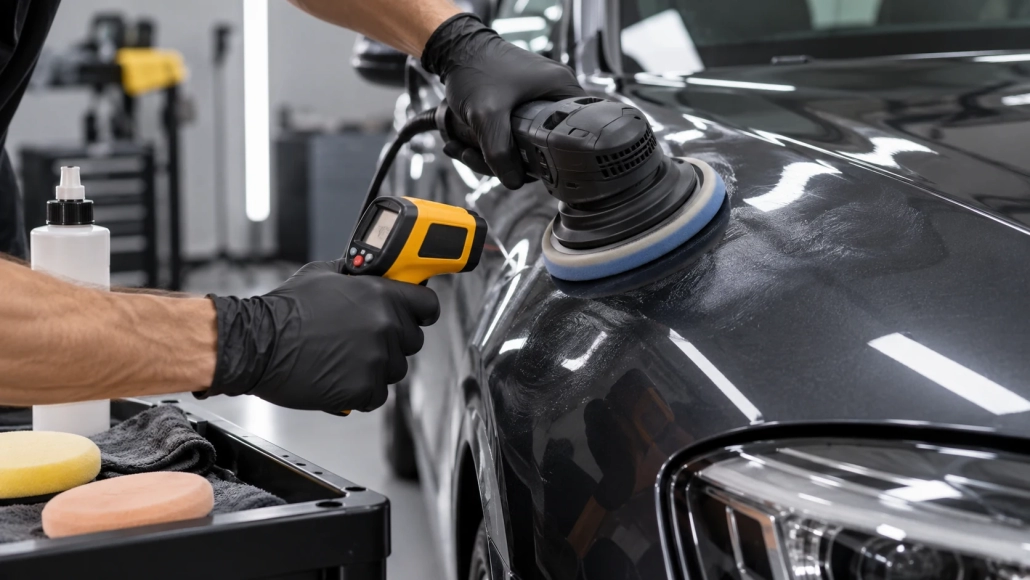
There is no universal number of drops that suits every compound, pad size and construction. Initial preparation and later reloading can also require different quantities. Start with the actual system’s directions and observe whether the working film and pad remain in the intended condition.
A new or freshly cleaned pad may need a particular preparation method. Later sections already have residual product within the face. Treating every reload as a fresh-pad application can progressively increase saturation.
Record the preparation and reload method separately in the test note. This makes a successful first section easier to reproduce through the job.
If useful correction declines, inspect the pad before adding more product. Loading or contamination may be the problem, and extra liquid can make it worse.
If the film disappears too early, examine section size, surface conditions and the working cycle. Insufficient quantity is only one possible cause.
Apply product as the manufacturer specifies and spread it using the approved method. Uneven distribution can create inconsistent initial contact or splatter.
Keep the bottle tip clean and avoid touching it to a contaminated surface. A dosing routine is also a contamination-control routine.
For a studio, weigh or otherwise measure a bottle before and after a representative job using an appropriate method, then record the actual service performed. Include the number of stages and pads.
Do not turn one measurement into a universal millilitres-per-car promise. Vehicle area, defects, system and operator practice vary. Consumption is most useful when tied to a clearly defined workflow.
The goal is a stable working film with an appropriately maintained pad. Following a repeated drop count while the face becomes progressively overloaded is less controlled than adapting within documented instructions and inspecting the result.
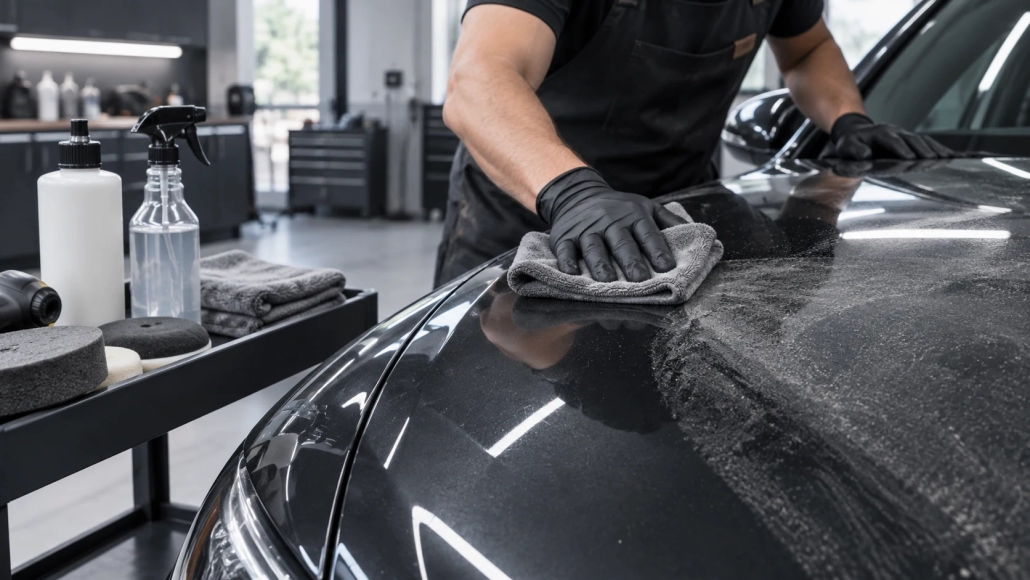
Organise a polishing job into clear decision points for surface assessment, correction, refinement and preparation for protection.
Check panel conditions, section size, loading and cycle length when polishing residue dries prematurely, before adding water or changing chemistry.
Plan polishing sections, pad rotation and inspection pauses to keep heat and tool control within the limits of the surface and equipment.

 Polish Drying Too Fast: Diagnose the Working Conditions