






A full polishing range.
From cutting and one-step correction to final finishing.
Specialist chemistry. Expert application.
 QUARTZ99 / CERAMIC BASE COAT
The foundation of your coating system.
A layerable quartz base coat designed for mechanical protection. Pair it with a suitable top coat to create the final finish.
For application by NANOLAB certified installers only.
Four formulas. Extended working time. Find the coating for your finish.
Explore the BEAST family of ceramic coatings.
Find the coating for each exterior surface.
 PPF & VINYLGLOSSProtection for glossy films and wraps.Discover
 MATTE & SATINMATTEProtection that respects the finish.Discover
 GLASSWINDOWSExplore dedicated glass protection.Discover
 WHEEL PROTECTIONWHEELSA dedicated coating for your wheels.Discover
 TRIM PROTECTIONPLASTICProtection for plastic surfaces.Discover
Dedicated care for the surfaces inside.
 LEATHER SURFACESLEATHERDiscover NANOLAB leather protection.Discover PLASTIC SURFACESPLASTICProtection for interior plastic surfaces.Discover TEXTILE SURFACESFABRICExplore the latest fabric formulation.Discover
Spray protection, maintenance and upcoming wash products.
 MAINTENANCEBEAST 365Explore the BEAST maintenance range.Discover
Next in washing, cleaning & care.
Ceramic protection for boats and yachts.
An easy-to-apply ceramic coating with an established track record on boats and yachts around the world.
Results vary with surface preparation, exposure and maintenance.
Read 50 MARINE guides →Explore MARINEProtection for the surfaces you live with.
A look at what we’re developing.
From cutting and one-step correction to final finishing.
A wider range for professional vehicle care.
Taking shape alongside BEAST & MATRIX.
Practical guidance for your next coating project.
Explore all guides →
Plan small-area polishing around access, pad fit and blending so a mini DA solves a local problem without turning into uncontrolled spot abrasion.
Updated · NANOLAB Knowledge
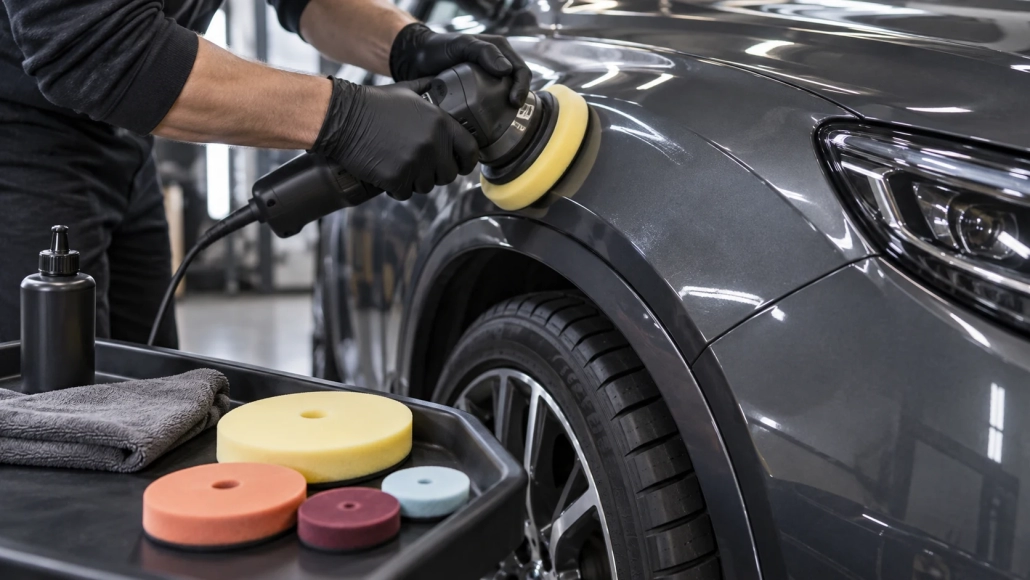
A mini DA can provide access where a larger tool is awkward, but a smaller pad is not automatically gentler. Local work concentrates attention and can encourage repeated correction in a small area. Define the objective and boundary before starting.
Narrow trim can be painted, coated plastic, film or another finish. Identify it rather than assuming it behaves like the adjacent body panel. Glossy appearance alone does not establish suitability for the same compound.
Inspect edges, chips and repairs. Small components may have limited accessible flat area and different thermal behaviour from the surrounding metal panel.
Use the machine’s supported plate, pad and operating range. Do not improvise an attachment to reach a gap. Check clearance so the tool body, plate and pad edge cannot strike nearby parts.
Protect adjacent sensitive areas using compatible methods. Masking is a boundary aid, not permission to press a pad against the tape or a sharp edge.
Use a conservative appropriate test and inspect after residue removal. If the target defect improves, assess the transition to surrounding paint before repeating the process.
The goal is an even finish, not a sharply defined bright patch. A local cutting stage may need a broader suitable refinement area, but that decision should remain within the paint assessment.
Small defects are easy to revisit repeatedly because they remain in the centre of attention. Set a limit based on response and surface condition rather than a universal pass count.
If the defect is beyond the intended correction scope, document it and leave it. Mini tools are most useful when they improve access and precision within a controlled plan. They should not become a way to pursue isolated damage that would be rejected during the same assessment on a larger panel.
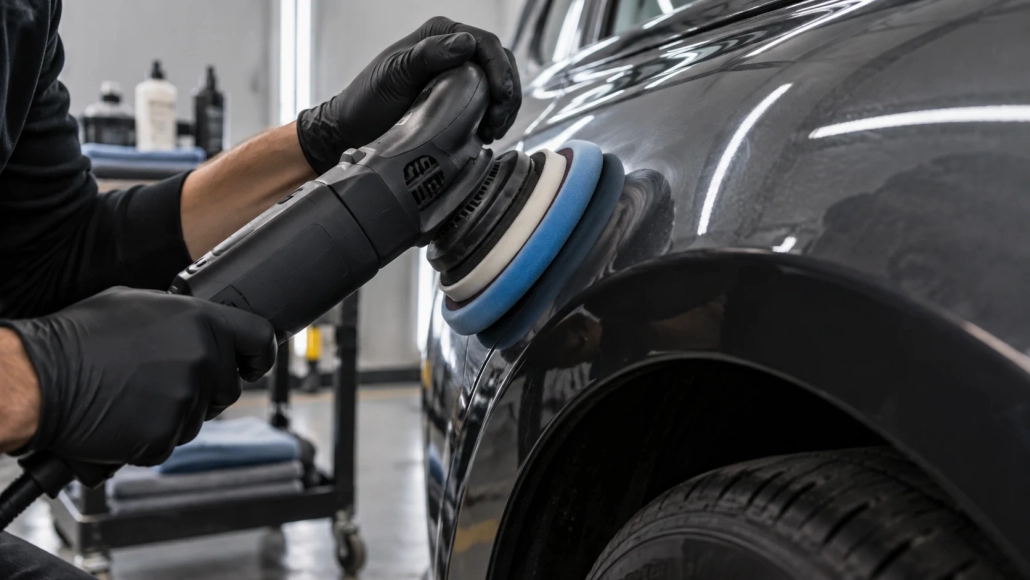
Choose a dual-action polish by machine movement, defect level and pad system, then validate correction and finish before working around the vehicle.
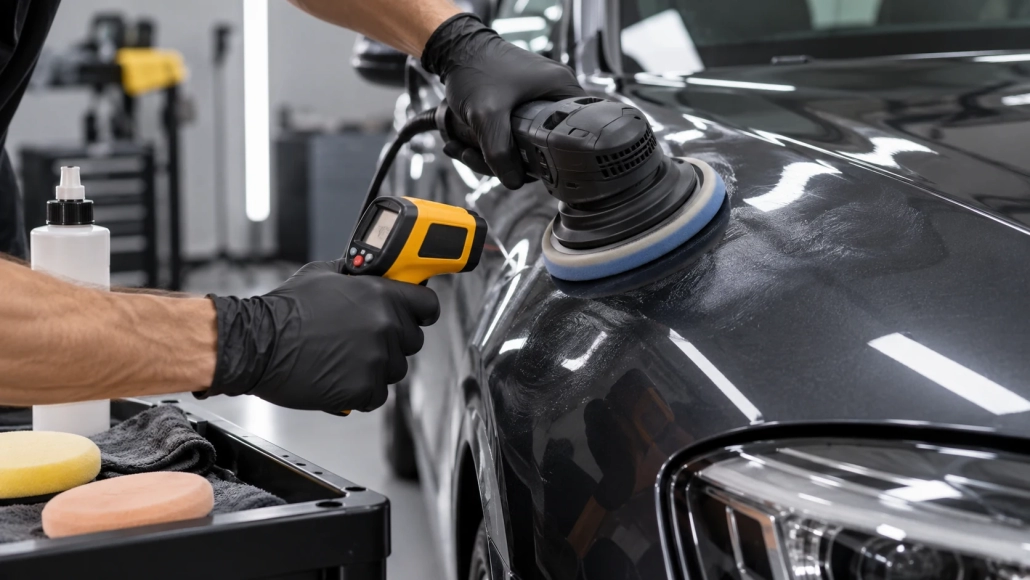
Choose DA operating speed using the exact tool, pad and polish instructions, then inspect the result instead of copying another machine's dial number.
Confirm the machine, plate and pad combination before polishing so attachment, clearance and operating limits suit the intended work.

 DA Polisher Speed Settings: Why Dial Numbers Are Not a Recipe