






A full polishing range.
From cutting and one-step correction to final finishing.
Specialist chemistry. Expert application.
 QUARTZ99 / CERAMIC BASE COAT
The foundation of your coating system.
A layerable quartz base coat designed for mechanical protection. Pair it with a suitable top coat to create the final finish.
For application by NANOLAB certified installers only.
Four formulas. Extended working time. Find the coating for your finish.
Explore the BEAST family of ceramic coatings.
Find the coating for each exterior surface.
 PPF & VINYLGLOSSProtection for glossy films and wraps.Discover
 MATTE & SATINMATTEProtection that respects the finish.Discover
 GLASSWINDOWSExplore dedicated glass protection.Discover
 WHEEL PROTECTIONWHEELSA dedicated coating for your wheels.Discover
 TRIM PROTECTIONPLASTICProtection for plastic surfaces.Discover
Dedicated care for the surfaces inside.
 LEATHER SURFACESLEATHERDiscover NANOLAB leather protection.Discover PLASTIC SURFACESPLASTICProtection for interior plastic surfaces.Discover TEXTILE SURFACESFABRICExplore the latest fabric formulation.Discover
Spray protection, maintenance and upcoming wash products.
 MAINTENANCEBEAST 365Explore the BEAST maintenance range.Discover
Next in washing, cleaning & care.
Ceramic protection for boats and yachts.
An easy-to-apply ceramic coating with an established track record on boats and yachts around the world.
Results vary with surface preparation, exposure and maintenance.
Read 50 MARINE guides →Explore MARINEProtection for the surfaces you live with.
A look at what we’re developing.
From cutting and one-step correction to final finishing.
A wider range for professional vehicle care.
Taking shape alongside BEAST & MATRIX.
Practical guidance for your next coating project.
Explore all guides →
Assess delivery condition and desired finish before polishing a new vehicle, without assuming either perfect paint or a need for heavy correction.
Updated · NANOLAB Knowledge
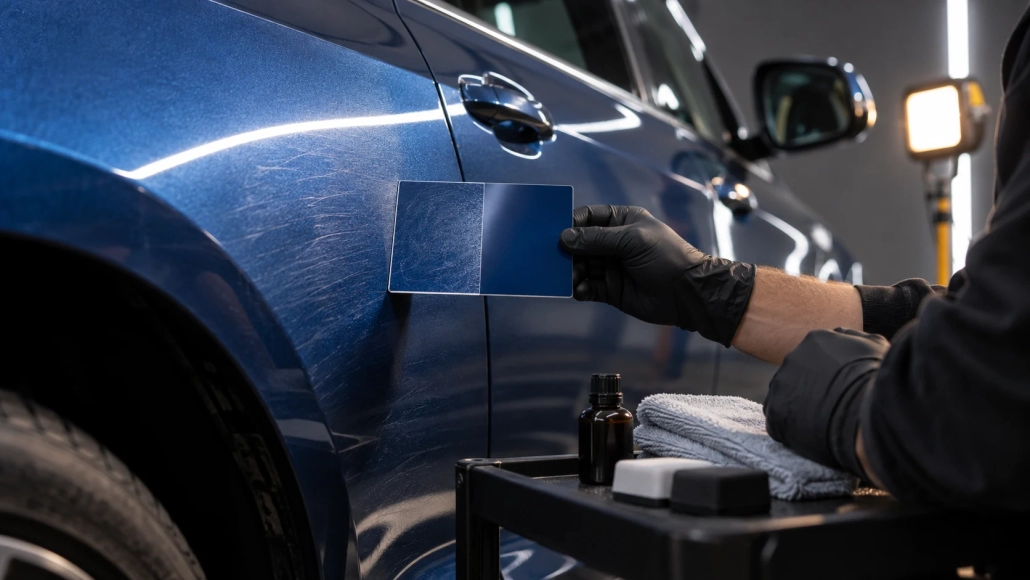
New ownership does not prove perfect paint, but it also does not justify automatic compounding. A new vehicle may have handling marks, contamination or a sound finish that needs little beyond suitable preparation. Inspect the actual car before choosing the process.
Examine clean paint under useful lighting and document visible defects, repairs or transport-related marks. Where a concern may require dealer assessment, clarify it before changing the surface.
Do not assume a new panel has an unlimited correction allowance. Paint thickness and previous handling are not established by the registration date.
Remove suitable contamination using compatible methods and reassess. Deposits and residue can exaggerate the apparent need for polishing.
If the paint already meets the appearance goal, additional abrasive work may offer no useful benefit. Preparation for protection should follow the chosen system rather than an automatic stage count.
Use a conservative supported combination on a representative area. Compare the cleaned result and any newly introduced haze.
A light refinement may be enough for minor marks. Stronger correction requires its own justification, even when an owner asks for a premium new-car package.
Describe which defects will be improved, what may remain and how the finish will be inspected. Avoid a promise of perfect paint based solely on the vehicle being new.
Choose protection according to surface compatibility and the owner’s maintenance needs, then provide clear care instructions.
The strongest new-car service is condition-led. It addresses actual problems while preserving sound finish and documents the starting point for future care. More abrasive stages are not automatically better preparation, and the absence of polishing is not a shortcut when inspection shows it is unnecessary.
Browse the complete car polish and compound guide.
For NANOLAB protection selection and application requirements, consult the technical documentation or contact NANOLAB with the intended surface and process.
Plan the transition from correction to protection around an accepted finish, compatible residue removal and the chosen coating's actual application requirements.
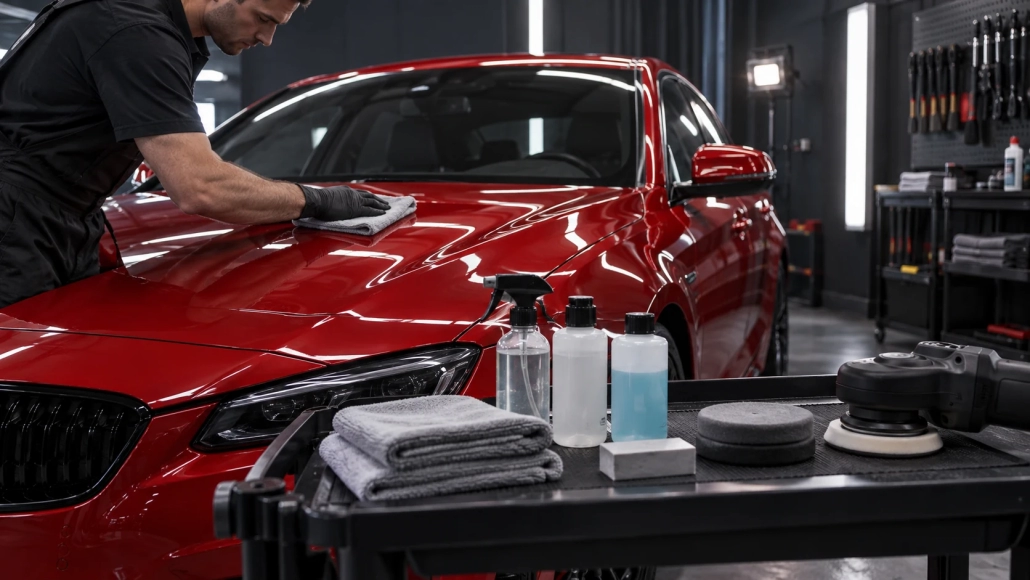
Compare appearance enhancement and targeted defect correction by scope, test results and finish expectations rather than ambiguous package names.
Use inspection and a test area to decide whether polishing is needed, how much correction is sensible and which defects should remain.

 Paint Enhancement vs Paint Correction: Define the Service