






A full polishing range.
From cutting and one-step correction to final finishing.
Specialist chemistry. Expert application.
 QUARTZ99 / CERAMIC BASE COAT
The foundation of your coating system.
A layerable quartz base coat designed for mechanical protection. Pair it with a suitable top coat to create the final finish.
For application by NANOLAB certified installers only.
Four formulas. Extended working time. Find the coating for your finish.
Explore the BEAST family of ceramic coatings.
Find the coating for each exterior surface.
 PPF & VINYLGLOSSProtection for glossy films and wraps.Discover
 MATTE & SATINMATTEProtection that respects the finish.Discover
 GLASSWINDOWSExplore dedicated glass protection.Discover
 WHEEL PROTECTIONWHEELSA dedicated coating for your wheels.Discover
 TRIM PROTECTIONPLASTICProtection for plastic surfaces.Discover
Dedicated care for the surfaces inside.
 LEATHER SURFACESLEATHERDiscover NANOLAB leather protection.Discover PLASTIC SURFACESPLASTICProtection for interior plastic surfaces.Discover TEXTILE SURFACESFABRICExplore the latest fabric formulation.Discover
Spray protection, maintenance and upcoming wash products.
 MAINTENANCEBEAST 365Explore the BEAST maintenance range.Discover
Next in washing, cleaning & care.
Ceramic protection for boats and yachts.
An easy-to-apply ceramic coating with an established track record on boats and yachts around the world.
Results vary with surface preparation, exposure and maintenance.
Read 50 MARINE guides →Explore MARINEProtection for the surfaces you live with.
A look at what we’re developing.
From cutting and one-step correction to final finishing.
A wider range for professional vehicle care.
Taking shape alongside BEAST & MATRIX.
Practical guidance for your next coating project.
Explore all guides →
Calculate compound cost within the complete service, including actual consumption, pads, cleanup and the finishing labour required.
Updated · NANOLAB Knowledge
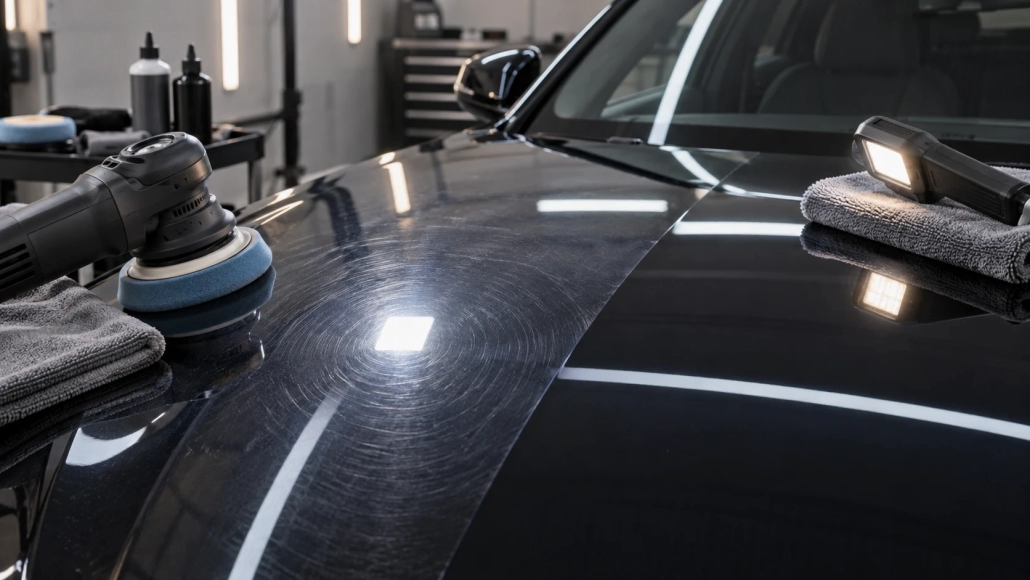
The cheapest bottle is not necessarily the cheapest route to an accepted finish. A polishing system consumes liquid, pad capacity and labour. Evaluate those costs against the same service outcome rather than comparing container prices alone.
Use an appropriate consistent method to record product used on representative jobs. Note vehicle size, correction scope, stages and relevant conditions.
Do not treat one measurement as a universal millilitres-per-car rate. A light enhancement and substantial correction are different services.
Record pad use and cleaning, residue removal, detail cleanup and refinement. A fast cutting stage may create additional finishing labour, while another system may take longer initially but simplify completion.
Separate machine time from total technician time. Customers pay for the completed result, not only the minutes the pad is moving.
For an illustrative internal model, total consumable cost equals the liquid used at its unit cost, the allocated pad cost and other job-specific consumables. Add measured labour at the studio’s chosen costing rate.
Those inputs should come from the business’s own records. Do not copy a supplier’s best-case demo and present it as your guaranteed production cost.
Use the same accepted finish standard and similar starting conditions. A lower-cost test that leaves substantially more defects is not an equal service.
Record rework as well as first-pass performance. Difficult wipe-off, inconsistent pads or repeated refinement can dominate small savings in product price.
A reliable purchasing decision uses several representative jobs and preserves the variation between them. The result should show where a system performs efficiently and where it needs a different process, not reduce every vehicle to an unsupported single cost figure.
Suppose one process uses €4 of liquid and 90 minutes of labour, while another uses €7 of liquid and 60 minutes. At an illustrative labour cost of €30 per hour, those subtotals are €49 and €37 respectively. The dearer liquid can produce the lower process cost. These are example inputs, not market prices, and both processes must deliver the same accepted finish.
Add pad wear, towel laundering, refinement, preparation and rework before using the calculation in a real quotation.
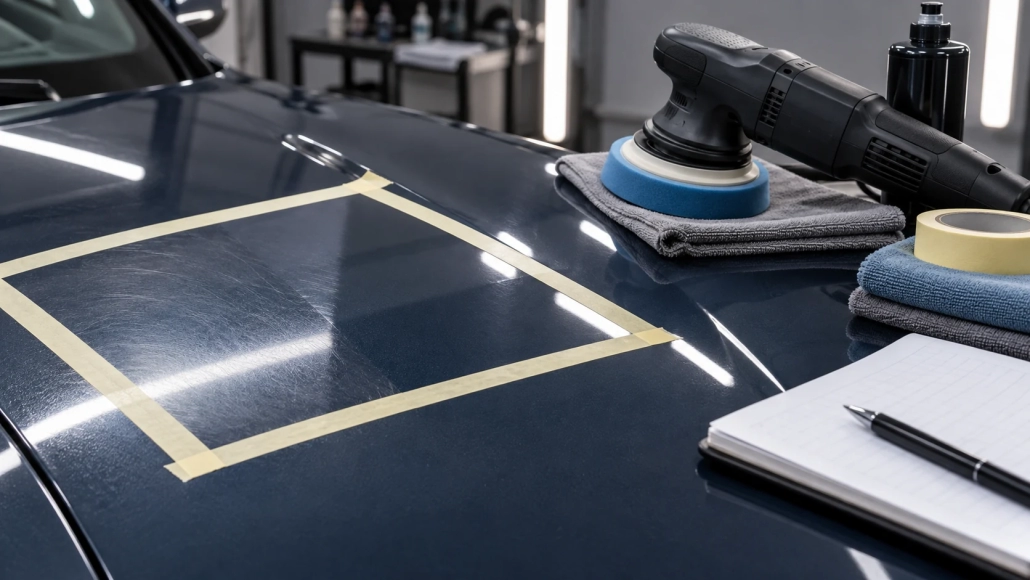
Compare polishing quotations through inspection, correction scope, finishing standard and protection rather than choosing only by stage count.
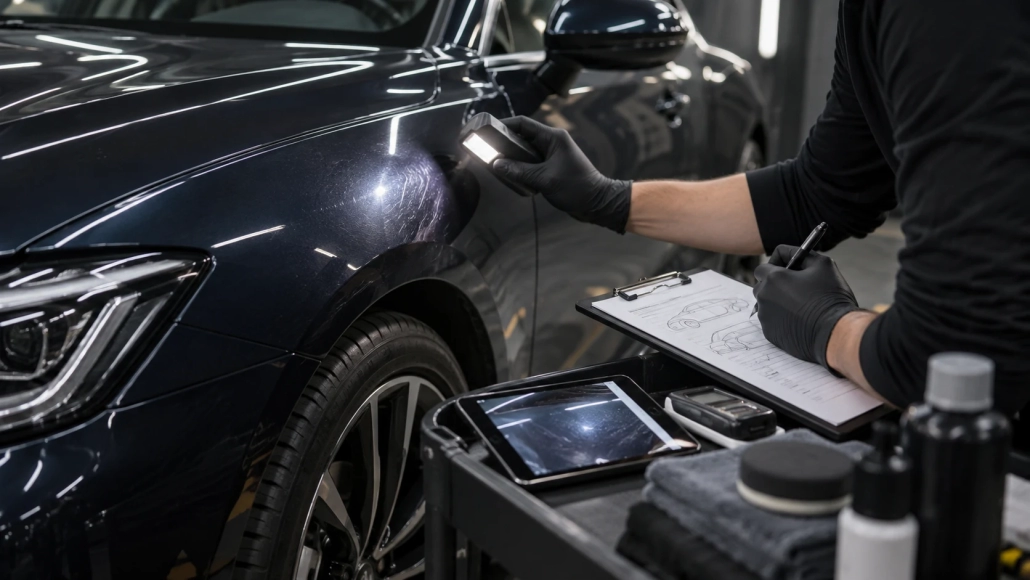
Build a polishing time estimate from a complete representative test while accounting for access, pad maintenance, cleanup and different paint responses.
Set a paint-correction stopping point that balances appearance, remaining defects, paint condition and the customer's intended use.

 Estimating Paint Correction Time from a Test Area