






A full polishing range.
From cutting and one-step correction to final finishing.
Specialist chemistry. Expert application.
 QUARTZ99 / CERAMIC BASE COAT
The foundation of your coating system.
A layerable quartz base coat designed for mechanical protection. Pair it with a suitable top coat to create the final finish.
For application by NANOLAB certified installers only.
Four formulas. Extended working time. Find the coating for your finish.
Explore the BEAST family of ceramic coatings.
Find the coating for each exterior surface.
 PPF & VINYLGLOSSProtection for glossy films and wraps.Discover
 MATTE & SATINMATTEProtection that respects the finish.Discover
 GLASSWINDOWSExplore dedicated glass protection.Discover
 WHEEL PROTECTIONWHEELSA dedicated coating for your wheels.Discover
 TRIM PROTECTIONPLASTICProtection for plastic surfaces.Discover
Dedicated care for the surfaces inside.
 LEATHER SURFACESLEATHERDiscover NANOLAB leather protection.Discover PLASTIC SURFACESPLASTICProtection for interior plastic surfaces.Discover TEXTILE SURFACESFABRICExplore the latest fabric formulation.Discover
Spray protection, maintenance and upcoming wash products.
 MAINTENANCEBEAST 365Explore the BEAST maintenance range.Discover
Next in washing, cleaning & care.
Ceramic protection for boats and yachts.
An easy-to-apply ceramic coating with an established track record on boats and yachts around the world.
Results vary with surface preparation, exposure and maintenance.
Read 50 MARINE guides →Explore MARINEProtection for the surfaces you live with.
A look at what we’re developing.
From cutting and one-step correction to final finishing.
A wider range for professional vehicle care.
Taking shape alongside BEAST & MATRIX.
Practical guidance for your next coating project.
Explore all guides →
Check the finish, details and job record before protection or handover so a polishing service is accepted against a clear and repeatable standard.
Updated · NANOLAB Knowledge
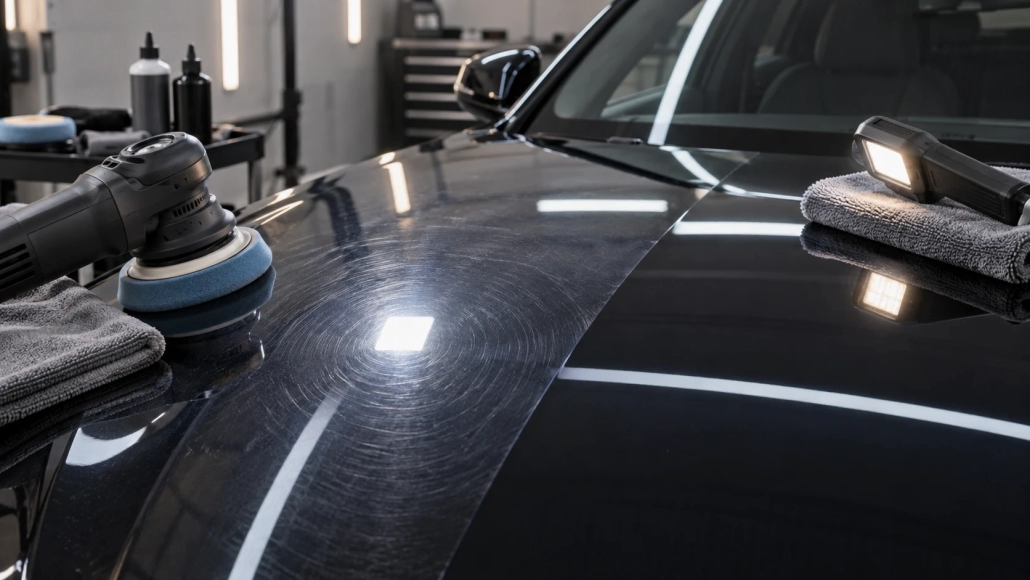
Final inspection should confirm the agreed polishing result and catch incomplete details. It should not become an unplanned attempt to remove every previously excluded defect. Use the same acceptance standard established during the initial test.
Inspect clean dry paint under the agreed lighting. Check original target defects, process haze, directional trails and consistency across transitions.
Review the whole panel, not only the most accessible centre. Look at boundaries between technicians, pad changes and locally corrected sections.
Inspect appropriate seams, trim and neighbouring surfaces for residue or splatter. Remove contamination with material-compatible methods.
Confirm that masking has been removed correctly and that no adhesive residue or overlooked edge remains. A glossy panel surrounded by cleanup problems is not complete.
If protection follows, complete the selected system’s preparation and readiness checks. Do not infer readiness only from gloss, slickness or beading.
If the vehicle already had protection, verify that the agreed repair or renewal plan has been completed for areas affected by abrasion.
Document the products, tools and relevant process changes. List deeper defects deliberately retained and any surfaces excluded from treatment.
At handover, explain care requirements from the protection system and show the result under a meaningful inspection view. Avoid presenting selective photographs as the entire quality check.
A practical sign-off has four parts: accepted paint appearance, clean details, completed protection plan and an accurate service record. That structure makes quality review teachable and repeatable without reducing workmanship to a stage count.
Where an issue remains uncertain, resolve or document it before delivery. A clear limitation is more useful than a vague assurance that the car is perfect.
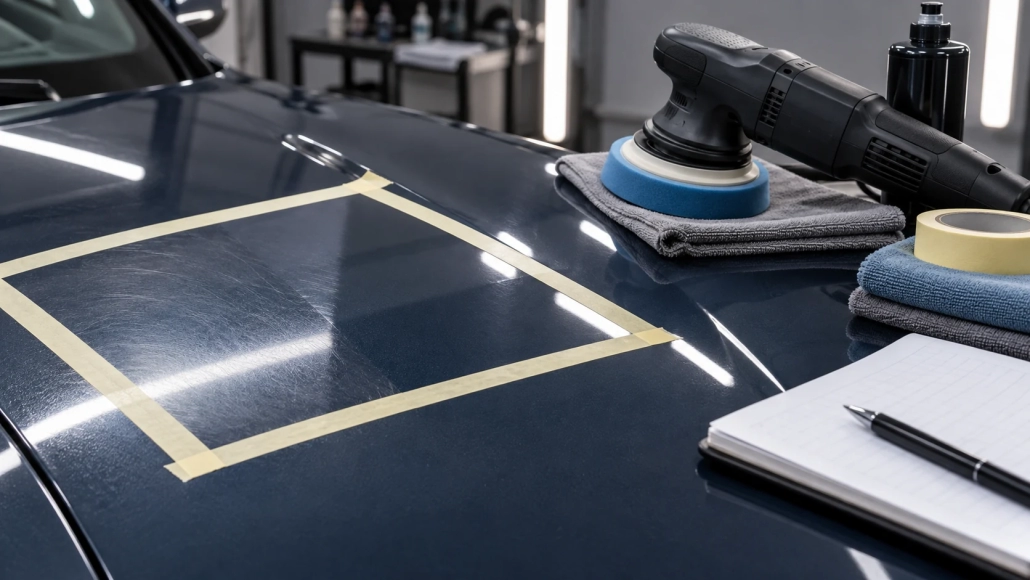
Compare polishing quotations through inspection, correction scope, finishing standard and protection rather than choosing only by stage count.
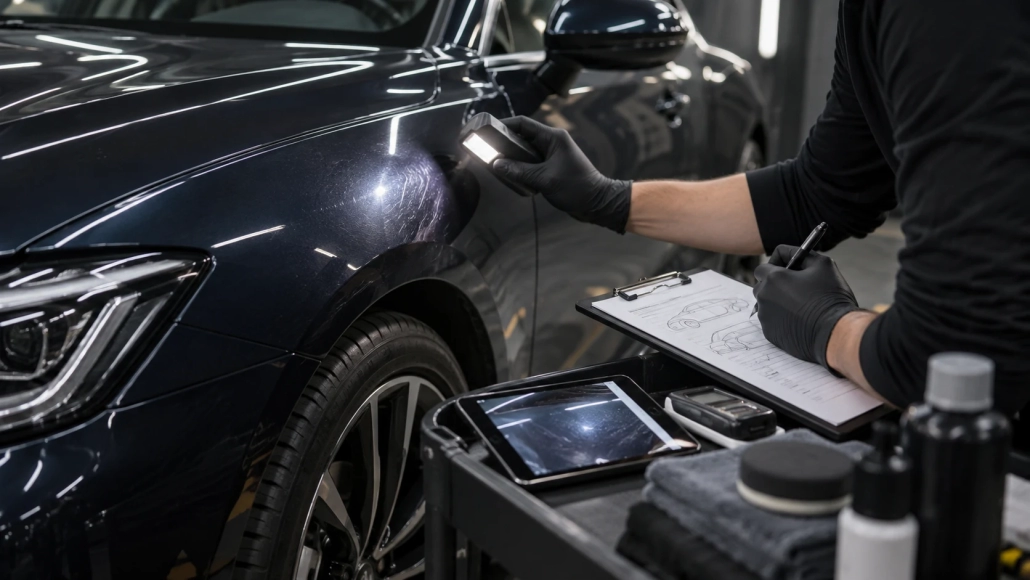
Preserve a polished finish with suitable washing, clean contact materials and protection-specific care instead of treating repeated abrasion as routine maintenance.
Set a paint-correction stopping point that balances appearance, remaining defects, paint condition and the customer's intended use.

 Maintaining a Car After Polishing: Reduce the Need for Recorrection