






A full polishing range.
From cutting and one-step correction to final finishing.
Specialist chemistry. Expert application.
 QUARTZ99 / CERAMIC BASE COAT
The foundation of your coating system.
A layerable quartz base coat designed for mechanical protection. Pair it with a suitable top coat to create the final finish.
For application by NANOLAB certified installers only.
Four formulas. Extended working time. Find the coating for your finish.
Explore the BEAST family of ceramic coatings.
Find the coating for each exterior surface.
 PPF & VINYLGLOSSProtection for glossy films and wraps.Discover
 MATTE & SATINMATTEProtection that respects the finish.Discover
 GLASSWINDOWSExplore dedicated glass protection.Discover
 WHEEL PROTECTIONWHEELSA dedicated coating for your wheels.Discover
 TRIM PROTECTIONPLASTICProtection for plastic surfaces.Discover
Dedicated care for the surfaces inside.
 LEATHER SURFACESLEATHERDiscover NANOLAB leather protection.Discover PLASTIC SURFACESPLASTICProtection for interior plastic surfaces.Discover TEXTILE SURFACESFABRICExplore the latest fabric formulation.Discover
Spray protection, maintenance and upcoming wash products.
 MAINTENANCEBEAST 365Explore the BEAST maintenance range.Discover
Next in washing, cleaning & care.
Ceramic protection for boats and yachts.
An easy-to-apply ceramic coating with an established track record on boats and yachts around the world.
Results vary with surface preparation, exposure and maintenance.
Read 50 MARINE guides →Explore MARINEProtection for the surfaces you live with.
A look at what we’re developing.
From cutting and one-step correction to final finishing.
A wider range for professional vehicle care.
Taking shape alongside BEAST & MATRIX.
Practical guidance for your next coating project.
Explore all guides →
Plan a consistent polishing path and evaluate arm speed, overlap and coverage without relying on a universal seconds-per-pass rule.
Updated · NANOLAB Knowledge
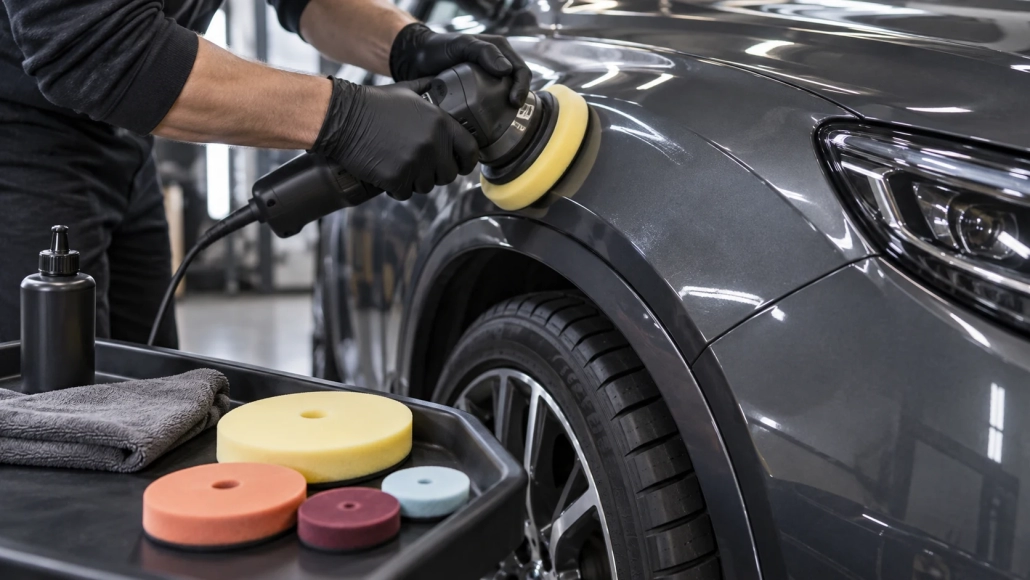
Arm speed is how quickly the operator moves the tool across the section. Overlap describes how successive paths cover the area. Both affect consistency, but neither has one universal setting for every machine, liquid or paint.
Use a section that fits the product’s instructions and the panel’s shape. Large sections can become difficult to cover evenly before the film changes. Very small sections can encourage excessive repeated work in one location.
Identify boundaries before starting. Do not let the section drift as attention follows the remaining defects.
Use an orderly overlapping path where specified by the system. Work across the area in a way that makes missed strips and repeated zones easier to notice.
Edges of a test section deserve inspection as well as its centre. An excellent centre beside untreated strips is not evidence of a repeatable whole-panel process.
If correction is uneven, examine contact and coverage before changing the liquid. If residue dries before coverage is complete, review section size and conditions rather than assuming slower movement is always better.
Moving extremely slowly can concentrate work; moving too quickly may produce an inconsistent result. The useful rate is the one supported by the system and validated by inspection.
Describe the section and path clearly enough for another technician to reproduce them. Keep machine setting, pad condition and product application in the same record.
Inspect after compatible residue removal and compare the whole section. Repeat the accepted method on another representative area before committing to the entire vehicle.
A consistent path makes the polishing test more informative. It helps distinguish a weak product pairing from a coverage problem and reduces the temptation to solve every imperfect result through additional indiscriminate passes.
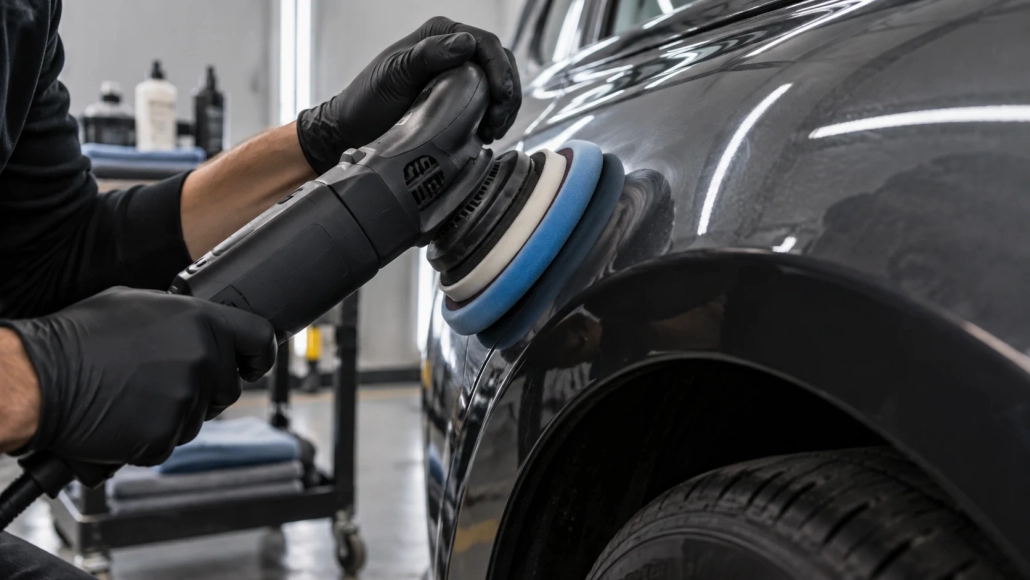
Choose a dual-action polish by machine movement, defect level and pad system, then validate correction and finish before working around the vehicle.
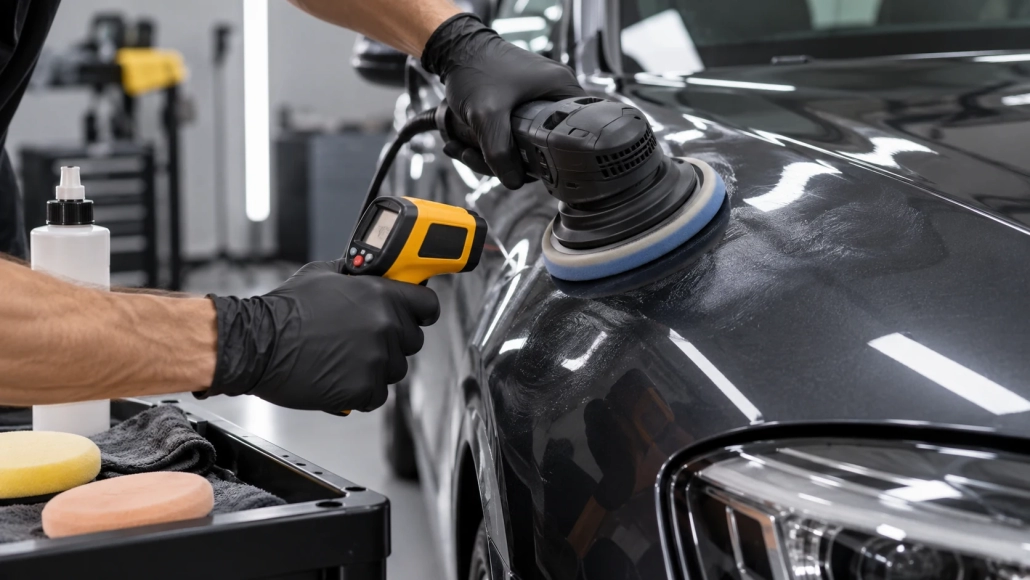
Define a pass, section and working cycle clearly so polishing instructions and workshop records are understandable and repeatable.
Confirm the machine, plate and pad combination before polishing so attachment, clearance and operating limits suit the intended work.

 Polishing Passes, Sections and Cycles: A Practical Glossary