






A full polishing range.
From cutting and one-step correction to final finishing.
Specialist chemistry. Expert application.
 QUARTZ99 / CERAMIC BASE COAT
The foundation of your coating system.
A layerable quartz base coat designed for mechanical protection. Pair it with a suitable top coat to create the final finish.
For application by NANOLAB certified installers only.
Four formulas. Extended working time. Find the coating for your finish.
Explore the BEAST family of ceramic coatings.
Find the coating for each exterior surface.
 PPF & VINYLGLOSSProtection for glossy films and wraps.Discover
 MATTE & SATINMATTEProtection that respects the finish.Discover
 GLASSWINDOWSExplore dedicated glass protection.Discover
 WHEEL PROTECTIONWHEELSA dedicated coating for your wheels.Discover
 TRIM PROTECTIONPLASTICProtection for plastic surfaces.Discover
Dedicated care for the surfaces inside.
 LEATHER SURFACESLEATHERDiscover NANOLAB leather protection.Discover PLASTIC SURFACESPLASTICProtection for interior plastic surfaces.Discover TEXTILE SURFACESFABRICExplore the latest fabric formulation.Discover
Spray protection, maintenance and upcoming wash products.
 MAINTENANCEBEAST 365Explore the BEAST maintenance range.Discover
Next in washing, cleaning & care.
Ceramic protection for boats and yachts.
An easy-to-apply ceramic coating with an established track record on boats and yachts around the world.
Results vary with surface preparation, exposure and maintenance.
Read 50 MARINE guides →Explore MARINEProtection for the surfaces you live with.
A look at what we’re developing.
From cutting and one-step correction to final finishing.
A wider range for professional vehicle care.
Taking shape alongside BEAST & MATRIX.
Practical guidance for your next coating project.
Explore all guides →
Recognise pad conditions that call for retirement or reassessment and distinguish structural damage from residue that can be removed safely.
Updated · NANOLAB Knowledge
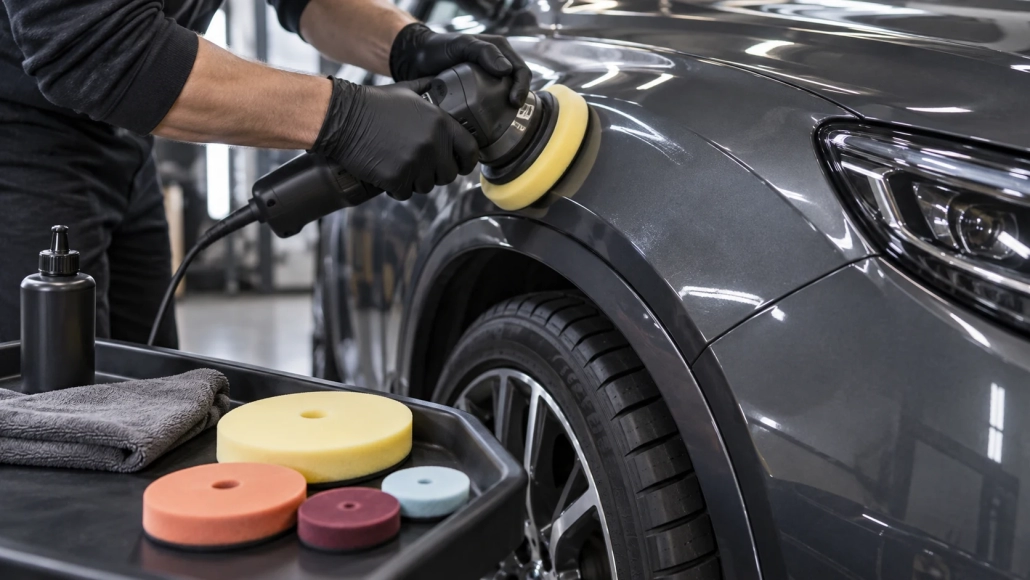
A polishing pad is a consumable, not a permanent machine part. Continued use should depend on condition and supported serviceability, not only on how many cars it has completed. Different jobs can place very different demands on identical pads.
Check the fastening face and the bond between layers. Poor attachment, lifting edges or delamination can make a pad unsuitable for further machine use.
Do not try to compensate for unreliable fastening by pressing harder or using improvised adhesive. Replace the compromised component with an appropriate supported pad.
Look for tears, missing sections, contamination and changes that cleaning does not resolve. Fibre and foam faces show wear differently, so use the manufacturer’s guidance for the actual construction.
A persistent hard inclusion or embedded debris deserves particular attention. Do not return a questionable pad to delicate finishing merely because most of its surface appears clean.
If a previously successful combination becomes inconsistent, compare with a clean serviceable pad before blaming the liquid or paint. Record differences in handling, useful cut and finish.
Performance change alone does not identify wear conclusively; loading, product condition and panel differences may also contribute. The purpose of comparison is to separate those variables.
Mark or segregate rejected pads so another technician cannot accidentally fit them. If a pad is retained for a non-machine cleanup role, keep it unmistakably separate from polishing stock.
Avoid inventing a universal replacement interval. Use condition checks, manufacturer guidance and documented workload. Maintaining enough spare pads makes it easier to retire a doubtful one without pressure to finish the job with it.
The small saving from extending an unreliable pad’s service life is poor value if it compromises control or creates defects that require rework. Serviceable condition is part of the correction system’s specification.
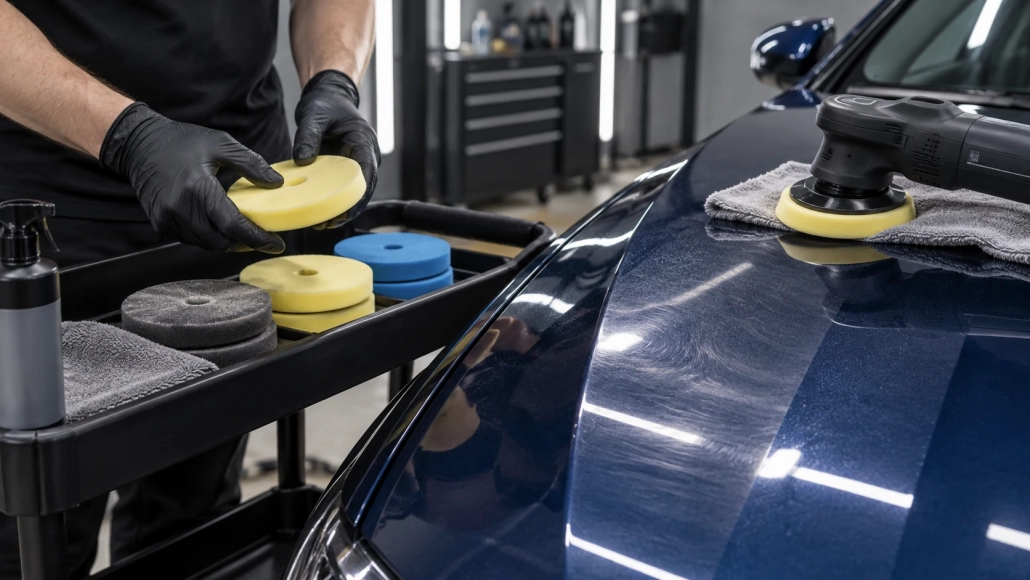
Compare polishing pad materials by their intended role, machine compatibility and maintenance needs before choosing a complete correction system.
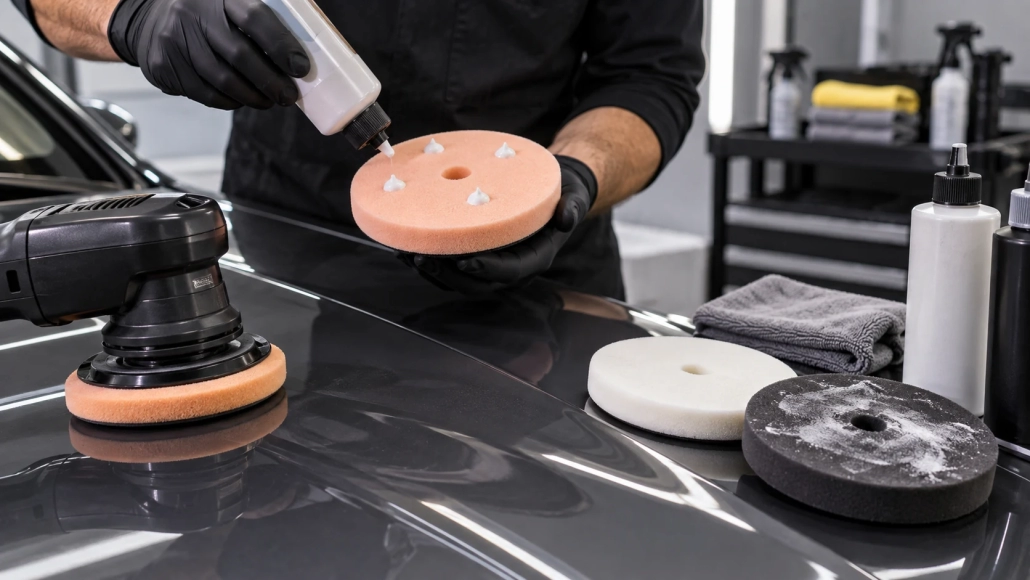
Control pad condition when testing compounds so a fresh-versus-loaded comparison is not mistaken for a difference between polishing liquids.
Match pad size and approved tools to panel geometry so curved areas can be corrected with controlled contact and clear inspection.

 New vs Used Polishing Pads in Product Comparisons