






A full polishing range.
From cutting and one-step correction to final finishing.
Specialist chemistry. Expert application.
 QUARTZ99 / CERAMIC BASE COAT
The foundation of your coating system.
A layerable quartz base coat designed for mechanical protection. Pair it with a suitable top coat to create the final finish.
For application by NANOLAB certified installers only.
Four formulas. Extended working time. Find the coating for your finish.
Explore the BEAST family of ceramic coatings.
Find the coating for each exterior surface.
 PPF & VINYLGLOSSProtection for glossy films and wraps.Discover
 MATTE & SATINMATTEProtection that respects the finish.Discover
 GLASSWINDOWSExplore dedicated glass protection.Discover
 WHEEL PROTECTIONWHEELSA dedicated coating for your wheels.Discover
 TRIM PROTECTIONPLASTICProtection for plastic surfaces.Discover
Dedicated care for the surfaces inside.
 LEATHER SURFACESLEATHERDiscover NANOLAB leather protection.Discover PLASTIC SURFACESPLASTICProtection for interior plastic surfaces.Discover TEXTILE SURFACESFABRICExplore the latest fabric formulation.Discover
Spray protection, maintenance and upcoming wash products.
 MAINTENANCEBEAST 365Explore the BEAST maintenance range.Discover
Next in washing, cleaning & care.
Ceramic protection for boats and yachts.
An easy-to-apply ceramic coating with an established track record on boats and yachts around the world.
Results vary with surface preparation, exposure and maintenance.
Read 50 MARINE guides →Explore MARINEProtection for the surfaces you live with.
A look at what we’re developing.
From cutting and one-step correction to final finishing.
A wider range for professional vehicle care.
Taking shape alongside BEAST & MATRIX.
Practical guidance for your next coating project.
Explore all guides →
Choose between heavy cut compound and fine cut polish by the defects present, paint response and finish required after a controlled test.
Updated · NANOLAB Knowledge
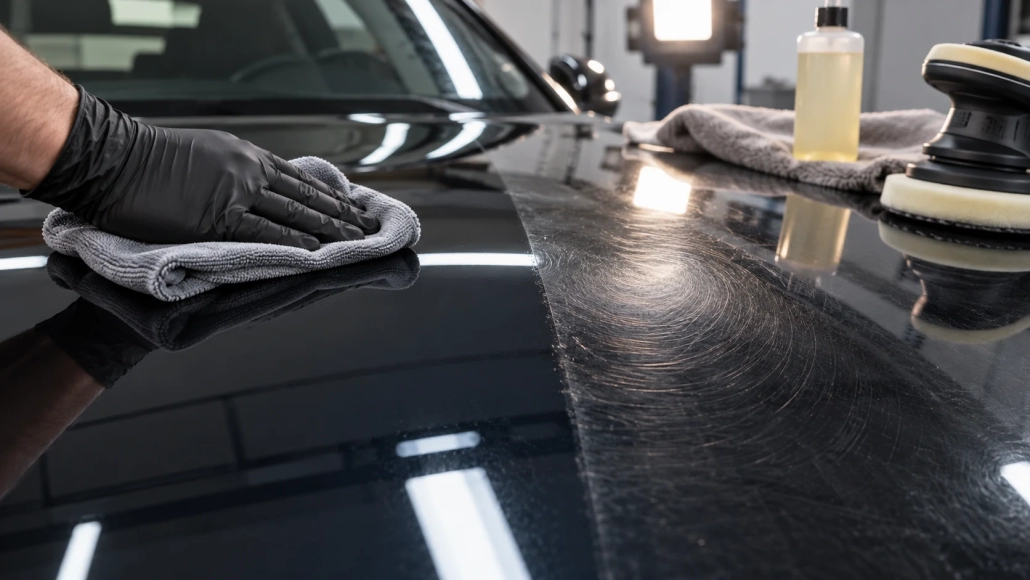
Heavy cut and fine cut describe positions within a polishing system. They are useful starting points, but they do not tell you how much paint a particular pass will remove or whether the finish will need another stage. The pad and machine matter alongside the liquid.
Separate widespread light swirls from more isolated damage. A panel can have both, but the deepest mark should not automatically dictate the treatment for every square centimetre. Decide what improvement is worthwhile and where preservation limits further correction.
Fine cut is a sensible candidate for lighter defects or refinement when the product is approved for that use. Heavy cut becomes a candidate when a milder suitable system fails to achieve the agreed correction and the paint condition supports a stronger process.
Use clean pads and adjacent representative areas with comparable defects. Keep lighting, residue removal and the inspection angle consistent. Avoid comparing a fresh pad in one test with a saturated pad in the other; that changes more than the abrasive grade.
Record what remains as well as what disappears. A stronger combination that improves the target defects but introduces haze may require more total work than a finer combination that achieves an acceptable result directly. Consider the whole correction and refinement sequence.
On a dark panel, look for a uniform grey veil after the cutting stage. On a light panel, inspect with a directional light rather than assuming that an apparently bright reflection proves complete refinement. A fine cut label does not guarantee a haze-free finish on every paint system.
If the finer test lacks correction but finishes well, you have learned something useful: it may be the right finishing stage after a separate cutting process. If both tests behave unpredictably, investigate surface condition and the setup before increasing aggression.
There is no requirement to use heavy cut, medium cut and fine cut on every vehicle. Equally, omitting refinement to save time is poor practice when the accepted test shows it is needed. Select the minimum complete process that reaches the intended finish within the paint’s limits. Keep the rejected test results in the job record so the decision is understandable later.
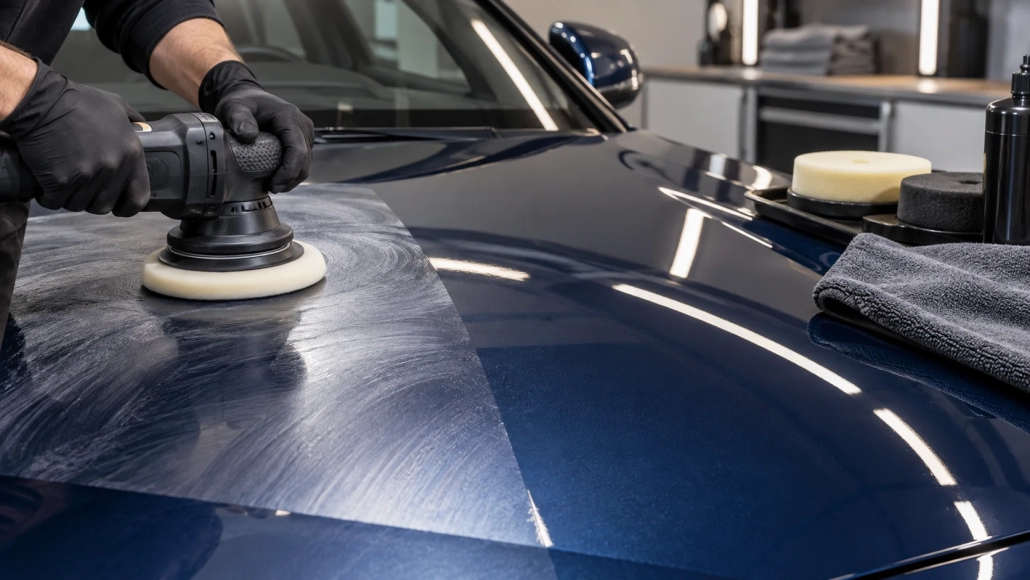
Understand heavy cut compound, fine cut and finishing polish, then choose a paint correction process that fits your paint, machine and intended result.
Learn how abrasive car polish differs from wax and sealant, and why correction, inspection and protection need their own decisions.
Inspect corrected paint after suitable residue removal to distinguish lasting defect improvement from temporary masking by polishing residue.

 Car Polish vs Wax and Sealant: Put Each Step in Its Place