






A full polishing range.
From cutting and one-step correction to final finishing.
Specialist chemistry. Expert application.
 QUARTZ99 / CERAMIC BASE COAT
The foundation of your coating system.
A layerable quartz base coat designed for mechanical protection. Pair it with a suitable top coat to create the final finish.
For application by NANOLAB certified installers only.
Four formulas. Extended working time. Find the coating for your finish.
Explore the BEAST family of ceramic coatings.
Find the coating for each exterior surface.
 PPF & VINYLGLOSSProtection for glossy films and wraps.Discover
 MATTE & SATINMATTEProtection that respects the finish.Discover
 GLASSWINDOWSExplore dedicated glass protection.Discover
 WHEEL PROTECTIONWHEELSA dedicated coating for your wheels.Discover
 TRIM PROTECTIONPLASTICProtection for plastic surfaces.Discover
Dedicated care for the surfaces inside.
 LEATHER SURFACESLEATHERDiscover NANOLAB leather protection.Discover PLASTIC SURFACESPLASTICProtection for interior plastic surfaces.Discover TEXTILE SURFACESFABRICExplore the latest fabric formulation.Discover
Spray protection, maintenance and upcoming wash products.
 MAINTENANCEBEAST 365Explore the BEAST maintenance range.Discover
Next in washing, cleaning & care.
Ceramic protection for boats and yachts.
An easy-to-apply ceramic coating with an established track record on boats and yachts around the world.
Results vary with surface preparation, exposure and maintenance.
Read 50 MARINE guides →Explore MARINEProtection for the surfaces you live with.
A look at what we’re developing.
From cutting and one-step correction to final finishing.
A wider range for professional vehicle care.
Taking shape alongside BEAST & MATRIX.
Practical guidance for your next coating project.
Explore all guides →
Learn how abrasive car polish differs from wax and sealant, and why correction, inspection and protection need their own decisions.
Updated · NANOLAB Knowledge
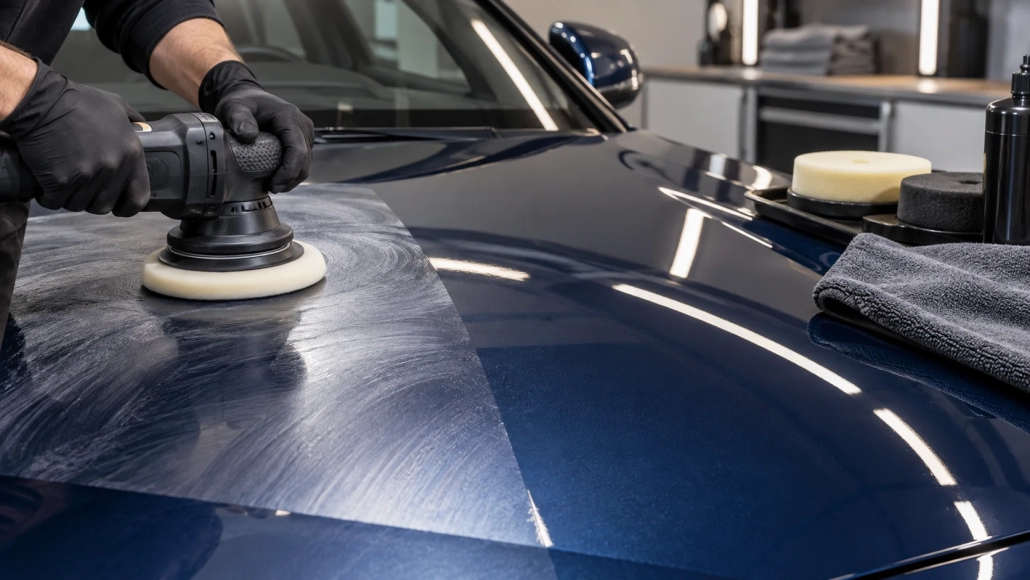
Car polish and wax are often grouped together on a shop shelf, but they can perform different jobs. An abrasive polish changes the finish through mechanical correction. A wax or sealant primarily deposits protection. Some products combine these roles, so reading the exact description matters more than the word polish on the bottle.
Wash swirls and light scratches are defects within the surface. A suitable abrasive process can reduce their appearance by levelling the surrounding finish. Wax may improve appearance, but it should not be treated as proof that underlying defects have been removed.
This distinction affects inspection. Judge correction after the polishing residue has been removed with a compatible method. Then decide whether the finish is acceptable before introducing protection that can change its appearance again.
For a conventional polish-and-wax service, cleaning and any necessary correction come before the chosen wax. For a ceramic coating service, the coating manufacturer’s preparation procedure governs the final cleaning and compatibility checks.
An all-in-one polish can leave a protective film deliberately. That can be useful when it is the intended final treatment, but it is a poor assumption that every coating will bond properly over it. Verify the complete combination instead of adding a strong solvent step by guesswork.
Abrasive correction is not routine washing. Repeating it simply because a wax needs renewal can remove finish unnecessarily. Inspect the clean car and decide whether the issue is contamination, degraded protection or actual paint defects.
If the paint is already satisfactory, suitable cleaning and renewed protection may be all that is needed. If defects have returned, investigate washing and drying practices as well as the corrective treatment.
Ask what each stage is expected to achieve: cleaning, defect reduction, visual refinement or protection. A clear explanation lets you compare services with different product names. It also makes the handover more useful: the owner needs a maintenance routine for the protection system, not an instruction to repeat the entire correction process whenever the car loses its freshly detailed appearance.
Understand heavy cut compound, fine cut and finishing polish, then choose a paint correction process that fits your paint, machine and intended result.
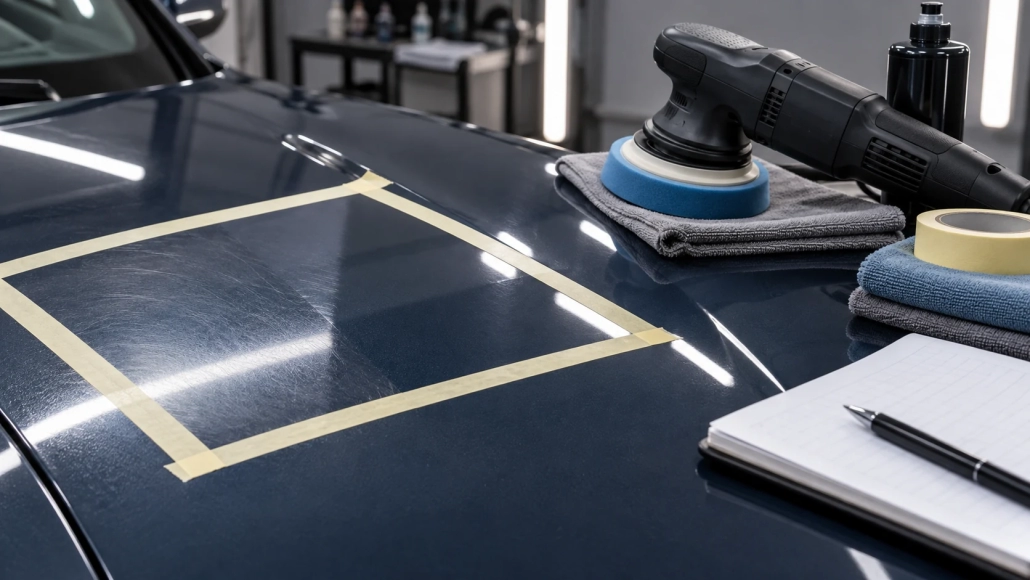
Distinguish a one-step correction process from an all-in-one polish that adds protection, especially when planning ceramic coating preparation.
Choose a polishing process by testing defect removal, finishing quality and clear-coat preservation rather than counting steps alone.

 One-Step Polish vs All-in-One: Correction Is Not the Same as Protection