






A full polishing range.
From cutting and one-step correction to final finishing.
Specialist chemistry. Expert application.
 QUARTZ99 / CERAMIC BASE COAT
The foundation of your coating system.
A layerable quartz base coat designed for mechanical protection. Pair it with a suitable top coat to create the final finish.
For application by NANOLAB certified installers only.
Four formulas. Extended working time. Find the coating for your finish.
Explore the BEAST family of ceramic coatings.
Find the coating for each exterior surface.
 PPF & VINYLGLOSSProtection for glossy films and wraps.Discover
 MATTE & SATINMATTEProtection that respects the finish.Discover
 GLASSWINDOWSExplore dedicated glass protection.Discover
 WHEEL PROTECTIONWHEELSA dedicated coating for your wheels.Discover
 TRIM PROTECTIONPLASTICProtection for plastic surfaces.Discover
Dedicated care for the surfaces inside.
 LEATHER SURFACESLEATHERDiscover NANOLAB leather protection.Discover PLASTIC SURFACESPLASTICProtection for interior plastic surfaces.Discover TEXTILE SURFACESFABRICExplore the latest fabric formulation.Discover
Spray protection, maintenance and upcoming wash products.
 MAINTENANCEBEAST 365Explore the BEAST maintenance range.Discover
Next in washing, cleaning & care.
Ceramic protection for boats and yachts.
An easy-to-apply ceramic coating with an established track record on boats and yachts around the world.
Results vary with surface preparation, exposure and maintenance.
Read 50 MARINE guides →Explore MARINEProtection for the surfaces you live with.
A look at what we’re developing.
From cutting and one-step correction to final finishing.
A wider range for professional vehicle care.
Taking shape alongside BEAST & MATRIX.
Practical guidance for your next coating project.
Explore all guides →
Distinguish a one-step correction process from an all-in-one polish that adds protection, especially when planning ceramic coating preparation.
Updated · NANOLAB Knowledge
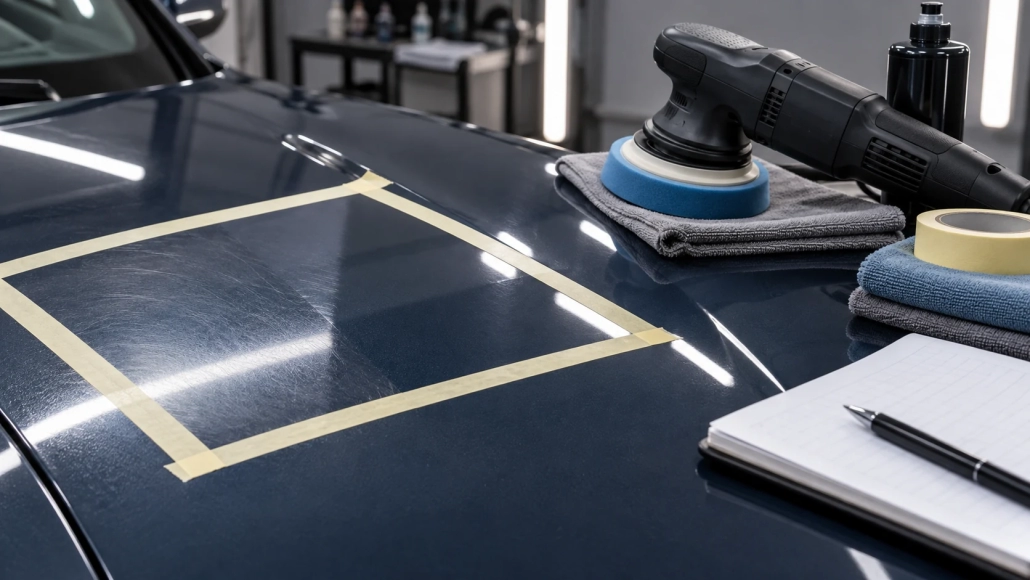
One-step and all-in-one can sound interchangeable, but they answer different questions. A one-step correction process seeks the agreed improvement with one polishing stage. An all-in-one product usually combines functions such as cleaning, polishing and depositing protection. Confirm the manufacturer’s definition for the exact bottle.
A dedicated abrasive polish can achieve a one-step correction without adding wax or sealant. It may still require a separate protection stage. Conversely, a multifunction product may leave protection while offering only the level of correction appropriate to its formulation and pad system.
The number of bottles used does not prove the number of functions performed. Write the service specification in terms of outcomes: target defects, final clarity, final protective treatment and preparation requirements.
For an owner seeking a modest appearance improvement with a simple protective finish, an approved all-in-one process may suit the brief. For a coating installation, a dedicated correction process can make the transition to the coating’s specified cleaning procedure easier to define.
Neither approach guarantees a particular percentage of defect removal. Use a test area to show what the selected service can achieve on that vehicle. Be clear about deeper marks that will remain.
Assess the working cycle, wipe-off effort and finish under consistent light. If the polish removes the target swirls but leaves haze, the process is not complete merely because the label says one-step. It may need a different pairing or a separate refinement stage.
Likewise, if a test looks clear only before residue removal, distinguish temporary visual improvement from mechanical correction. The inspection method should reflect the product’s intended use without applying an unapproved solvent challenge.
Do not coat over an unknown protective residue. Ask the coating supplier whether the all-in-one product is compatible and what preparation is required. If that information is unavailable, choose a documented route. A service that is straightforward from the first test through final protection is more dependable than one built around an ambiguous marketing phrase.
Browse the complete car polish and compound guide.
These references illustrate named product systems. Use the current instructions for the exact product, pad and machine in your own process.
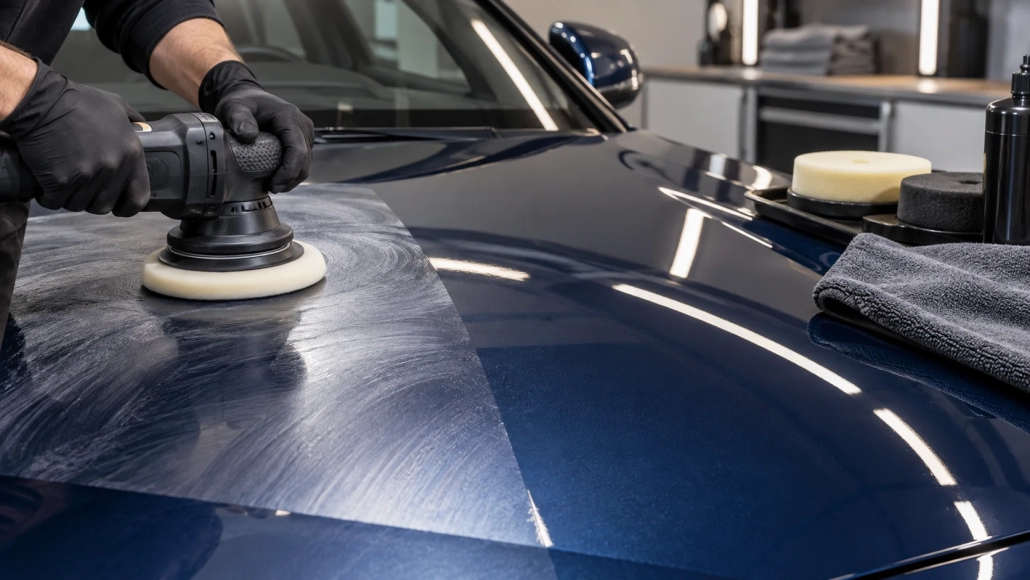
Understand heavy cut compound, fine cut and finishing polish, then choose a paint correction process that fits your paint, machine and intended result.
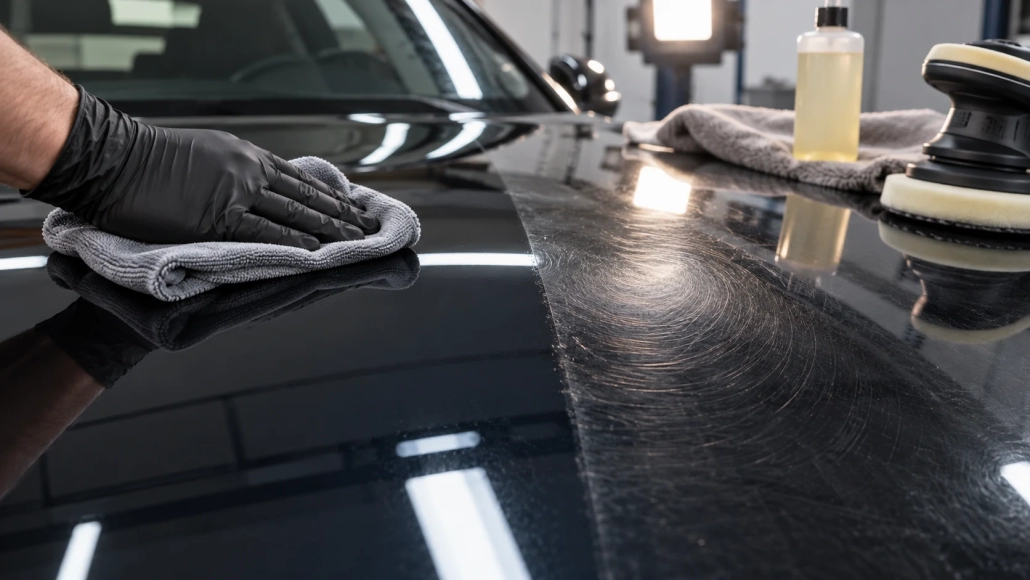
Understand cut and gloss ratings on compound bottles and compare systems without treating manufacturer scales as universal measurements.
Document pad, polish, machine, surface and inspection results so a successful polishing test can guide the rest of the vehicle.

 Polishing Compound Cut Ratings: Why Brand Scales Do Not Match