






A full polishing range.
From cutting and one-step correction to final finishing.
Specialist chemistry. Expert application.
 QUARTZ99 / CERAMIC BASE COAT
The foundation of your coating system.
A layerable quartz base coat designed for mechanical protection. Pair it with a suitable top coat to create the final finish.
For application by NANOLAB certified installers only.
Four formulas. Extended working time. Find the coating for your finish.
Explore the BEAST family of ceramic coatings.
Find the coating for each exterior surface.
 PPF & VINYLGLOSSProtection for glossy films and wraps.Discover
 MATTE & SATINMATTEProtection that respects the finish.Discover
 GLASSWINDOWSExplore dedicated glass protection.Discover
 WHEEL PROTECTIONWHEELSA dedicated coating for your wheels.Discover
 TRIM PROTECTIONPLASTICProtection for plastic surfaces.Discover
Dedicated care for the surfaces inside.
 LEATHER SURFACESLEATHERDiscover NANOLAB leather protection.Discover PLASTIC SURFACESPLASTICProtection for interior plastic surfaces.Discover TEXTILE SURFACESFABRICExplore the latest fabric formulation.Discover
Spray protection, maintenance and upcoming wash products.
 MAINTENANCEBEAST 365Explore the BEAST maintenance range.Discover
Next in washing, cleaning & care.
Ceramic protection for boats and yachts.
An easy-to-apply ceramic coating with an established track record on boats and yachts around the world.
Results vary with surface preparation, exposure and maintenance.
Read 50 MARINE guides →Explore MARINEProtection for the surfaces you live with.
A look at what we’re developing.
From cutting and one-step correction to final finishing.
A wider range for professional vehicle care.
Taking shape alongside BEAST & MATRIX.
Practical guidance for your next coating project.
Explore all guides →
Compare cutting compound and car polish by correction strength, finishing quality and purpose, with a practical test for choosing between them.
Updated · NANOLAB Knowledge
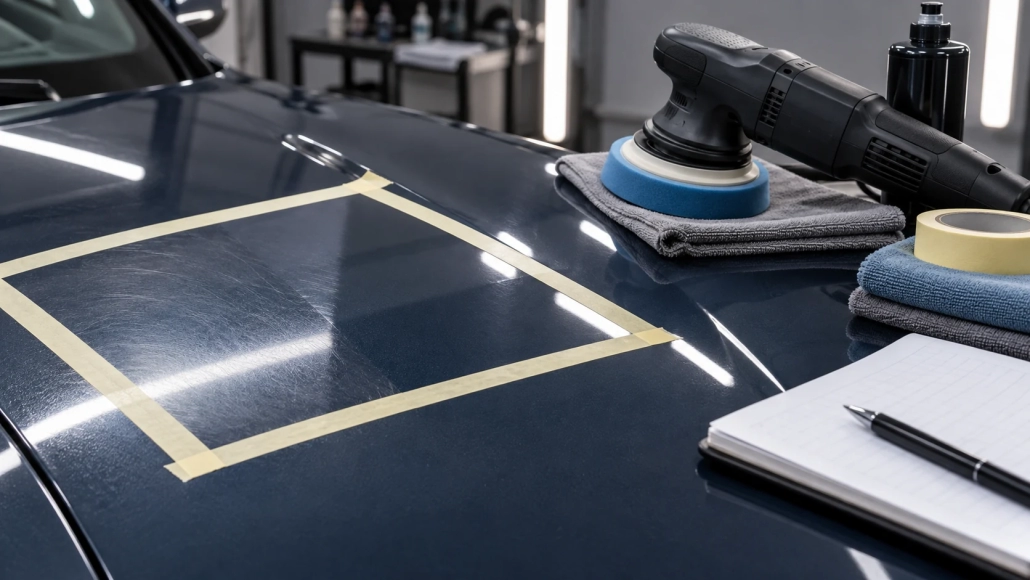
A compound and a polish are not two completely unrelated treatments. In paint correction, both can contain abrasives. The usual distinction is their role: a compound emphasises stronger correction, while a polish often emphasises refinement. Product names alone are not enough to predict either result.
A car covered in light wash marks may respond to a fine polish without compounding. A panel with more substantial but correctable defects may need stronger cutting. A paint surface that already looks clear may need no abrasive correction at all.
Cleaning is a separate diagnosis. Bonded contamination, residue and mineral deposits should not automatically be treated as scratches. Remove suitable contamination through the appropriate cleaning process before deciding how much correction is necessary.
A useful test records defect reduction and the finish left behind. Strong correction with visible haze is not the same result as a clear finished panel. Conversely, an attractive reflection through oily residue does not prove that the defects have been permanently reduced.
Inspect under consistent lighting after compatible residue removal. Compare the test area with the original condition from the same angle. Avoid judging success only by how slippery the paint feels; lubricants and protective ingredients can influence touch without demonstrating correction.
Use a compound followed by a polish when the required cutting stage leaves a finish that benefits from refinement. Do not assume every compound always needs a second stage, or that every polish can finish every paint. The test area decides.
For example, a compound may remove the target wash damage but leave fine uniform haze on a sensitive black panel. A separate finishing test can establish whether that haze is removable with a milder pad and liquid. If it is, plan that complete process before compounding the entire car.
Check the manufacturer’s approved machine movements, pad pairings, intended surfaces and finishing instructions. Ask whether the product includes protection, whether a separate inspection cleaner is specified, and whether the proposed result has been demonstrated on comparable paint. Choose a complete process you can inspect, not simply the bottle with the strongest cut claim.
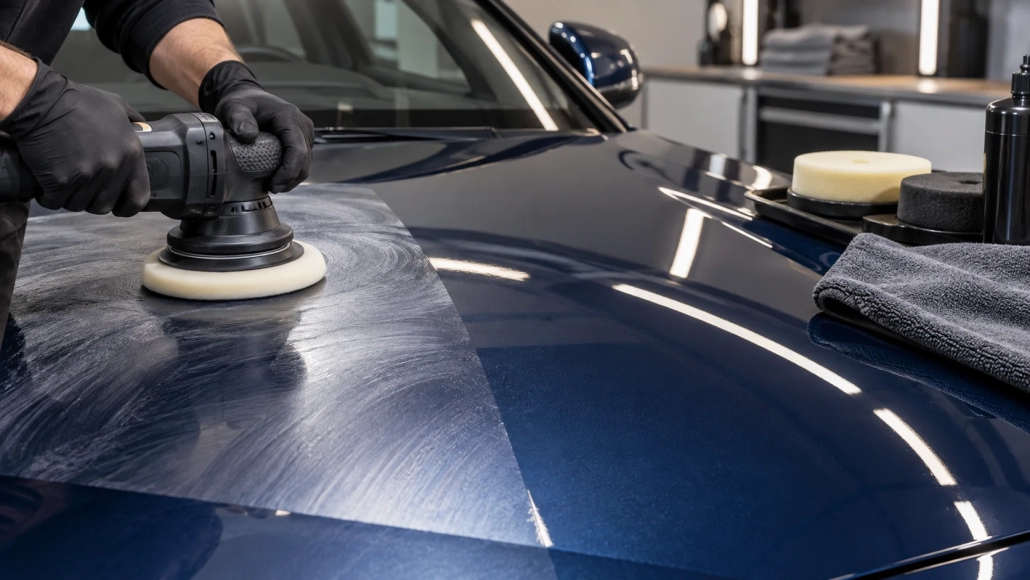
Understand heavy cut compound, fine cut and finishing polish, then choose a paint correction process that fits your paint, machine and intended result.
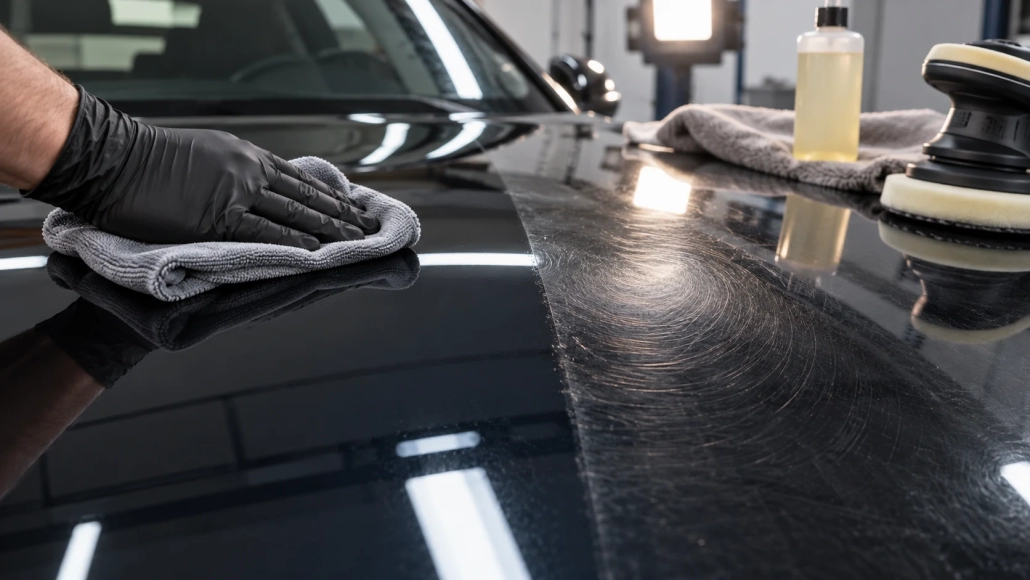
Choose between heavy cut compound and fine cut polish by the defects present, paint response and finish required after a controlled test.
Document pad, polish, machine, surface and inspection results so a successful polishing test can guide the rest of the vehicle.

 Heavy Cut vs Fine Cut: Choosing the Right Correction Level