






A full polishing range.
From cutting and one-step correction to final finishing.
Specialist chemistry. Expert application.
 QUARTZ99 / CERAMIC BASE COAT
The foundation of your coating system.
A layerable quartz base coat designed for mechanical protection. Pair it with a suitable top coat to create the final finish.
For application by NANOLAB certified installers only.
Four formulas. Extended working time. Find the coating for your finish.
Explore the BEAST family of ceramic coatings.
Find the coating for each exterior surface.
 PPF & VINYLGLOSSProtection for glossy films and wraps.Discover
 MATTE & SATINMATTEProtection that respects the finish.Discover
 GLASSWINDOWSExplore dedicated glass protection.Discover
 WHEEL PROTECTIONWHEELSA dedicated coating for your wheels.Discover
 TRIM PROTECTIONPLASTICProtection for plastic surfaces.Discover
Dedicated care for the surfaces inside.
 LEATHER SURFACESLEATHERDiscover NANOLAB leather protection.Discover PLASTIC SURFACESPLASTICProtection for interior plastic surfaces.Discover TEXTILE SURFACESFABRICExplore the latest fabric formulation.Discover
Spray protection, maintenance and upcoming wash products.
 MAINTENANCEBEAST 365Explore the BEAST maintenance range.Discover
Next in washing, cleaning & care.
Ceramic protection for boats and yachts.
An easy-to-apply ceramic coating with an established track record on boats and yachts around the world.
Results vary with surface preparation, exposure and maintenance.
Read 50 MARINE guides →Explore MARINEProtection for the surfaces you live with.
A look at what we’re developing.
From cutting and one-step correction to final finishing.
A wider range for professional vehicle care.
Taking shape alongside BEAST & MATRIX.
Practical guidance for your next coating project.
Explore all guides →
Compare foam and wool for heavy cutting by machine compatibility, defect reduction, finish quality and the maintenance each pad requires.
Updated · NANOLAB Knowledge
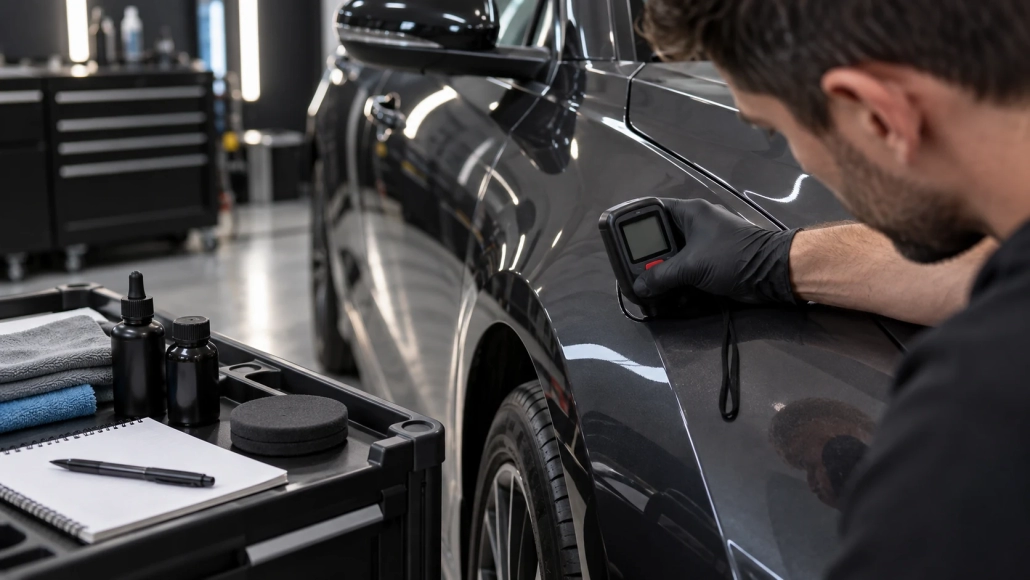
Foam and wool can both have a role in heavy cutting, but neither material name establishes a universal ranking. Pad construction, liquid, machine movement and the paint’s response determine the result. Compare complete combinations rather than assuming wool always cuts more or foam always finishes better.
Look for the manufacturer’s approved machine action and backing-plate arrangement. Wool made for one tool family may not be suitable for another. Foam also varies considerably in structure, firmness, profile and intended correction role.
Use a correctly fitted clean pad for each test. A worn wool pad and fresh cutting foam do not provide a fair comparison of the materials themselves.
On equivalent test areas, record target-defect improvement and any new haze. Then test the finishing stage each cutting combination requires. One pad may remove defects quickly but leave more refinement work; another may reach an acceptable overall result with fewer changes.
Include the edges of the worked section in the inspection. An apparently successful centre can hide uneven contact or incomplete coverage near the perimeter.
Fibre pads and foam pads require the cleaning methods specified for their construction. Accumulated residue changes how the face contacts the paint. Keep enough clean pads available so your test result can be maintained through the vehicle.
Do not compare a freshly cleaned pad at the start of one system with a loaded pad late in the other. Where you record working time, include cleaning and replacement rather than counting only machine-on time.
Large accessible panels, small contours and sensitive finishes may call for different arrangements. A pad that suits the broad bonnet is not automatically the best choice around a tight recess.
Select the combination that reaches the agreed correction and finish within the surface’s limits. Keep the alternative available for a specific reason, not because a material-based rule says every car must be compounded with the same type of pad.
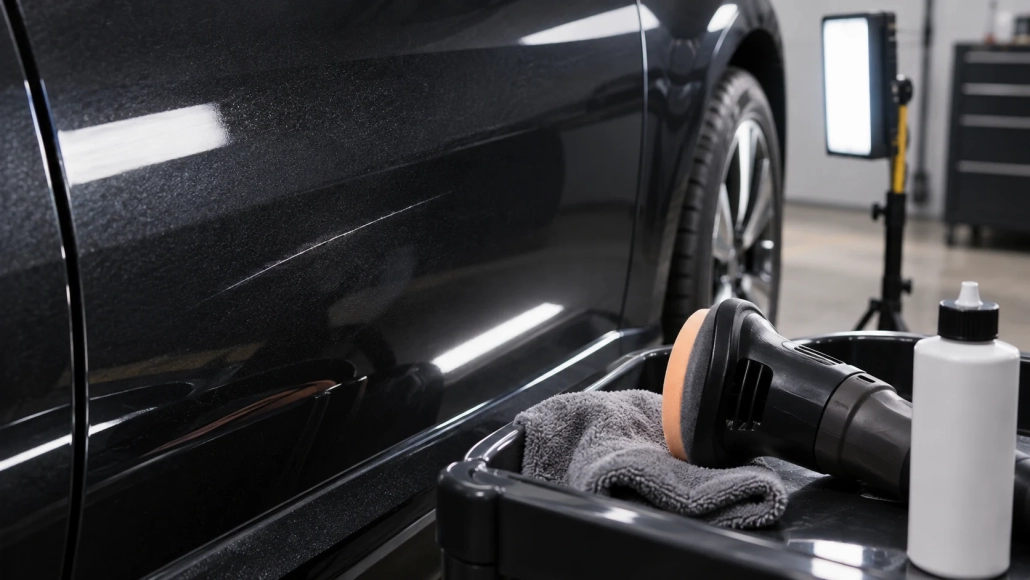
Learn when a heavy cut compound belongs in a paint correction plan and how to evaluate cutting performance, refinement and paint preservation together.
Diagnose slow correction on hard clear coat by reviewing the pad, abrasive system and machine contact before repeating heavy compounding cycles.
Understand what a paint gauge can measure, where its limits matter and why readings should support rather than replace surface assessment.

 Compounding Hard Clear Coat Without Chasing Endless Passes