






A full polishing range.
From cutting and one-step correction to final finishing.
Specialist chemistry. Expert application.
 QUARTZ99 / CERAMIC BASE COAT
The foundation of your coating system.
A layerable quartz base coat designed for mechanical protection. Pair it with a suitable top coat to create the final finish.
For application by NANOLAB certified installers only.
Four formulas. Extended working time. Find the coating for your finish.
Explore the BEAST family of ceramic coatings.
Find the coating for each exterior surface.
 PPF & VINYLGLOSSProtection for glossy films and wraps.Discover
 MATTE & SATINMATTEProtection that respects the finish.Discover
 GLASSWINDOWSExplore dedicated glass protection.Discover
 WHEEL PROTECTIONWHEELSA dedicated coating for your wheels.Discover
 TRIM PROTECTIONPLASTICProtection for plastic surfaces.Discover
Dedicated care for the surfaces inside.
 LEATHER SURFACESLEATHERDiscover NANOLAB leather protection.Discover PLASTIC SURFACESPLASTICProtection for interior plastic surfaces.Discover TEXTILE SURFACESFABRICExplore the latest fabric formulation.Discover
Spray protection, maintenance and upcoming wash products.
 MAINTENANCEBEAST 365Explore the BEAST maintenance range.Discover
Next in washing, cleaning & care.
Ceramic protection for boats and yachts.
An easy-to-apply ceramic coating with an established track record on boats and yachts around the world.
Results vary with surface preparation, exposure and maintenance.
Read 50 MARINE guides →Explore MARINEProtection for the surfaces you live with.
A look at what we’re developing.
From cutting and one-step correction to final finishing.
A wider range for professional vehicle care.
Taking shape alongside BEAST & MATRIX.
Practical guidance for your next coating project.
Explore all guides →
Diagnose slow correction on hard clear coat by reviewing the pad, abrasive system and machine contact before repeating heavy compounding cycles.
Updated · NANOLAB Knowledge
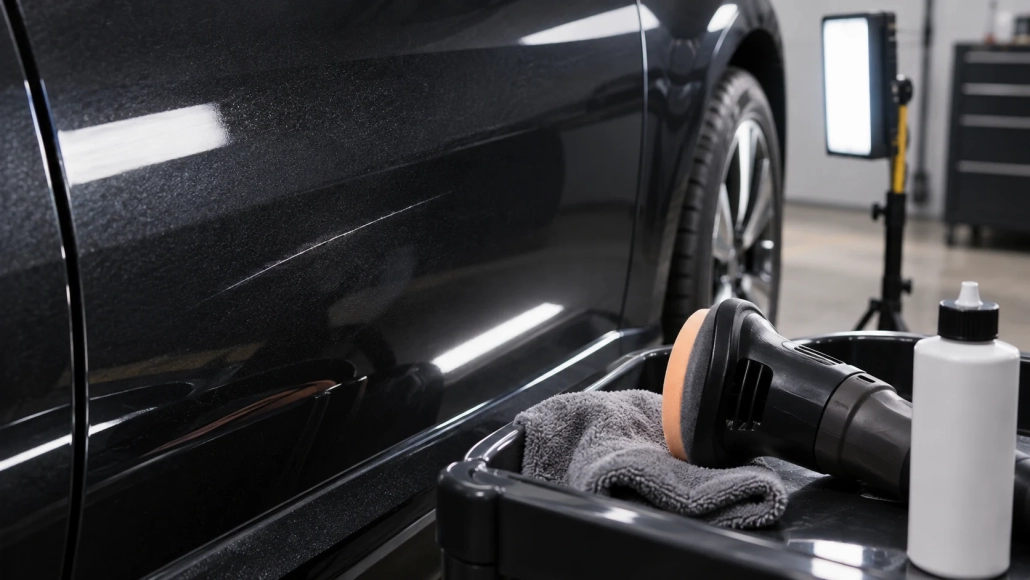
Paint that responds slowly to a polishing test is often described as hard. That description is useful only after you have ruled out an ineffective setup. Poor pad movement, a clogged face or an unsuitable liquid can also produce slow correction.
Confirm the actual machine action, pad compatibility and compound instructions. Inspect the pad after the first controlled test. If it is overloaded or contaminated, correct that condition before judging the paint.
On a free-spinning DA, check whether rotation remains effective through the working area. A machine can sound busy while the pad’s movement is not producing the result expected from the tested system.
A field of light swirls and one persistent deep scratch should not be treated as one correction target. If the general finish improves but one mark remains, increasing aggression across the whole panel may be unnecessary.
Use paint history and condition to set limits. Slow response does not prove that the clear coat is thick or that repeated heavy correction is safe. Hardness and available material are separate questions.
A supported fibre pad or different cutting liquid may improve the process, but change one factor at a time where practical. Keep the section, inspection conditions and starting defects comparable. Record whether the stronger system actually improves useful correction or simply creates more finishing work.
Do not extend cycles indefinitely when the result has stopped changing. Clean the pad and inspect the surface. Product drying, loading or unsuitable contact can make additional passes unproductive.
A cutting process on hard paint still needs a verified final finish. Test the planned polish and pad after the stronger stage, using the same residue-removal and inspection method.
The successful outcome is a repeatable sequence with a clear stopping point. If a remaining defect would require uncertain material removal, document it and preserve the finish. More passes are a decision with a cost, not evidence of better workmanship.
Learn when a heavy cut compound belongs in a paint correction plan and how to evaluate cutting performance, refinement and paint preservation together.
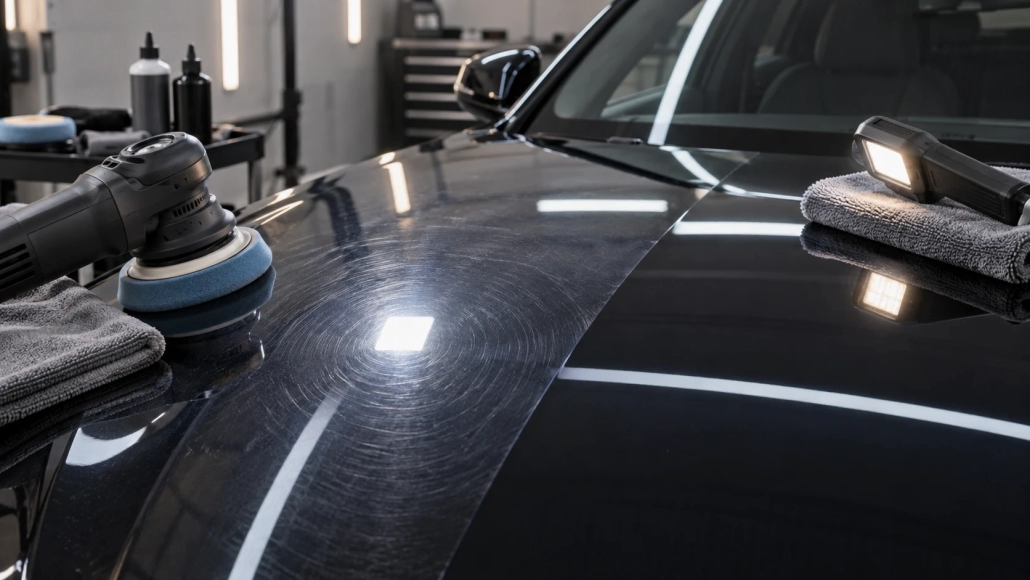
Interpret compound claims such as P1500 or P3000 removal in the context of the complete sanding, pad and paint system used to support them.
Assess an isolated paint scratch by its location, paint history and response to a conservative test instead of chasing complete removal.

 Sanding-Mark Removal Claims on Compound: How to Read Them