






A full polishing range.
From cutting and one-step correction to final finishing.
Specialist chemistry. Expert application.
 QUARTZ99 / CERAMIC BASE COAT
The foundation of your coating system.
A layerable quartz base coat designed for mechanical protection. Pair it with a suitable top coat to create the final finish.
For application by NANOLAB certified installers only.
Four formulas. Extended working time. Find the coating for your finish.
Explore the BEAST family of ceramic coatings.
Find the coating for each exterior surface.
 PPF & VINYLGLOSSProtection for glossy films and wraps.Discover
 MATTE & SATINMATTEProtection that respects the finish.Discover
 GLASSWINDOWSExplore dedicated glass protection.Discover
 WHEEL PROTECTIONWHEELSA dedicated coating for your wheels.Discover
 TRIM PROTECTIONPLASTICProtection for plastic surfaces.Discover
Dedicated care for the surfaces inside.
 LEATHER SURFACESLEATHERDiscover NANOLAB leather protection.Discover PLASTIC SURFACESPLASTICProtection for interior plastic surfaces.Discover TEXTILE SURFACESFABRICExplore the latest fabric formulation.Discover
Spray protection, maintenance and upcoming wash products.
 MAINTENANCEBEAST 365Explore the BEAST maintenance range.Discover
Next in washing, cleaning & care.
Ceramic protection for boats and yachts.
An easy-to-apply ceramic coating with an established track record on boats and yachts around the world.
Results vary with surface preparation, exposure and maintenance.
Read 50 MARINE guides →Explore MARINEProtection for the surfaces you live with.
A look at what we’re developing.
From cutting and one-step correction to final finishing.
A wider range for professional vehicle care.
Taking shape alongside BEAST & MATRIX.
Practical guidance for your next coating project.
Explore all guides →
Learn when a heavy cut compound belongs in a paint correction plan and how to evaluate cutting performance, refinement and paint preservation together.
Updated · NANOLAB Knowledge
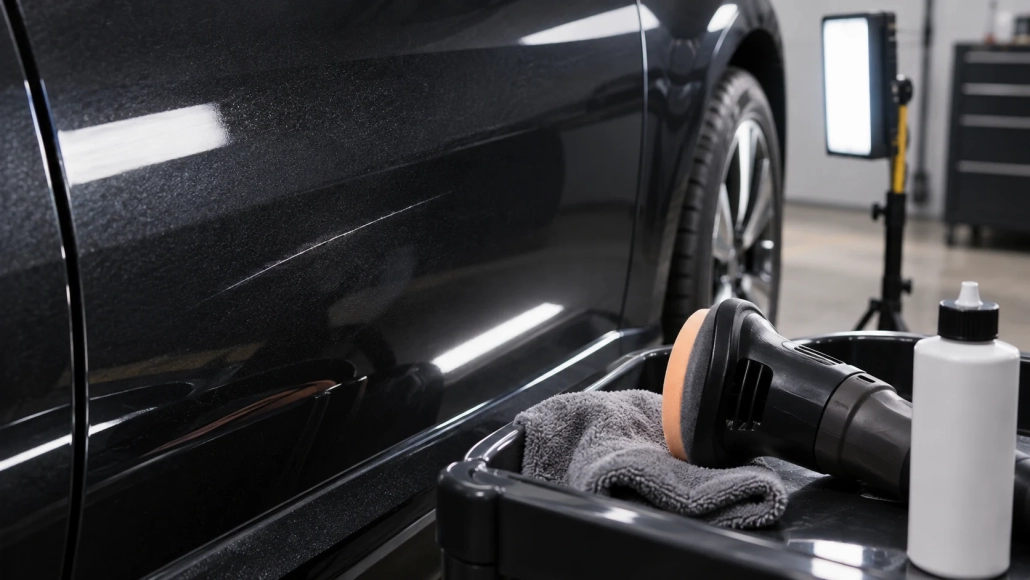
Heavy cut compound is a tool for a defined correction problem. It should not be the default opening step on every car. The decision depends on the defects, paint condition and what a less aggressive suitable test can achieve.
Inspect a clean surface and separate contamination from paint damage. A deposit above the finish may require cleaning; a defect within it presents a different decision. Flaking, peeling or exposed underlying layers are not problems that additional compound can restore.
Review repair history, vulnerable edges and available thickness information. A gauge reading is useful context, but it does not create a universal safe allowance for heavy correction. If the paint’s condition is uncertain, reduce the scope or seek a specialist assessment.
Choose a compound, pad and machine combination supported by the manufacturers. Work a representative area with controlled contact and the specified method. Clean the residue appropriately, then assess both the target defects and any haze introduced.
A heavy compound that cuts well may still need refinement. Confirm that the proposed finishing stage works before repeating the cutting process across the car. This avoids discovering at the end that the correction stage created a difficult finish to resolve.
Include pad cleaning, changes, residue removal and refinement when evaluating efficiency. The fastest first pass is not necessarily the fastest route to an accepted finish. A somewhat milder system can be a better choice when it delivers sufficient correction with less follow-up work.
Keep the accepted test record available and revisit it when moving to a repainted or differently responding panel. Treat unexpected grabbing, heat or loss of cut as reasons to reassess, not instructions to press harder.
Define what will remain before starting. Deeper isolated defects can be documented and left while the surrounding wash damage improves. Heavy cut cannot promise complete scratch removal on every finish. Its useful role is controlled correction within the paint’s limits, followed by a verified finish and the appropriate protection process.
| Record | Why it matters |
|---|---|
| Starting defects and paint history | Separates the correction goal from the paint’s limits. |
| Machine, pad and compound | Makes the tested system repeatable. |
| Cleaned result under the same light | Separates apparent gloss from defect reduction. |
| Required refinement | Reveals the total process, not just cutting speed. |
| Retained defects and stopping point | Prevents another technician from chasing rejected defects. |
Browse the complete car polish and compound guide.
These references illustrate named product systems. Use the current instructions for the exact product, pad and machine in your own process.
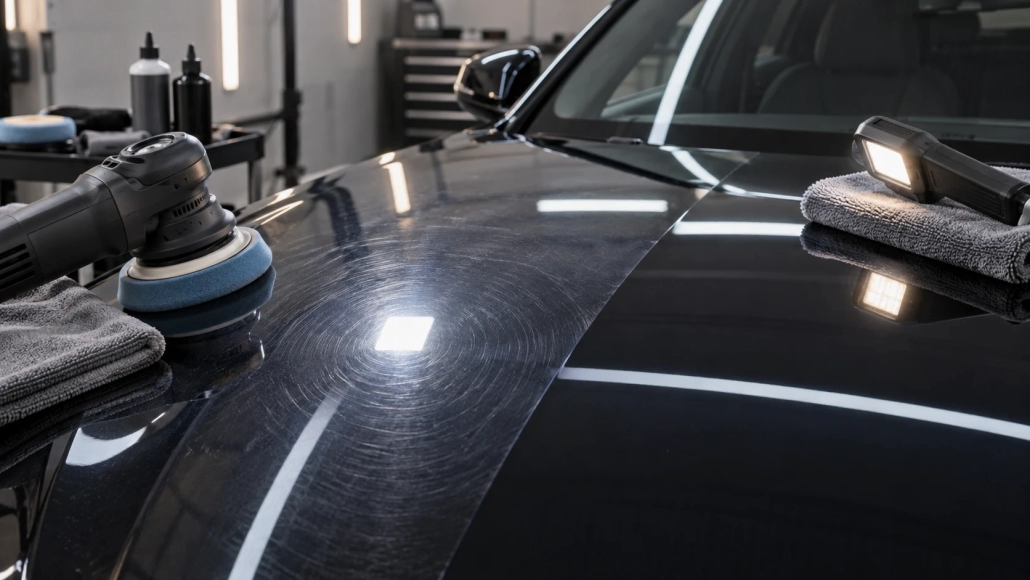
Plan heavy cutting with a DA polisher by checking liquid compatibility, pad movement, working area and the finishing process that follows.
Assess an isolated paint scratch by its location, paint history and response to a conservative test instead of chasing complete removal.

 Using Heavy Cut Compound with a Dual-Action Polisher