






A full polishing range.
From cutting and one-step correction to final finishing.
Specialist chemistry. Expert application.
 QUARTZ99 / CERAMIC BASE COAT
The foundation of your coating system.
A layerable quartz base coat designed for mechanical protection. Pair it with a suitable top coat to create the final finish.
For application by NANOLAB certified installers only.
Four formulas. Extended working time. Find the coating for your finish.
Explore the BEAST family of ceramic coatings.
Find the coating for each exterior surface.
 PPF & VINYLGLOSSProtection for glossy films and wraps.Discover
 MATTE & SATINMATTEProtection that respects the finish.Discover
 GLASSWINDOWSExplore dedicated glass protection.Discover
 WHEEL PROTECTIONWHEELSA dedicated coating for your wheels.Discover
 TRIM PROTECTIONPLASTICProtection for plastic surfaces.Discover
Dedicated care for the surfaces inside.
 LEATHER SURFACESLEATHERDiscover NANOLAB leather protection.Discover PLASTIC SURFACESPLASTICProtection for interior plastic surfaces.Discover TEXTILE SURFACESFABRICExplore the latest fabric formulation.Discover
Spray protection, maintenance and upcoming wash products.
 MAINTENANCEBEAST 365Explore the BEAST maintenance range.Discover
Next in washing, cleaning & care.
Ceramic protection for boats and yachts.
An easy-to-apply ceramic coating with an established track record on boats and yachts around the world.
Results vary with surface preparation, exposure and maintenance.
Read 50 MARINE guides →Explore MARINEProtection for the surfaces you live with.
A look at what we’re developing.
From cutting and one-step correction to final finishing.
A wider range for professional vehicle care.
Taking shape alongside BEAST & MATRIX.
Practical guidance for your next coating project.
Explore all guides →
Check protective ingredients and the coating supplier's preparation requirements before placing ceramic protection over an all-in-one polishing process.
Updated · NANOLAB Knowledge
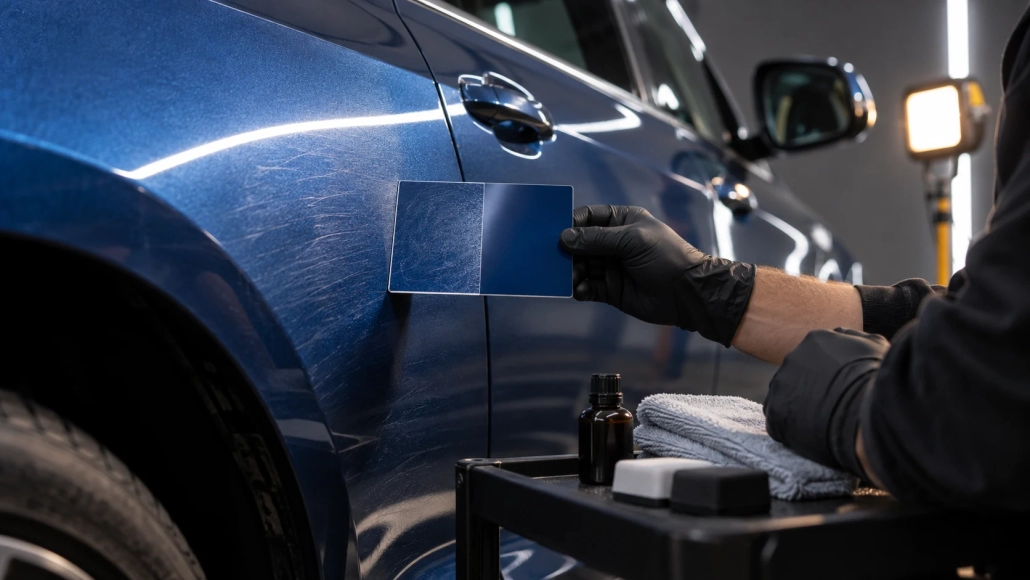
An all-in-one polish can deliberately leave protection while improving appearance. That can be appropriate as a finished service. When ceramic coating is planned next, the deposited layer becomes a compatibility question that should be resolved before polishing.
Read whether the product cleans, corrects, fills, waxes, seals or combines functions. Product names are not consistent enough to infer those details.
Ask the supplier for current guidance if the description is vague. A claim of easy application says nothing about whether a later coating is supported.
Check the coating manufacturer’s instructions for acceptable substrates and preparation. Do not assume that a generic solvent wipe will reliably remove every protective component without affecting the paint.
If the combination is documented, follow its complete method. If it is not, a dedicated correction polish may provide a more clearly defined route.
Multifunction products can change appearance through more than abrasion. Evaluate the result using an inspection method appropriate to the intended service.
Do not advertise all visible improvement as permanent defect removal unless that conclusion is supported by the cleaned surface and the product’s function.
For a polish-and-protect package, the all-in-one may be the final treatment. For a separate ceramic installation, choose a sequence whose compatibility and cleanup are explicit.
Compare total labour rather than assuming one bottle always saves a stage. Removing an unwanted protective residue can erase the time supposedly saved earlier.
Record the actual products and preparation. This helps explain the result to the owner and supports future troubleshooting.
The central decision is not whether all-in-one products are good or bad. It is whether their intended deposited finish belongs in the planned service and whether the next treatment is documented to work with it.
Browse the complete car polish and compound guide.
These references illustrate named product systems. Use the current instructions for the exact product, pad and machine in your own process.
For NANOLAB protection selection and application requirements, consult the technical documentation or contact NANOLAB with the intended surface and process.
Plan the transition from correction to protection around an accepted finish, compatible residue removal and the chosen coating's actual application requirements.
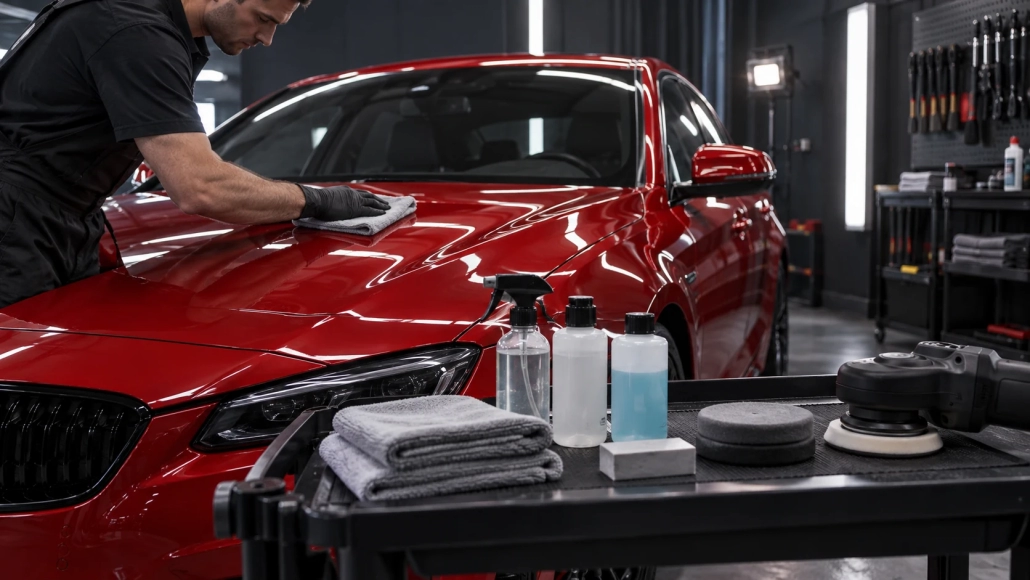
Decide whether a post-polish wash belongs in the workflow by residue, contamination and protection instructions, while avoiding new contact marks.
Use inspection and a test area to decide whether polishing is needed, how much correction is sensible and which defects should remain.

 Should You Wash the Car After Polishing and Before Protection?