






A full polishing range.
From cutting and one-step correction to final finishing.
Specialist chemistry. Expert application.
 QUARTZ99 / CERAMIC BASE COAT
The foundation of your coating system.
A layerable quartz base coat designed for mechanical protection. Pair it with a suitable top coat to create the final finish.
For application by NANOLAB certified installers only.
Four formulas. Extended working time. Find the coating for your finish.
Explore the BEAST family of ceramic coatings.
Find the coating for each exterior surface.
 PPF & VINYLGLOSSProtection for glossy films and wraps.Discover
 MATTE & SATINMATTEProtection that respects the finish.Discover
 GLASSWINDOWSExplore dedicated glass protection.Discover
 WHEEL PROTECTIONWHEELSA dedicated coating for your wheels.Discover
 TRIM PROTECTIONPLASTICProtection for plastic surfaces.Discover
Dedicated care for the surfaces inside.
 LEATHER SURFACESLEATHERDiscover NANOLAB leather protection.Discover PLASTIC SURFACESPLASTICProtection for interior plastic surfaces.Discover TEXTILE SURFACESFABRICExplore the latest fabric formulation.Discover
Spray protection, maintenance and upcoming wash products.
 MAINTENANCEBEAST 365Explore the BEAST maintenance range.Discover
Next in washing, cleaning & care.
Ceramic protection for boats and yachts.
An easy-to-apply ceramic coating with an established track record on boats and yachts around the world.
Results vary with surface preparation, exposure and maintenance.
Read 50 MARINE guides →Explore MARINEProtection for the surfaces you live with.
A look at what we’re developing.
From cutting and one-step correction to final finishing.
A wider range for professional vehicle care.
Taking shape alongside BEAST & MATRIX.
Practical guidance for your next coating project.
Explore all guides →
Compare rotary and DA movements by working characteristics, control and intended task without treating either machine as universally superior.
Updated · NANOLAB Knowledge
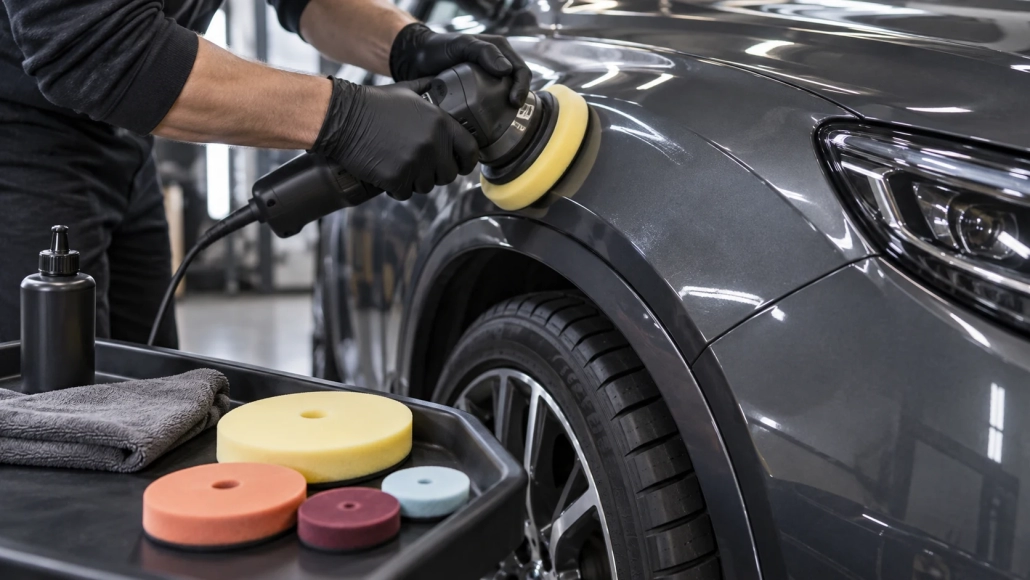
Rotary and dual-action tools move the pad differently. That affects handling, correction behaviour and the technique required. Choosing between them is a task decision; it should not become a contest over which machine is professional.
A rotary spins around a central axis. A dual-action tool also moves the backing plate through an orbit, with either free or mechanically driven rotation depending on its design.
These differences influence how the machine responds to contact and load. They also explain why pads and liquids can have movement-specific instructions.
Consider panel access, paint condition and the technician’s training. A tool that performs efficiently in experienced hands may be difficult for a beginner to control. Small contours can require a different arrangement from broad open panels.
Neither movement removes the need to identify vulnerable edges, previous repairs or finish failure. A DA can still damage paint, and a rotary is not automatically the correct answer to every stubborn defect.
Use supported pad and liquid combinations for each machine. Judge correction and the finishing stage needed afterward. Comparing a rotary cutting system with a DA finishing pad tells you little about the machines’ relative capability.
Include handling, fatigue, cleanup and refinement when considering productivity. A strong first-stage result is only part of the total job.
A studio may use one movement for selected correction and another for refinement or access. That is useful when tests demonstrate a benefit and technicians can reproduce the process.
Record the tool used for each stage, especially if handing the job to another operator. Instructions such as polish at speed four are incomplete without a model and supported setup.
Choose the machine that helps deliver the intended finish with predictable control. Training and a verified process are more meaningful than a rule that every car should be corrected with one movement.
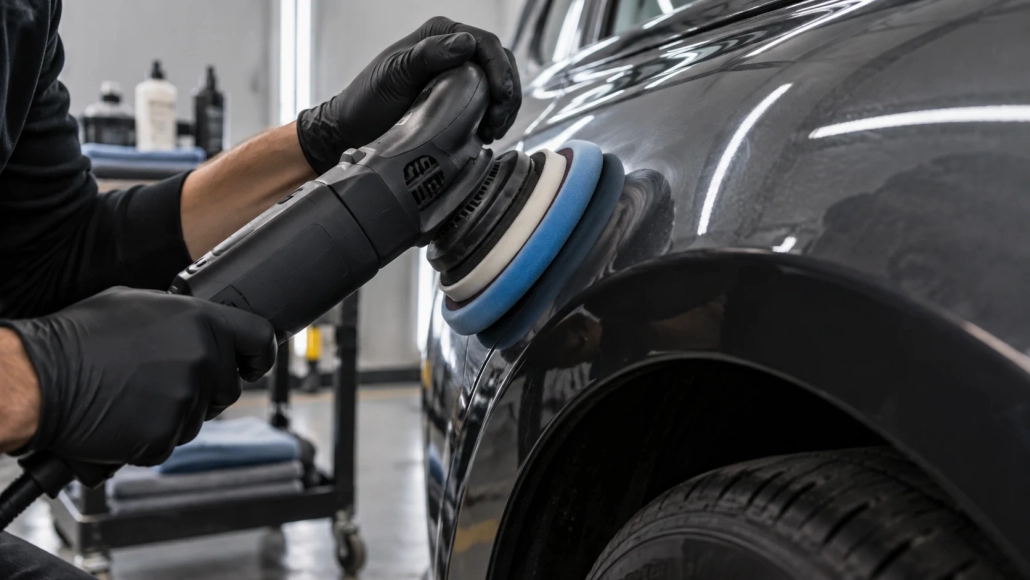
Choose a dual-action polish by machine movement, defect level and pad system, then validate correction and finish before working around the vehicle.
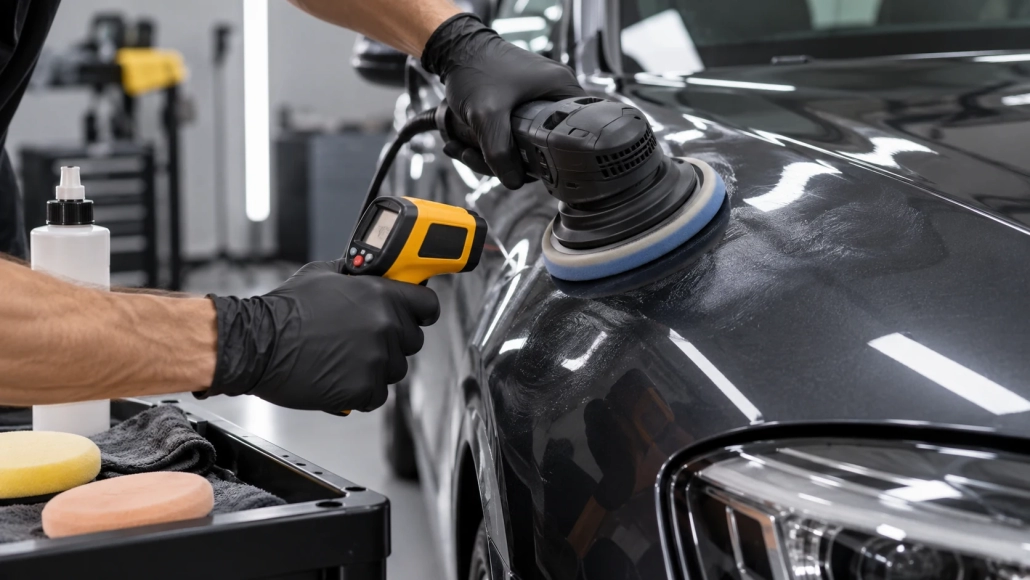
Understand how free-spinning and gear-driven DA movements respond to load and what that means for pad selection, handling and process records.
Confirm the machine, plate and pad combination before polishing so attachment, clearance and operating limits suit the intended work.

 Free-Spinning vs Forced-Rotation DA Polishers