






A full polishing range.
From cutting and one-step correction to final finishing.
Specialist chemistry. Expert application.
 QUARTZ99 / CERAMIC BASE COAT
The foundation of your coating system.
A layerable quartz base coat designed for mechanical protection. Pair it with a suitable top coat to create the final finish.
For application by NANOLAB certified installers only.
Four formulas. Extended working time. Find the coating for your finish.
Explore the BEAST family of ceramic coatings.
Find the coating for each exterior surface.
 PPF & VINYLGLOSSProtection for glossy films and wraps.Discover
 MATTE & SATINMATTEProtection that respects the finish.Discover
 GLASSWINDOWSExplore dedicated glass protection.Discover
 WHEEL PROTECTIONWHEELSA dedicated coating for your wheels.Discover
 TRIM PROTECTIONPLASTICProtection for plastic surfaces.Discover
Dedicated care for the surfaces inside.
 LEATHER SURFACESLEATHERDiscover NANOLAB leather protection.Discover PLASTIC SURFACESPLASTICProtection for interior plastic surfaces.Discover TEXTILE SURFACESFABRICExplore the latest fabric formulation.Discover
Spray protection, maintenance and upcoming wash products.
 MAINTENANCEBEAST 365Explore the BEAST maintenance range.Discover
Next in washing, cleaning & care.
Ceramic protection for boats and yachts.
An easy-to-apply ceramic coating with an established track record on boats and yachts around the world.
Results vary with surface preparation, exposure and maintenance.
Read 50 MARINE guides →Explore MARINEProtection for the surfaces you live with.
A look at what we’re developing.
From cutting and one-step correction to final finishing.
A wider range for professional vehicle care.
Taking shape alongside BEAST & MATRIX.
Practical guidance for your next coating project.
Explore all guides →
Practical guides for vehicle care, boats, living spaces, shower glass, stainless steel and private-label coating projects.
Explore 3219 guides, covering surface preparation, product selection, application and everyday maintenance.

Use work sampling to estimate where detailing time goes without continuously timing every operator movement or confusing activity with useful output.
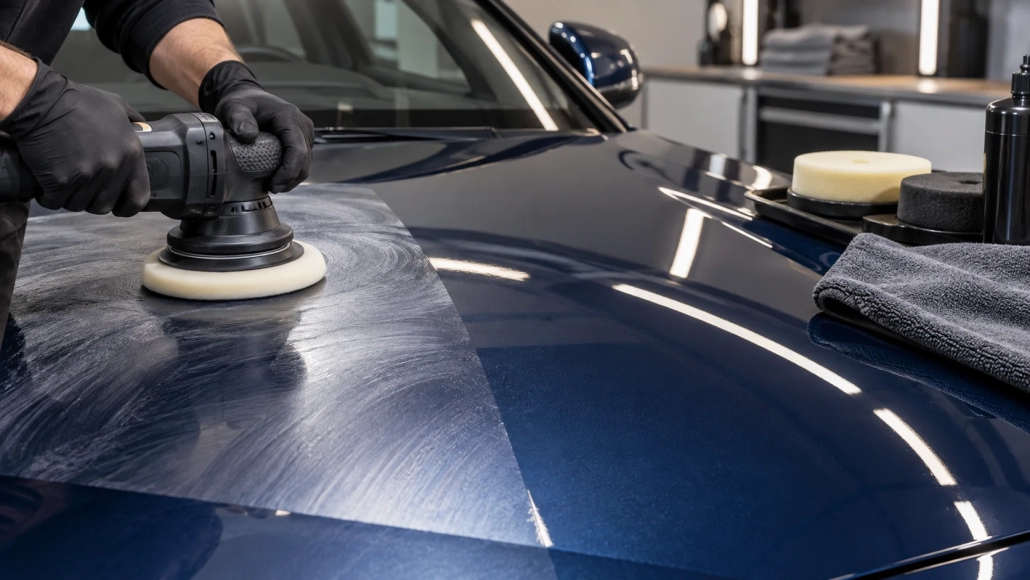
Scale a polishing test spot into a whole-car estimate by adding geometry, setup, cleanup and inspection instead of multiplying area alone.
Use coded polishing references and repeat scoring to train inspectors to recognise the agreed finish without relying on product labels or operator reputation.
Allocate compound consumption across shared jobs using a defined issue-and-return method rather than estimating from the bottle’s final level.
Agree paint-finish acceptance under relevant lighting before delivery so a change in viewing conditions does not create an avoidable surprise.
Trace film identity, storage and installation history so a coating trial represents the PPF actually fitted to the vehicle.
Identify lifted or stressed film edges before coating, and keep installation correction separate from surface-protection work.
Locate apparent squeegee lines relative to the film surface before choosing cleaning, installation review or any corrective action.
Coordinate film installation, dust control and approved cleaning so airborne particles are not trapped in a subsequent coating step.
Map bumper film edges, deep recesses and vehicle sensors before selecting a practical, approved coating application sequence.
Include film-edge locations and the film maker’s washing instructions in the care brief for a coated PPF installation.
Keep paint and PPF zones distinct when tracking coating maintenance, especially where one vehicle carries several surface systems.