






A full polishing range.
From cutting and one-step correction to final finishing.
Specialist chemistry. Expert application.
 QUARTZ99 / CERAMIC BASE COAT
The foundation of your coating system.
A layerable quartz base coat designed for mechanical protection. Pair it with a suitable top coat to create the final finish.
For application by NANOLAB certified installers only.
Four formulas. Extended working time. Find the coating for your finish.
Explore the BEAST family of ceramic coatings.
Find the coating for each exterior surface.
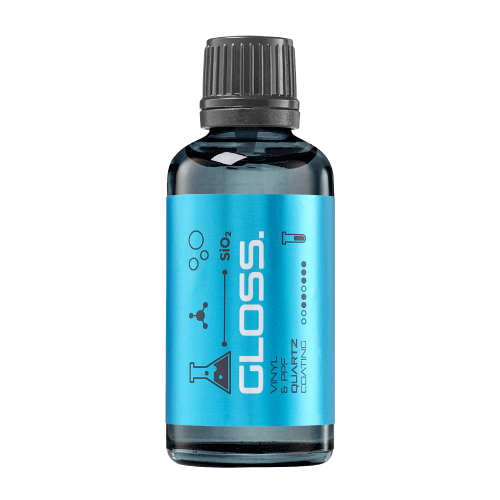
 PPF & VINYLGLOSSProtection for glossy films and wraps.Discover
 MATTE & SATINMATTEProtection that respects the finish.Discover
 GLASSWINDOWSExplore dedicated glass protection.Discover
 WHEEL PROTECTIONWHEELSA dedicated coating for your wheels.Discover
 TRIM PROTECTIONPLASTICProtection for plastic surfaces.Discover
Dedicated care for the surfaces inside.
 LEATHER SURFACESLEATHERDiscover NANOLAB leather protection.Discover PLASTIC SURFACESPLASTICProtection for interior plastic surfaces.Discover TEXTILE SURFACESFABRICExplore the latest fabric formulation.Discover
Spray protection, maintenance and upcoming wash products.
 MAINTENANCEBEAST 365Explore the BEAST maintenance range.Discover
Next in washing, cleaning & care.
Ceramic protection for boats and yachts.
An easy-to-apply ceramic coating with an established track record on boats and yachts around the world.
Results vary with surface preparation, exposure and maintenance.
Read 50 MARINE guides →Explore MARINEProtection for the surfaces you live with.
A look at what we’re developing.
From cutting and one-step correction to final finishing.
A wider range for professional vehicle care.
Taking shape alongside BEAST & MATRIX.
Practical guidance for your next coating project.
Explore all guides →
Understand film coverage, preparation, installation checks, edge care and compatible NANOLAB coatings for PPF.
A pale adhesive-line appearance in PPF needs installer assessment before a coating service. Coating the outside does not diagnose the film-to-paint interface.
A distorted reflection over PPF can have several causes. Distinguish outer-surface residue from an installation-related appearance before polishing or coating.
A newly replaced matte-film section can look different from neighbouring sections for reasons that need to be separated before treatment.
A visible boundary on partial PPF may be an optical edge or removable contamination. Establish which observation remains after appropriate cleaning.
Marks noticed after removing a car cover should be documented before applying heat or polishing. The observation does not by itself establish the cause.
A streak visible during wiping may disappear after proper removal, while another may remain in the finish. Judge PPF after the supported cleaning process is complete.
A film seam introduces an installation boundary as well as a coating boundary. Map it before spreading or levelling a coating nearby.
Coloured film becomes the visible exterior finish. Agree its accepted appearance before introducing a coating or topper that could complicate the comparison.
A film care plan needs the actual product identity. Use installation records instead of guessing from water behaviour or a brand logo alone.
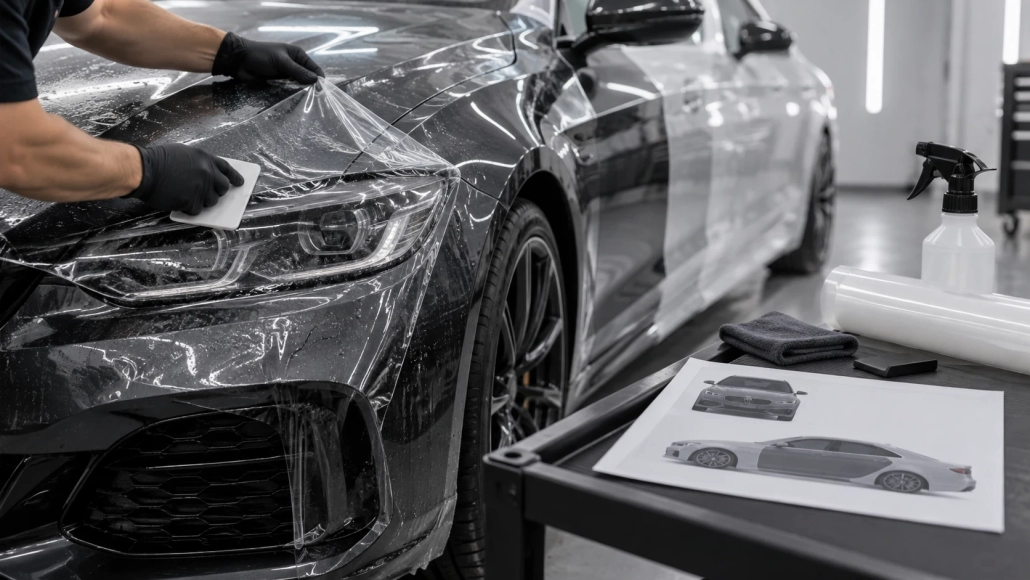
Plan PPF coverage around impact exposure, appearance boundaries, existing paint condition and the care routine for the whole vehicle.
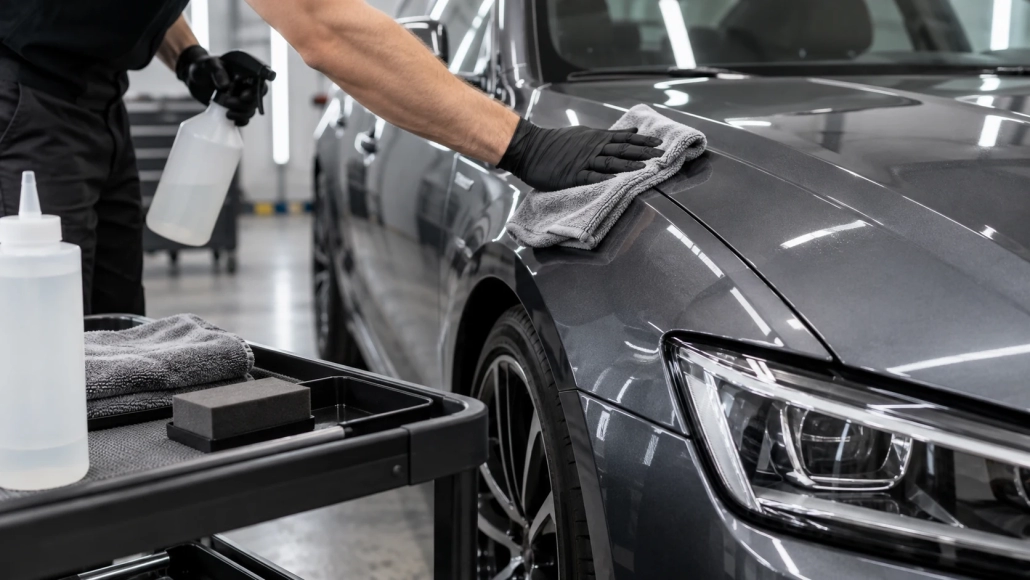
Prepare paint for PPF by agreeing the finish, cleaning sequence and adhesion requirements with the film installer before installation.
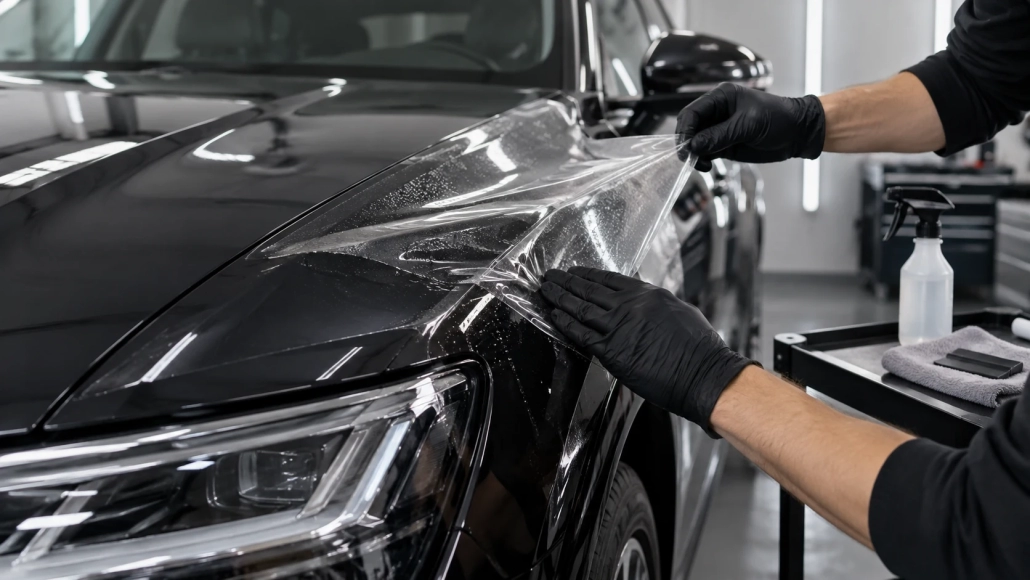
Discuss existing ceramic protection with the PPF installer and establish the required surface preparation before film installation.