






A full polishing range.
From cutting and one-step correction to final finishing.
Specialist chemistry. Expert application.
 QUARTZ99 / CERAMIC BASE COAT
The foundation of your coating system.
A layerable quartz base coat designed for mechanical protection. Pair it with a suitable top coat to create the final finish.
For application by NANOLAB certified installers only.
Four formulas. Extended working time. Find the coating for your finish.
Explore the BEAST family of ceramic coatings.
Find the coating for each exterior surface.
 PPF & VINYLGLOSSProtection for glossy films and wraps.Discover
 MATTE & SATINMATTEProtection that respects the finish.Discover
 GLASSWINDOWSExplore dedicated glass protection.Discover
 WHEEL PROTECTIONWHEELSA dedicated coating for your wheels.Discover
 TRIM PROTECTIONPLASTICProtection for plastic surfaces.Discover
Dedicated care for the surfaces inside.
 LEATHER SURFACESLEATHERDiscover NANOLAB leather protection.Discover PLASTIC SURFACESPLASTICProtection for interior plastic surfaces.Discover TEXTILE SURFACESFABRICExplore the latest fabric formulation.Discover
Spray protection, maintenance and upcoming wash products.
 MAINTENANCEBEAST 365Explore the BEAST maintenance range.Discover
Next in washing, cleaning & care.
Ceramic protection for boats and yachts.
An easy-to-apply ceramic coating with an established track record on boats and yachts around the world.
Results vary with surface preparation, exposure and maintenance.
Read 50 MARINE guides →Explore MARINEProtection for the surfaces you live with.
A look at what we’re developing.
From cutting and one-step correction to final finishing.
A wider range for professional vehicle care.
Taking shape alongside BEAST & MATRIX.
Practical guidance for your next coating project.
Explore all guides →
Practical guides for vehicle care, boats, living spaces, shower glass, stainless steel and private-label coating projects.
Explore 3219 guides, covering surface preparation, product selection, application and everyday maintenance.
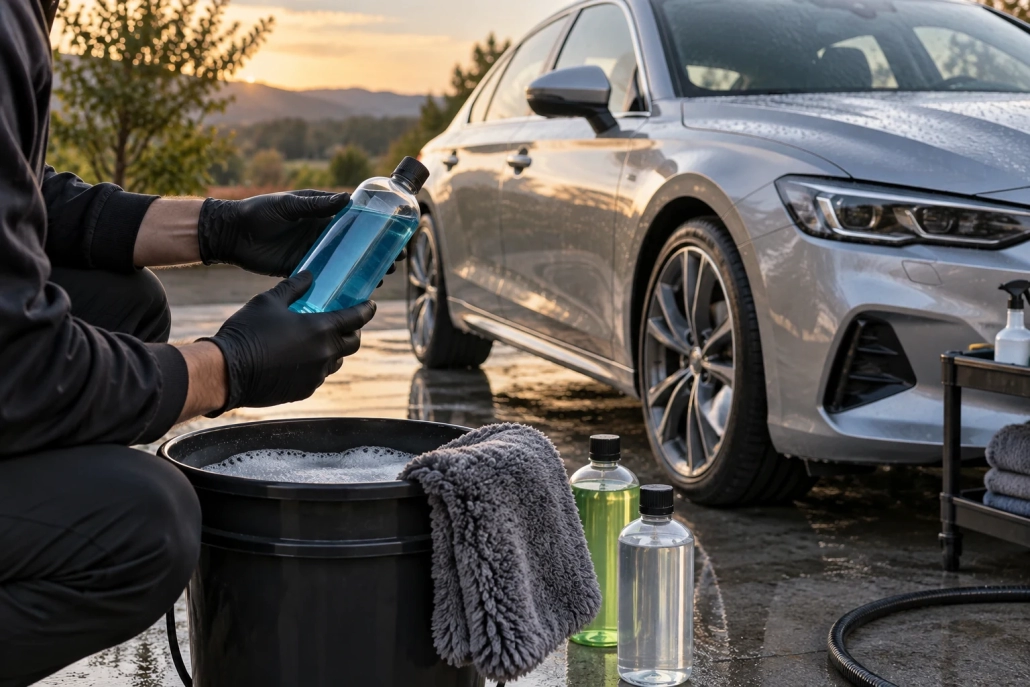
Check wash-bay splashback and runoff routes when a vehicle becomes dirty again immediately after its final rinse.
Set wash-mitt changes from contamination and task conditions rather than assuming every panel places the same load on the tool.
Include delayed water release from mirrors and trim in the drying routine so trapped rinse water does not create fresh deposits on finished panels.
Calculate shampoo concentration after bucket top-ups from the liquid actually remaining, and recognise when contamination makes calculation alone unhelpful.
Build a maintenance-product history before judging the underlying ceramic coating when several toppers, drying aids or wash products have been used.
Assess foam drainage on vertical panels through coverage, supported contact time and cleaning outcome rather than maximum foam thickness.
Check water held in hoses and downstream equipment when the first rinse differs from later flow, especially after long idle periods.
Plan outdoor drying around unequal sun exposure and surface conditions so the wash sequence reduces avoidable water drying on coated panels.
Match water volume, surface condition and drying geometry when demonstrating two rinse-water sources on coated surfaces.
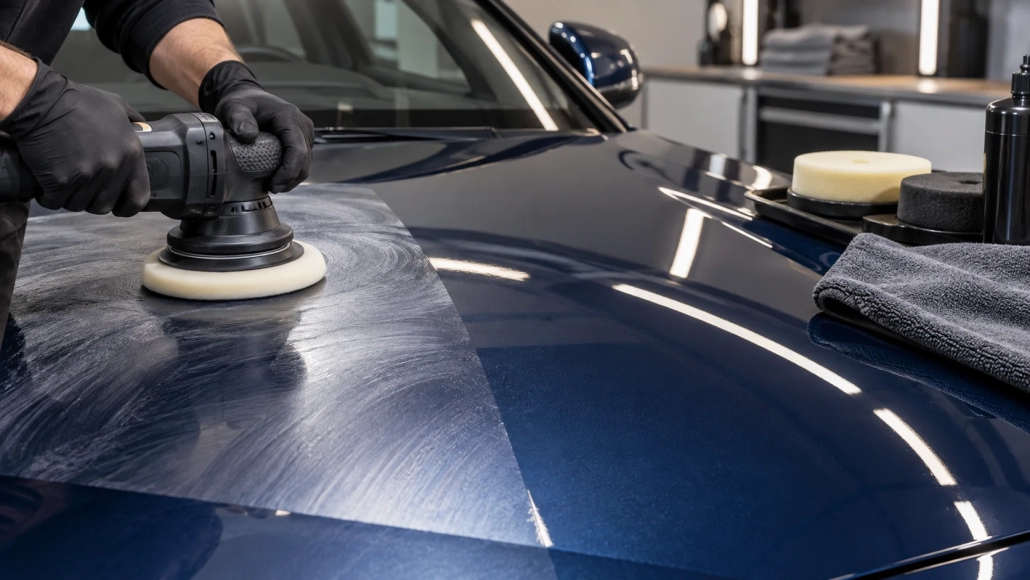
Control initial pad loading when comparing polishing systems so a fresh dry pad and a heavily loaded pad do not create an unfair trial.
Use the improvement from each compounding set to decide when further work has diminishing value, while respecting the paint’s correction limits.
Recheck a polishing system on representative curves because pad contact and machine behaviour can differ from a flat test spot.