






A full polishing range.
From cutting and one-step correction to final finishing.
Specialist chemistry. Expert application.
 QUARTZ99 / CERAMIC BASE COAT
The foundation of your coating system.
A layerable quartz base coat designed for mechanical protection. Pair it with a suitable top coat to create the final finish.
For application by NANOLAB certified installers only.
Four formulas. Extended working time. Find the coating for your finish.
Explore the BEAST family of ceramic coatings.
Find the coating for each exterior surface.
 PPF & VINYLGLOSSProtection for glossy films and wraps.Discover
 MATTE & SATINMATTEProtection that respects the finish.Discover
 GLASSWINDOWSExplore dedicated glass protection.Discover
 WHEEL PROTECTIONWHEELSA dedicated coating for your wheels.Discover
 TRIM PROTECTIONPLASTICProtection for plastic surfaces.Discover
Dedicated care for the surfaces inside.
 LEATHER SURFACESLEATHERDiscover NANOLAB leather protection.Discover PLASTIC SURFACESPLASTICProtection for interior plastic surfaces.Discover TEXTILE SURFACESFABRICExplore the latest fabric formulation.Discover
Spray protection, maintenance and upcoming wash products.
 MAINTENANCEBEAST 365Explore the BEAST maintenance range.Discover
Next in washing, cleaning & care.
Ceramic protection for boats and yachts.
An easy-to-apply ceramic coating with an established track record on boats and yachts around the world.
Results vary with surface preparation, exposure and maintenance.
Read 50 MARINE guides →Explore MARINEProtection for the surfaces you live with.
A look at what we’re developing.
From cutting and one-step correction to final finishing.
A wider range for professional vehicle care.
Taking shape alongside BEAST & MATRIX.
Practical guidance for your next coating project.
Explore all guides →
Include delayed water release from mirrors and trim in the drying routine so trapped rinse water does not create fresh deposits on finished panels.
Updated · NANOLAB Knowledge
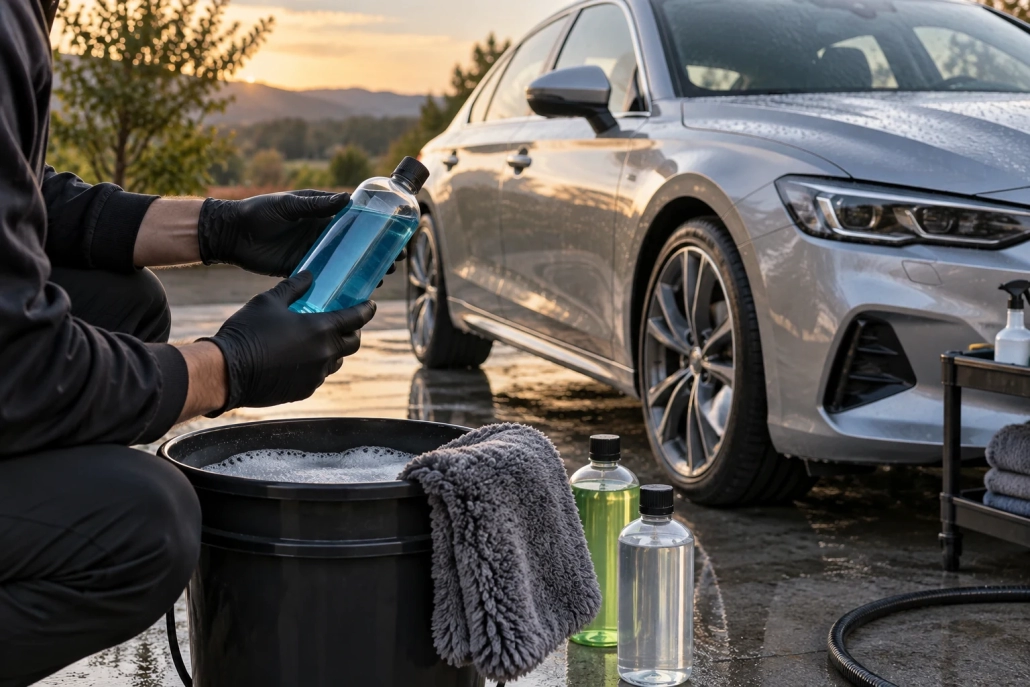
A vehicle may look dry until a mirror housing releases another stream of water. If that water dries on the door, the customer sees new spots despite a completed wash. Treat delayed drainage as part of the drying task.
Observe mirrors, trim joints, handles and other features during ordinary drying. Record where water emerges and which receiving surfaces are affected. Do not dismantle components merely to improve a routine wash unless that work is authorised and appropriate.
Follow vehicle, equipment and coating instructions for towels or assisted air drying. Keep air sources suitable for the task and avoid forcing water into seals or functional components. A stronger air stream is not automatically a better method.
| Stage | Purpose |
|---|---|
| Initial drying | Remove accessible water |
| Normal permitted movement | Reveal retained water where appropriate |
| Final panel check | Catch new trails before delivery |
Dry the known problem areas through the supported method, complete another suitable finishing task, then recheck the receiving panels. The interval should fit the observed drainage pattern rather than become an arbitrary universal waiting time.
If one component continues releasing contaminated liquid, investigate its condition and maintenance history. Repeatedly applying a drying aid over the trail may obscure the source without solving it.
Accepted drying means the surface remains in the agreed condition through the final inspection. Including delayed drainage prevents a small overlooked reservoir from undoing the visible result of the entire wash.
Ask NANOLAB about your surface and intended use. For application and care, use the current instructions for the exact product.
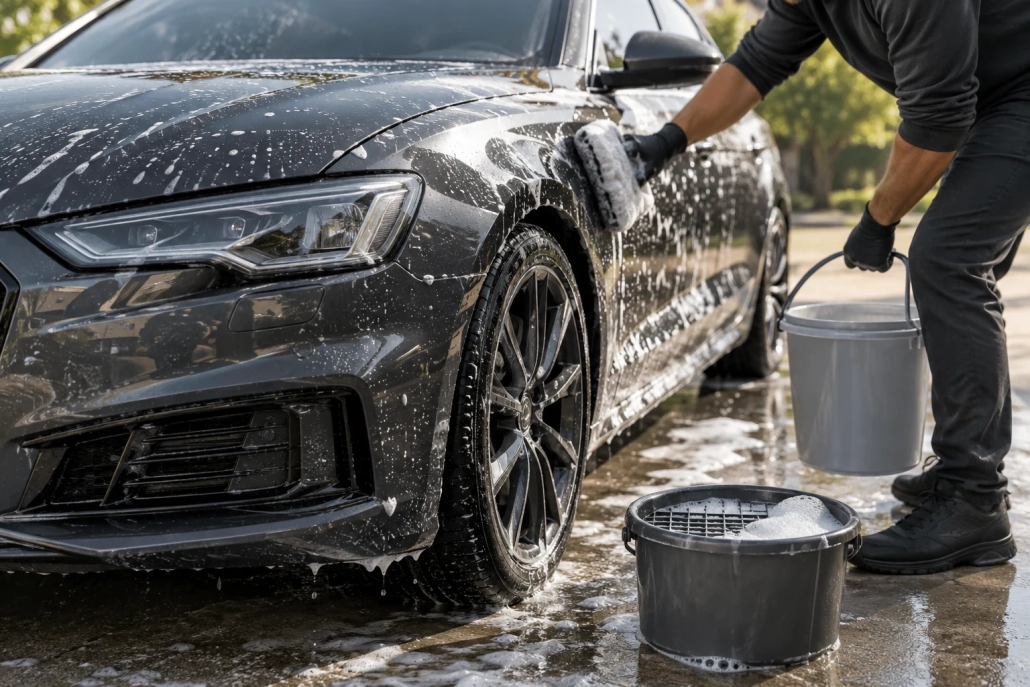
Build a gentle wash routine that removes loose grit before contact, keeps wheel tools separate and ends with careful rinsing and drying.

Plan ceramic shampoo use in hot conditions with suitable surface temperature, manageable sections and a rinse-and-dry process that follows the exact product.
Calculate shampoo concentration after bucket top-ups from the liquid actually remaining, and recognise when contamination makes calculation alone unhelpful.

 Topping Up a Shampoo Bucket: Keep the Concentration Calculation Honest