






A full polishing range.
From cutting and one-step correction to final finishing.
Specialist chemistry. Expert application.
 QUARTZ99 / CERAMIC BASE COAT
The foundation of your coating system.
A layerable quartz base coat designed for mechanical protection. Pair it with a suitable top coat to create the final finish.
For application by NANOLAB certified installers only.
Four formulas. Extended working time. Find the coating for your finish.
Explore the BEAST family of ceramic coatings.
Find the coating for each exterior surface.
 PPF & VINYLGLOSSProtection for glossy films and wraps.Discover
 MATTE & SATINMATTEProtection that respects the finish.Discover
 GLASSWINDOWSExplore dedicated glass protection.Discover
 WHEEL PROTECTIONWHEELSA dedicated coating for your wheels.Discover
 TRIM PROTECTIONPLASTICProtection for plastic surfaces.Discover
Dedicated care for the surfaces inside.
 LEATHER SURFACESLEATHERDiscover NANOLAB leather protection.Discover PLASTIC SURFACESPLASTICProtection for interior plastic surfaces.Discover TEXTILE SURFACESFABRICExplore the latest fabric formulation.Discover
Spray protection, maintenance and upcoming wash products.
 MAINTENANCEBEAST 365Explore the BEAST maintenance range.Discover
Next in washing, cleaning & care.
Ceramic protection for boats and yachts.
An easy-to-apply ceramic coating with an established track record on boats and yachts around the world.
Results vary with surface preparation, exposure and maintenance.
Read 50 MARINE guides →Explore MARINEProtection for the surfaces you live with.
A look at what we’re developing.
From cutting and one-step correction to final finishing.
A wider range for professional vehicle care.
Taking shape alongside BEAST & MATRIX.
Practical guidance for your next coating project.
Explore all guides →
Plan outdoor drying around unequal sun exposure and surface conditions so the wash sequence reduces avoidable water drying on coated panels.
Updated · NANOLAB Knowledge
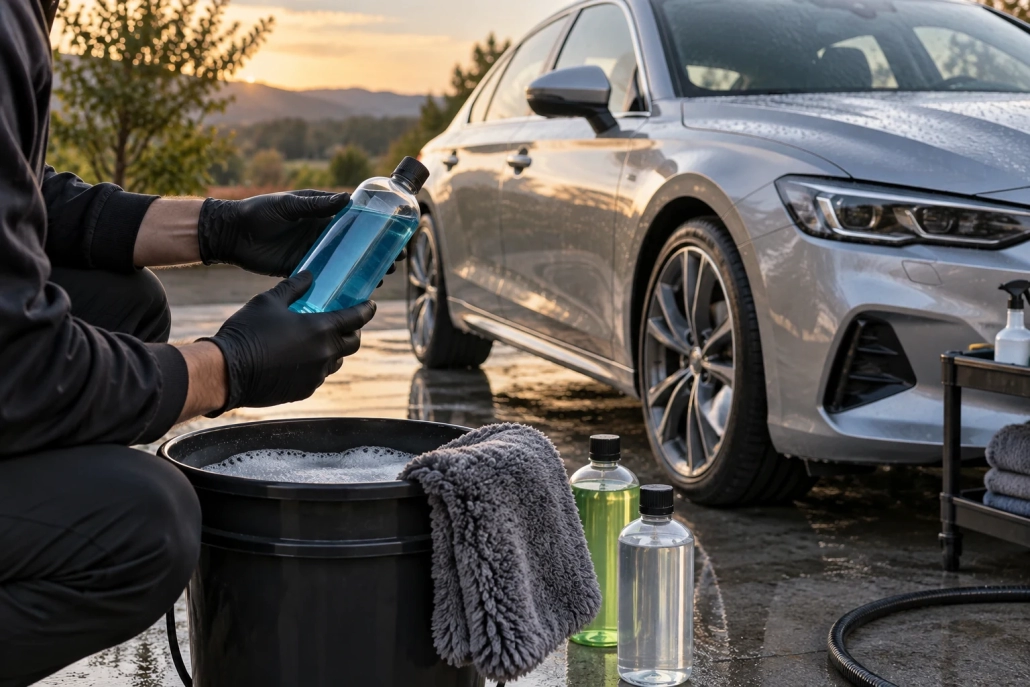
One side of a vehicle can dry much faster than the other outdoors. A fixed drying route may leave the most exposed panels until last, increasing the chance of visible deposits.
Use a location and method allowed by the products and vehicle materials. Check sun exposure, wind and actual surface condition. If the task cannot be completed within the supported conditions, change the location or schedule rather than forcing the process.
Organise washing, rinsing and drying so product and water do not remain unattended on rapidly drying areas. Keep the sequence compatible with the cleaner’s instructions. A section should be sized for the operator’s real capacity, not for an ideal demonstration.
| Condition | Planning response |
|---|---|
| Unequal sun exposure | Reassess the order of supported work |
| Strong drying airflow | Reduce unattended wet area |
| Limited clean towels | Prepare sufficient suitable stock before starting |
Mirrors and trim may release water after the main panels are dry. Recheck known locations during final inspection so a new trail does not dry unnoticed.
Document any spots and the conditions under which they appeared. Do not assume that a coating guarantees spot-free drying under every water and exposure combination.
A successful outdoor routine uses supported chemistry, realistic sections and a drying order matched to the actual vehicle. If those conditions cannot be maintained, postponing or relocating the task can prevent more work than adding another maintenance product afterwards.
Ask NANOLAB about your surface and intended use. For application and care, use the current instructions for the exact product.
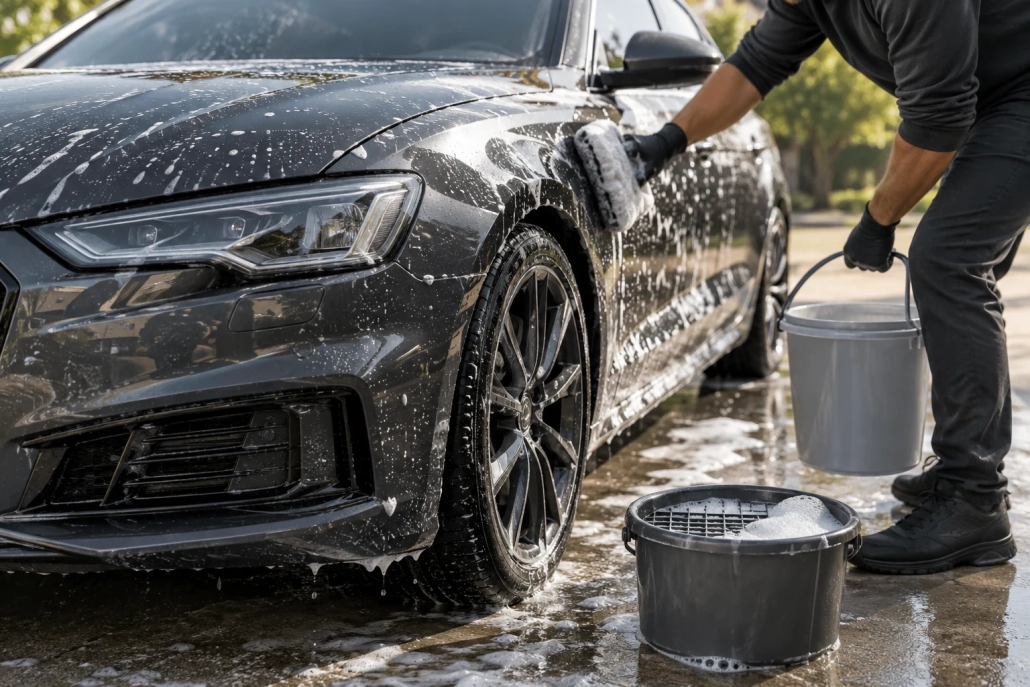
Build a gentle wash routine that removes loose grit before contact, keeps wheel tools separate and ends with careful rinsing and drying.
Drying outdoors becomes difficult when wind keeps depositing fresh dust on clean panels.
Match water volume, surface condition and drying geometry when demonstrating two rinse-water sources on coated surfaces.
 Demonstrating Two Rinse Waters: Match the Applied Volume and Drying Conditi...