






A full polishing range.
From cutting and one-step correction to final finishing.
Specialist chemistry. Expert application.
 QUARTZ99 / CERAMIC BASE COAT
The foundation of your coating system.
A layerable quartz base coat designed for mechanical protection. Pair it with a suitable top coat to create the final finish.
For application by NANOLAB certified installers only.
Four formulas. Extended working time. Find the coating for your finish.
Explore the BEAST family of ceramic coatings.
Find the coating for each exterior surface.
 PPF & VINYLGLOSSProtection for glossy films and wraps.Discover
 MATTE & SATINMATTEProtection that respects the finish.Discover
 GLASSWINDOWSExplore dedicated glass protection.Discover
 WHEEL PROTECTIONWHEELSA dedicated coating for your wheels.Discover
 TRIM PROTECTIONPLASTICProtection for plastic surfaces.Discover
Dedicated care for the surfaces inside.
 LEATHER SURFACESLEATHERDiscover NANOLAB leather protection.Discover PLASTIC SURFACESPLASTICProtection for interior plastic surfaces.Discover TEXTILE SURFACESFABRICExplore the latest fabric formulation.Discover
Spray protection, maintenance and upcoming wash products.
 MAINTENANCEBEAST 365Explore the BEAST maintenance range.Discover
Next in washing, cleaning & care.
Ceramic protection for boats and yachts.
An easy-to-apply ceramic coating with an established track record on boats and yachts around the world.
Results vary with surface preparation, exposure and maintenance.
Read 50 MARINE guides →Explore MARINEProtection for the surfaces you live with.
A look at what we’re developing.
From cutting and one-step correction to final finishing.
A wider range for professional vehicle care.
Taking shape alongside BEAST & MATRIX.
Practical guidance for your next coating project.
Explore all guides →
Practical guides for vehicle care, boats, living spaces, shower glass, stainless steel and private-label coating projects.
Explore 3219 guides, covering surface preparation, product selection, application and everyday maintenance.
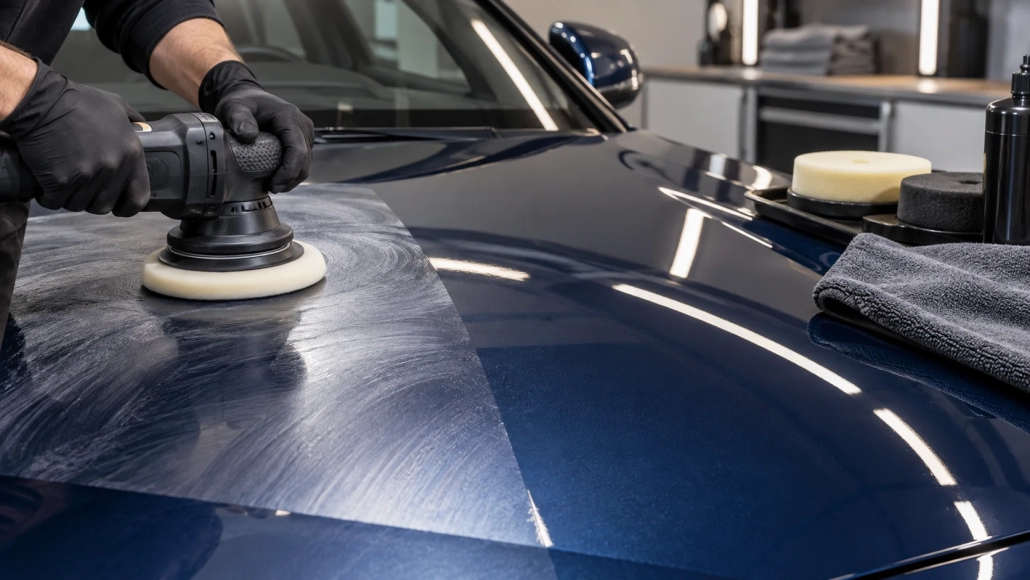
Inspect polished paint under more than one controlled light condition to distinguish a robust finish from one that looks acceptable only under a single lamp.
Include seam and trim cleanup when comparing compounds so a fast cutting stage does not hide a slower complete paint-correction process.
Treat a backing-plate change as a polishing-system change and recheck the result before comparing it with an earlier compound or pad trial.
Observe the rotation behaviour of a free-spinning DA pad on representative contours instead of assuming the machine setting guarantees the same motion everywhere.
Control inspection-wipe technique when comparing polished surfaces so the assessment step does not introduce different marks or residue removal.
Plan refinement around raised body lines using surface assessment and suitable tooling rather than extending a flat-panel polishing method automatically.
Estimate paint-correction work from the distribution of defects and surface types instead of relying only on vehicle size or a single test spot.
Use a defect Pareto chart to prioritise recurring polishing rework, while keeping severity and inspection opportunity separate from simple counts.
Track waiting between polishing and final inspection so workshop capacity improvements target delays as well as machine time.
Record unplanned refining separately from the quoted polishing sequence so repeated finishing work becomes visible and can be reduced.
Compare polishing productivity within similar job types before judging whether a team, compound or process has become faster.
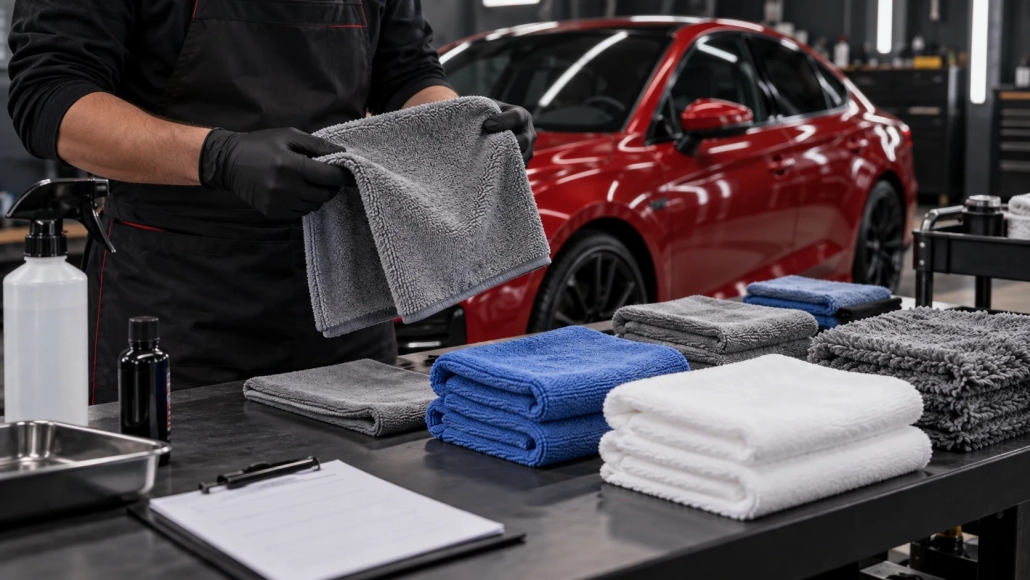
Plan polishing-pad stock around cleaning, drying and inspection lead time so operators are not forced to reuse unsuitable pads during busy work.