






A full polishing range.
From cutting and one-step correction to final finishing.
Specialist chemistry. Expert application.
 QUARTZ99 / CERAMIC BASE COAT
The foundation of your coating system.
A layerable quartz base coat designed for mechanical protection. Pair it with a suitable top coat to create the final finish.
For application by NANOLAB certified installers only.
Four formulas. Extended working time. Find the coating for your finish.
Explore the BEAST family of ceramic coatings.
Find the coating for each exterior surface.
 PPF & VINYLGLOSSProtection for glossy films and wraps.Discover
 MATTE & SATINMATTEProtection that respects the finish.Discover
 GLASSWINDOWSExplore dedicated glass protection.Discover
 WHEEL PROTECTIONWHEELSA dedicated coating for your wheels.Discover
 TRIM PROTECTIONPLASTICProtection for plastic surfaces.Discover
Dedicated care for the surfaces inside.
 LEATHER SURFACESLEATHERDiscover NANOLAB leather protection.Discover PLASTIC SURFACESPLASTICProtection for interior plastic surfaces.Discover TEXTILE SURFACESFABRICExplore the latest fabric formulation.Discover
Spray protection, maintenance and upcoming wash products.
 MAINTENANCEBEAST 365Explore the BEAST maintenance range.Discover
Next in washing, cleaning & care.
Ceramic protection for boats and yachts.
An easy-to-apply ceramic coating with an established track record on boats and yachts around the world.
Results vary with surface preparation, exposure and maintenance.
Read 50 MARINE guides →Explore MARINEProtection for the surfaces you live with.
A look at what we’re developing.
From cutting and one-step correction to final finishing.
A wider range for professional vehicle care.
Taking shape alongside BEAST & MATRIX.
Practical guidance for your next coating project.
Explore all guides →
Treat a backing-plate change as a polishing-system change and recheck the result before comparing it with an earlier compound or pad trial.
Updated · NANOLAB Knowledge
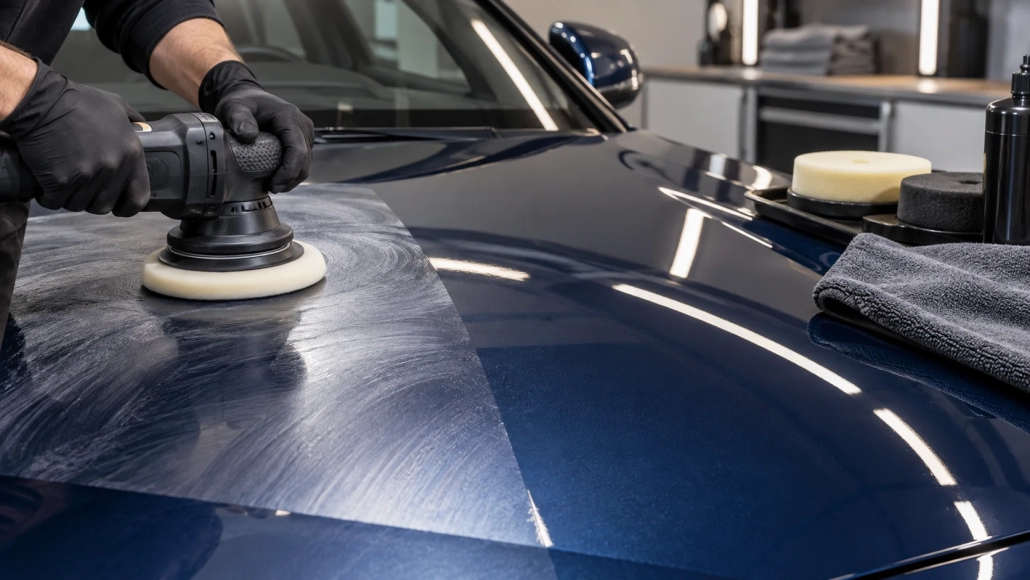
The backing plate is part of the polishing system. Changing its size, stiffness or interface can alter support and handling. A trial continued after that change is no longer identical to the original setup.
Use only components approved for the machine and suitable for the pad. Follow the equipment manufacturer’s fitting and inspection instructions. Do not improvise adapters or operate a visibly damaged assembly to complete a comparison.
| Component | Record |
|---|---|
| Machine | Model and operating mode |
| Backing plate | Exact type and size |
| Pad and interface | Material, dimensions and condition |
| Compound | Product and working procedure |
After the change, assess correction, finish and handling on a suitable area. Compare against the earlier result only with the configuration difference stated. A better finish may be real, but it cannot automatically be attributed to the compound alone.
A different plate may change how the operator controls the tool on curves. Record relevant technique adjustments and avoid forcing identical hand movements when the equipment requires a different supported approach.
If the new configuration is preferred, write it into the job instruction and training record. A statement such as use the same pad is incomplete when the supporting plate has changed.
The practical lesson is to compare complete, identified systems. That makes a workshop trial useful for purchasing, training and repeat work instead of leaving success dependent on an undocumented component.
Ask NANOLAB about your surface and intended use. For application and care, use the current instructions for the exact product.
Choose a polishing process by testing defect removal, finishing quality and clear-coat preservation rather than counting steps alone.
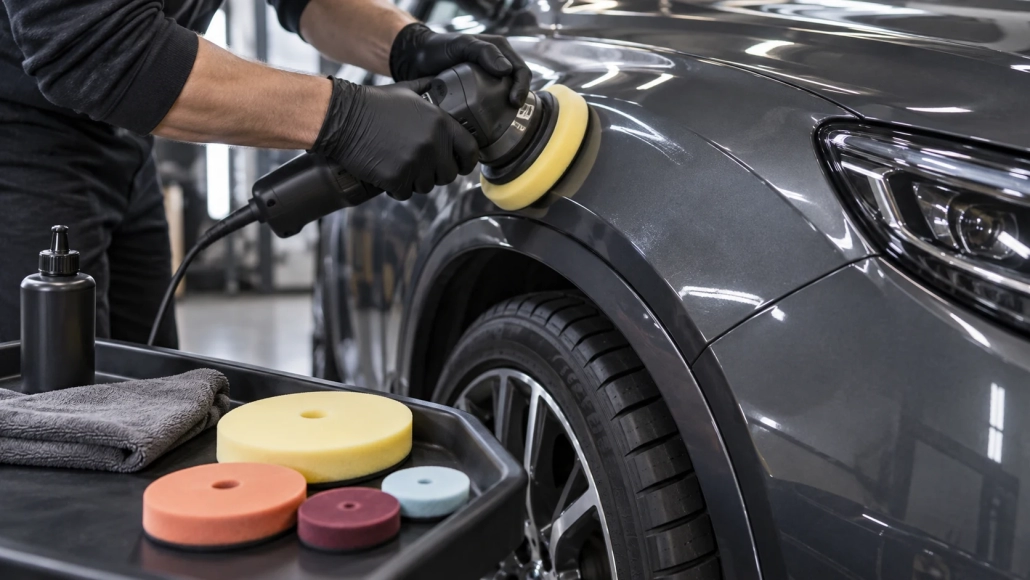
Confirm the machine, plate and pad combination before polishing so attachment, clearance and operating limits suit the intended work.
Observe the rotation behaviour of a free-spinning DA pad on representative contours instead of assuming the machine setting guarantees the same motion everywhere.
 Monitoring DA Pad Rotation on Curved Paint without Assuming It Stayed Const...