






A full polishing range.
From cutting and one-step correction to final finishing.
Specialist chemistry. Expert application.
 QUARTZ99 / CERAMIC BASE COAT
The foundation of your coating system.
A layerable quartz base coat designed for mechanical protection. Pair it with a suitable top coat to create the final finish.
For application by NANOLAB certified installers only.
Four formulas. Extended working time. Find the coating for your finish.
Explore the BEAST family of ceramic coatings.
Find the coating for each exterior surface.
 PPF & VINYLGLOSSProtection for glossy films and wraps.Discover
 MATTE & SATINMATTEProtection that respects the finish.Discover
 GLASSWINDOWSExplore dedicated glass protection.Discover
 WHEEL PROTECTIONWHEELSA dedicated coating for your wheels.Discover
 TRIM PROTECTIONPLASTICProtection for plastic surfaces.Discover
Dedicated care for the surfaces inside.
 LEATHER SURFACESLEATHERDiscover NANOLAB leather protection.Discover PLASTIC SURFACESPLASTICProtection for interior plastic surfaces.Discover TEXTILE SURFACESFABRICExplore the latest fabric formulation.Discover
Spray protection, maintenance and upcoming wash products.
 MAINTENANCEBEAST 365Explore the BEAST maintenance range.Discover
Next in washing, cleaning & care.
Ceramic protection for boats and yachts.
An easy-to-apply ceramic coating with an established track record on boats and yachts around the world.
Results vary with surface preparation, exposure and maintenance.
Read 50 MARINE guides →Explore MARINEProtection for the surfaces you live with.
A look at what we’re developing.
From cutting and one-step correction to final finishing.
A wider range for professional vehicle care.
Taking shape alongside BEAST & MATRIX.
Practical guidance for your next coating project.
Explore all guides →
Compare polishing productivity within similar job types before judging whether a team, compound or process has become faster.
Updated · NANOLAB Knowledge
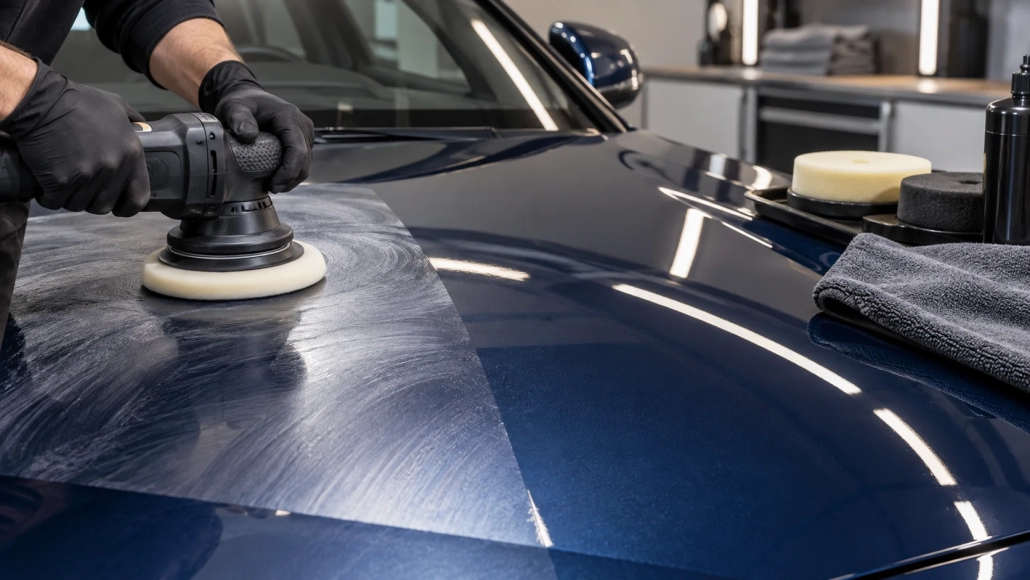
A week of enhancement jobs cannot be compared directly with a week of demanding correction work. Average hours per vehicle may change because the work changed, not because productivity improved or declined.
Group work by the agreed correction target, surface condition and major process requirements. Keep the categories simple enough for reliable use. Vehicle size can be included, but it should not replace condition and scope.
| Group | Relevant comparison |
|---|---|
| Light enhancement | Accepted time for a similar finish target |
| Multi-stage correction | Total correction and refinement effort |
| Mixed repairs or special geometry | Assessment and exception workload |
Suppose one week includes eight three-hour jobs and two eight-hour jobs: the average is four hours. Another includes two three-hour jobs and eight eight-hour jobs: the average is seven hours. The underlying task times are unchanged; the job mix explains the difference.
Compare rework and accepted finish alongside labour. A faster average achieved by accepting more defects is a change in service, not necessarily an efficiency improvement.
Estimate next week’s capacity from the expected mix instead of multiplying the number of bookings by one historical average. Review unusual jobs individually rather than forcing them into a convenient category.
This approach makes product trials and staffing discussions fairer. A compound or operator should be judged under comparable work, with the complete process recorded, rather than rewarded or penalised for the difficulty of the week’s customer vehicles.
Ask NANOLAB about your surface and intended use. For application and care, use the current instructions for the exact product.
Choose a polishing process by testing defect removal, finishing quality and clear-coat preservation rather than counting steps alone.

A shared correction job needs more than a product list. Give both operators an accepted reference that includes technique, inspection and the decision to stop.
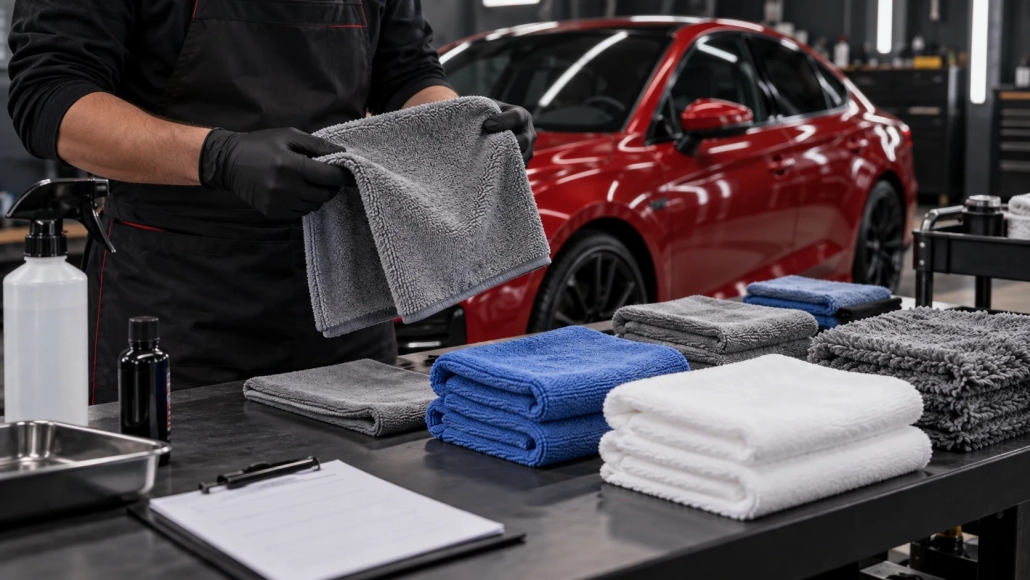
Plan polishing-pad stock around cleaning, drying and inspection lead time so operators are not forced to reuse unsuitable pads during busy work.

 Pad Laundry Lead Time and the Number of Pads a Workshop Needs