






A full polishing range.
From cutting and one-step correction to final finishing.
Specialist chemistry. Expert application.
 QUARTZ99 / CERAMIC BASE COAT
The foundation of your coating system.
A layerable quartz base coat designed for mechanical protection. Pair it with a suitable top coat to create the final finish.
For application by NANOLAB certified installers only.
Four formulas. Extended working time. Find the coating for your finish.
Explore the BEAST family of ceramic coatings.
Find the coating for each exterior surface.
 PPF & VINYLGLOSSProtection for glossy films and wraps.Discover
 MATTE & SATINMATTEProtection that respects the finish.Discover
 GLASSWINDOWSExplore dedicated glass protection.Discover
 WHEEL PROTECTIONWHEELSA dedicated coating for your wheels.Discover
 TRIM PROTECTIONPLASTICProtection for plastic surfaces.Discover
Dedicated care for the surfaces inside.
 LEATHER SURFACESLEATHERDiscover NANOLAB leather protection.Discover PLASTIC SURFACESPLASTICProtection for interior plastic surfaces.Discover TEXTILE SURFACESFABRICExplore the latest fabric formulation.Discover
Spray protection, maintenance and upcoming wash products.
 MAINTENANCEBEAST 365Explore the BEAST maintenance range.Discover
Next in washing, cleaning & care.
Ceramic protection for boats and yachts.
An easy-to-apply ceramic coating with an established track record on boats and yachts around the world.
Results vary with surface preparation, exposure and maintenance.
Read 50 MARINE guides →Explore MARINEProtection for the surfaces you live with.
A look at what we’re developing.
From cutting and one-step correction to final finishing.
A wider range for professional vehicle care.
Taking shape alongside BEAST & MATRIX.
Practical guidance for your next coating project.
Explore all guides →
Assess foam drainage on vertical panels through coverage, supported contact time and cleaning outcome rather than maximum foam thickness.
Updated · NANOLAB Knowledge
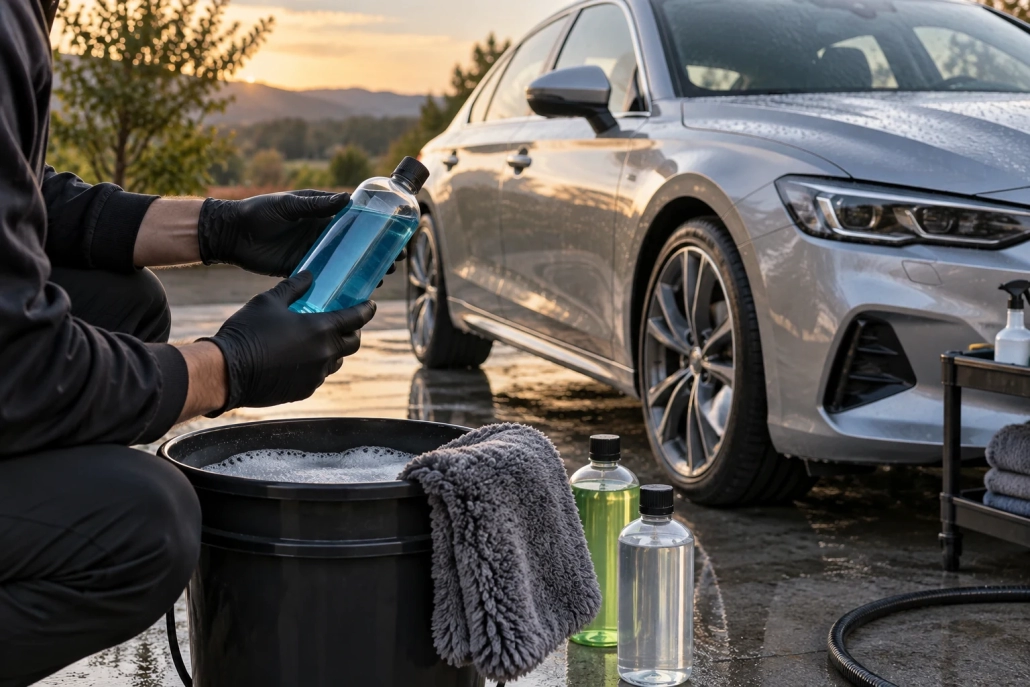
Foam on a vertical panel changes as liquid drains and bubbles evolve. A thick initial layer does not guarantee that every area experiences the same useful cleaning contact. Observe the full supported application period.
Use comparable panels, soil and temperature conditions. Record the product’s working dose and the delivery equipment. Keep the trial within the cleaner’s instructions, including any restriction on drying.
Photograph or record the same panel from a fixed position at defined times. Note where coverage becomes thin first and whether runoff concentrates at lower edges. Do not use a visually impressive initial frame as the only evidence.
| Observation | Question |
|---|---|
| Upper panel clears early | Is the supported contact still sufficient? |
| Lower edge retains product | Does rinsing remove it completely? |
| Thick foam but poor cleaning | Are chemistry, dose or soil conditions limiting? |
Compare the final dry finish and any repeat work. Include rinse demand. If two setups clean equally well, the one using less product or less rework may be preferable, provided it remains within the supported method.
Longer visible retention is not an instruction to leave the product longer. Follow the exact cleaner and coating guidance and adapt work areas to the actual conditions.
The purpose of watching drainage is to understand process consistency. It should improve coverage and rinsing decisions, not encourage an unsupported concentration or contact-time contest.
Ask NANOLAB about your surface and intended use. For application and care, use the current instructions for the exact product.

Build a gentle wash routine that removes loose grit before contact, keeps wheel tools separate and ends with careful rinsing and drying.
Compare foam height, drainage and cleaning as separate outcomes using consistent water, dilution, contact time and rinsing.
Check water held in hoses and downstream equipment when the first rinse differs from later flow, especially after long idle periods.
 The First Water from a Hose: Check Stored Water before a Rinse Comparison