






A full polishing range.
From cutting and one-step correction to final finishing.
Specialist chemistry. Expert application.
 QUARTZ99 / CERAMIC BASE COAT
The foundation of your coating system.
A layerable quartz base coat designed for mechanical protection. Pair it with a suitable top coat to create the final finish.
For application by NANOLAB certified installers only.
Four formulas. Extended working time. Find the coating for your finish.
Explore the BEAST family of ceramic coatings.
Find the coating for each exterior surface.
 PPF & VINYLGLOSSProtection for glossy films and wraps.Discover
 MATTE & SATINMATTEProtection that respects the finish.Discover
 GLASSWINDOWSExplore dedicated glass protection.Discover
 WHEEL PROTECTIONWHEELSA dedicated coating for your wheels.Discover
 TRIM PROTECTIONPLASTICProtection for plastic surfaces.Discover
Dedicated care for the surfaces inside.
 LEATHER SURFACESLEATHERDiscover NANOLAB leather protection.Discover PLASTIC SURFACESPLASTICProtection for interior plastic surfaces.Discover TEXTILE SURFACESFABRICExplore the latest fabric formulation.Discover
Spray protection, maintenance and upcoming wash products.
 MAINTENANCEBEAST 365Explore the BEAST maintenance range.Discover
Next in washing, cleaning & care.
Ceramic protection for boats and yachts.
An easy-to-apply ceramic coating with an established track record on boats and yachts around the world.
Results vary with surface preparation, exposure and maintenance.
Read 50 MARINE guides →Explore MARINEProtection for the surfaces you live with.
A look at what we’re developing.
From cutting and one-step correction to final finishing.
A wider range for professional vehicle care.
Taking shape alongside BEAST & MATRIX.
Practical guidance for your next coating project.
Explore all guides →
Build a maintenance-product history before judging the underlying ceramic coating when several toppers, drying aids or wash products have been used.
Updated · NANOLAB Knowledge
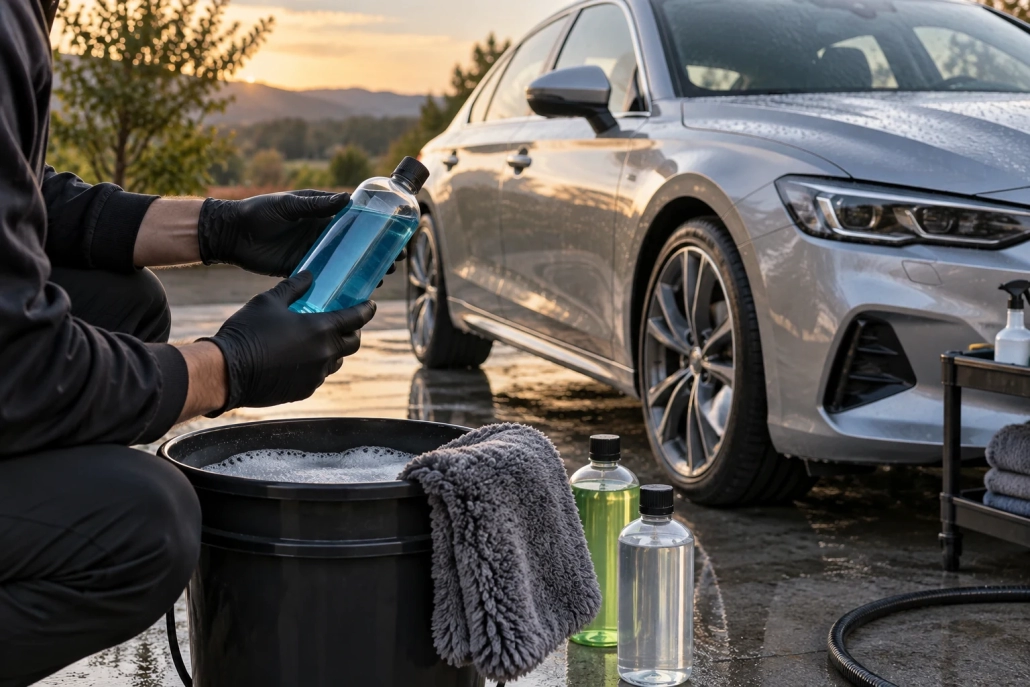
The water behaviour of a maintained vehicle reflects its current surface condition, which may include recent products and residues. When several maintenance products have been used, a single beading test cannot isolate the original coating.
Record shampoos, drying aids, sprays and other treatments with approximate dates and use conditions. Include products applied by another wash provider. Unknown entries should remain unknown rather than being assigned to the base coating by default.
| Question | Relevant evidence |
|---|---|
| Is the car maintainable now? | Current cleaning and dry appearance |
| What changed after a product? | Before-and-after history under matched conditions |
| What remains of the base coating? | A suitable product-specific technical assessment |
Do not strip the surface with arbitrary strong chemicals to create a supposedly pure baseline. Obtain the coating supplier’s guidance and assess a limited area where appropriate. A removal process can itself change the surface being investigated.
If supported cleaning changes water behaviour on a test area, the previous surface state contributed to the observation. That does not identify every layer or quantify the remaining original coating.
Once the surface is accepted, use a documented compatible maintenance system and record changes. Adding another product whenever beading looks different makes later diagnosis harder.
The practical benefit of a timeline is clarity: the workshop can distinguish a current maintenance issue from an unsupported conclusion about the original coating’s chemistry or service life.
Ask NANOLAB about your surface and intended use. For application and care, use the current instructions for the exact product.
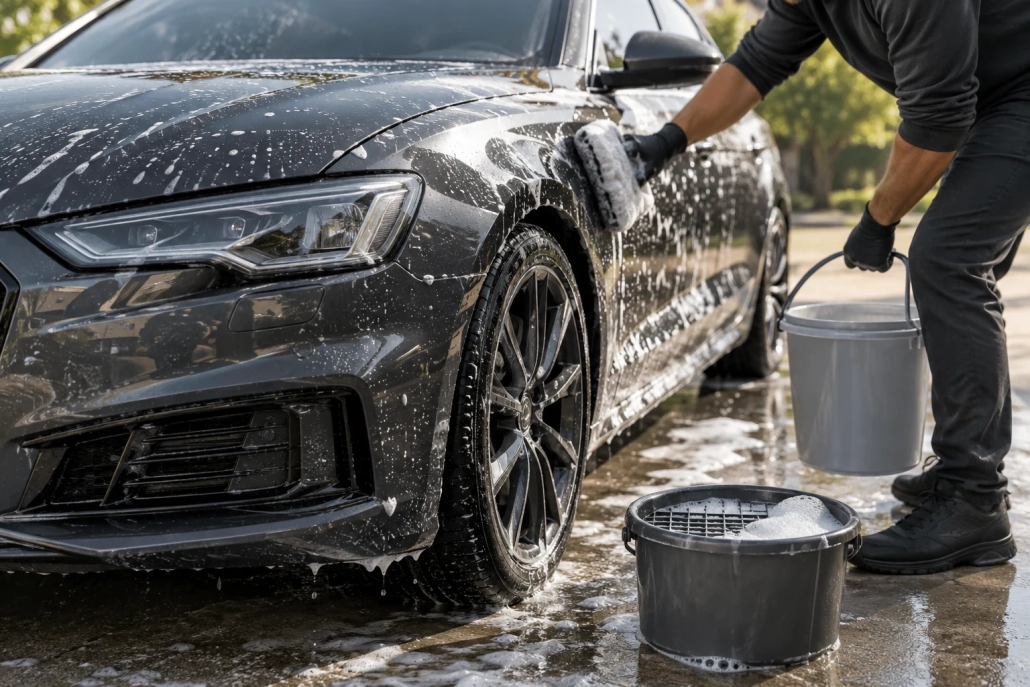
Build a gentle wash routine that removes loose grit before contact, keeps wheel tools separate and ends with careful rinsing and drying.
Reset maintenance on a coated car with an uncertain history through documentation, compatible cleaning and a staged baseline inspection.
Assess foam drainage on vertical panels through coverage, supported contact time and cleaning outcome rather than maximum foam thickness.
 Vertical Foam Drainage: Evaluate Contact Time without Chasing Maximum Foam