






A full polishing range.
From cutting and one-step correction to final finishing.
Specialist chemistry. Expert application.
 QUARTZ99 / CERAMIC BASE COAT
The foundation of your coating system.
A layerable quartz base coat designed for mechanical protection. Pair it with a suitable top coat to create the final finish.
For application by NANOLAB certified installers only.
Four formulas. Extended working time. Find the coating for your finish.
Explore the BEAST family of ceramic coatings.
Find the coating for each exterior surface.
 PPF & VINYLGLOSSProtection for glossy films and wraps.Discover
 MATTE & SATINMATTEProtection that respects the finish.Discover
 GLASSWINDOWSExplore dedicated glass protection.Discover
 WHEEL PROTECTIONWHEELSA dedicated coating for your wheels.Discover
 TRIM PROTECTIONPLASTICProtection for plastic surfaces.Discover
Dedicated care for the surfaces inside.
 LEATHER SURFACESLEATHERDiscover NANOLAB leather protection.Discover PLASTIC SURFACESPLASTICProtection for interior plastic surfaces.Discover TEXTILE SURFACESFABRICExplore the latest fabric formulation.Discover
Spray protection, maintenance and upcoming wash products.
 MAINTENANCEBEAST 365Explore the BEAST maintenance range.Discover
Next in washing, cleaning & care.
Ceramic protection for boats and yachts.
An easy-to-apply ceramic coating with an established track record on boats and yachts around the world.
Results vary with surface preparation, exposure and maintenance.
Read 50 MARINE guides →Explore MARINEProtection for the surfaces you live with.
A look at what we’re developing.
From cutting and one-step correction to final finishing.
A wider range for professional vehicle care.
Taking shape alongside BEAST & MATRIX.
Practical guidance for your next coating project.
Explore all guides →
Trace film identity, storage and installation history so a coating trial represents the PPF actually fitted to the vehicle.
Updated · NANOLAB Knowledge

A coating trial on an unidentified piece of paint protection film answers a limited question. Even when the brand is known, the installed product, batch and storage history may differ from the sample used to approve the coating.
Keep the film product name, finish, roll identifier and supplier documentation together. Record receipt date and storage conditions where these are available. Follow the film supplier’s storage instructions; an undocumented warehouse history should remain an uncertainty, not become an invented expiry date.
| Record | Why it matters |
|---|---|
| Roll and cut identifier | Links the installed piece to a retained sample |
| Panel and installation date | Distinguishes film age from vehicle age |
| Installation products | Documents another possible compatibility variable |
| Surface condition before coating | Separates existing marks from later changes |
Retain a clean, labelled offcut from the relevant roll. Where possible, install it on a suitable test panel using the same process before evaluating the proposed coating. A loose piece on its release liner does not reproduce every feature of installed film, especially edges, stretched areas and substrate appearance.
If a trial passes on one gloss film, record that exact combination and method. A change to matte film, a revised topcoat or an unknown replacement roll calls for a compatibility review. Traceability makes that review smaller and more useful: the team can identify what changed instead of repeating an unstructured demonstration.
Ask NANOLAB about your surface and intended use. For application and care, use the current instructions for the exact product.
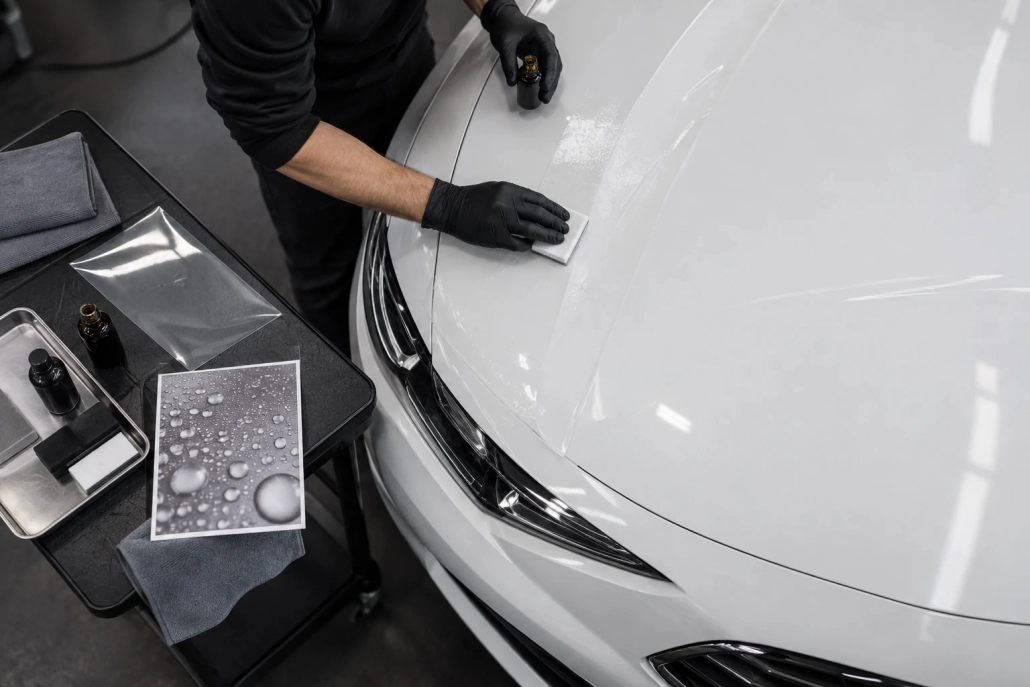
Check film condition, finish compatibility and the approved coating process before applying ceramic protection over paint protection film.
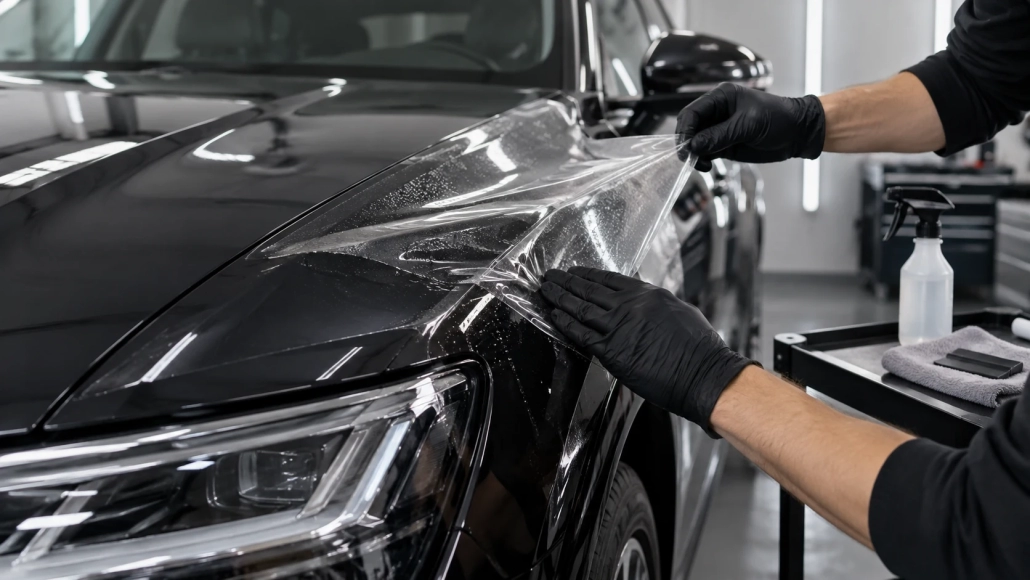
Discuss existing ceramic protection with the PPF installer and establish the required surface preparation before film installation.
Identify lifted or stressed film edges before coating, and keep installation correction separate from surface-protection work.

 Film Edges with Adhesive Stress: Resolve Installation Issues before Applying...