






A full polishing range.
From cutting and one-step correction to final finishing.
Specialist chemistry. Expert application.
 QUARTZ99 / CERAMIC BASE COAT
The foundation of your coating system.
A layerable quartz base coat designed for mechanical protection. Pair it with a suitable top coat to create the final finish.
For application by NANOLAB certified installers only.
Four formulas. Extended working time. Find the coating for your finish.
Explore the BEAST family of ceramic coatings.
Find the coating for each exterior surface.
 PPF & VINYLGLOSSProtection for glossy films and wraps.Discover
 MATTE & SATINMATTEProtection that respects the finish.Discover
 GLASSWINDOWSExplore dedicated glass protection.Discover
 WHEEL PROTECTIONWHEELSA dedicated coating for your wheels.Discover
 TRIM PROTECTIONPLASTICProtection for plastic surfaces.Discover
Dedicated care for the surfaces inside.
 LEATHER SURFACESLEATHERDiscover NANOLAB leather protection.Discover PLASTIC SURFACESPLASTICProtection for interior plastic surfaces.Discover TEXTILE SURFACESFABRICExplore the latest fabric formulation.Discover
Spray protection, maintenance and upcoming wash products.
 MAINTENANCEBEAST 365Explore the BEAST maintenance range.Discover
Next in washing, cleaning & care.
Ceramic protection for boats and yachts.
An easy-to-apply ceramic coating with an established track record on boats and yachts around the world.
Results vary with surface preparation, exposure and maintenance.
Read 50 MARINE guides →Explore MARINEProtection for the surfaces you live with.
A look at what we’re developing.
From cutting and one-step correction to final finishing.
A wider range for professional vehicle care.
Taking shape alongside BEAST & MATRIX.
Practical guidance for your next coating project.
Explore all guides →
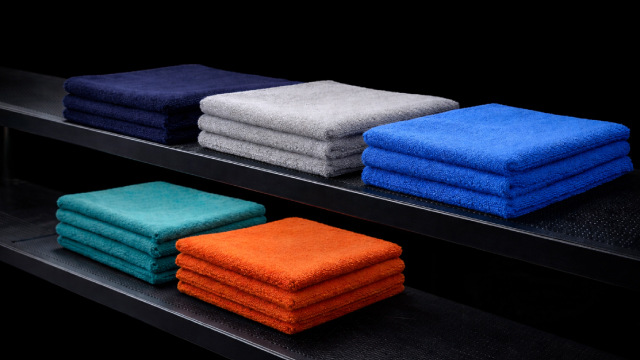
Choose and organise towels, applicators, wash equipment and inspection tools.
Delta E is not one universally interchangeable calculation. Different colour-difference formulas can produce different numerical results.
A single colour-difference value describes magnitude but does not explain the direction of the change. Component differences provide additional context.
Two samples can match under one light source and differ under another. This is a reason to define lighting in appearance approval.
Reflection haze concerns the reflected image; transmission haze concerns light passing through a material. They address different appearance questions.
The amount of transmitted light and the sharpness of an image viewed through a material are different properties.
Some instruments compensate haze values for influences such as background colour. A compensated result is not automatically interchangeable with an uncompensated one.
A rotational-viscosity result needs its test conditions. Spindle and speed are part of the method, especially for materials whose response depends on shear.
A flow time only becomes meaningful with the cup type, orifice and test conditions. Seconds from different cups are not automatically equivalent.
Dynamic and kinematic viscosity use different quantities and units. Density connects them under the appropriate conditions.
One centipoise equals one millipascal-second. The equal numerical value does not remove the need for matching test conditions.
Time-dependent flow behaviour requires a time-defined method. An immediate reading and a later reading may answer different questions.
Entrained air can interfere with a test specimen's suitability. Sample preparation should follow the instrument and product method.