






A full polishing range.
From cutting and one-step correction to final finishing.
Specialist chemistry. Expert application.
 QUARTZ99 / CERAMIC BASE COAT
The foundation of your coating system.
A layerable quartz base coat designed for mechanical protection. Pair it with a suitable top coat to create the final finish.
For application by NANOLAB certified installers only.
Four formulas. Extended working time. Find the coating for your finish.
Explore the BEAST family of ceramic coatings.
Find the coating for each exterior surface.
 PPF & VINYLGLOSSProtection for glossy films and wraps.Discover
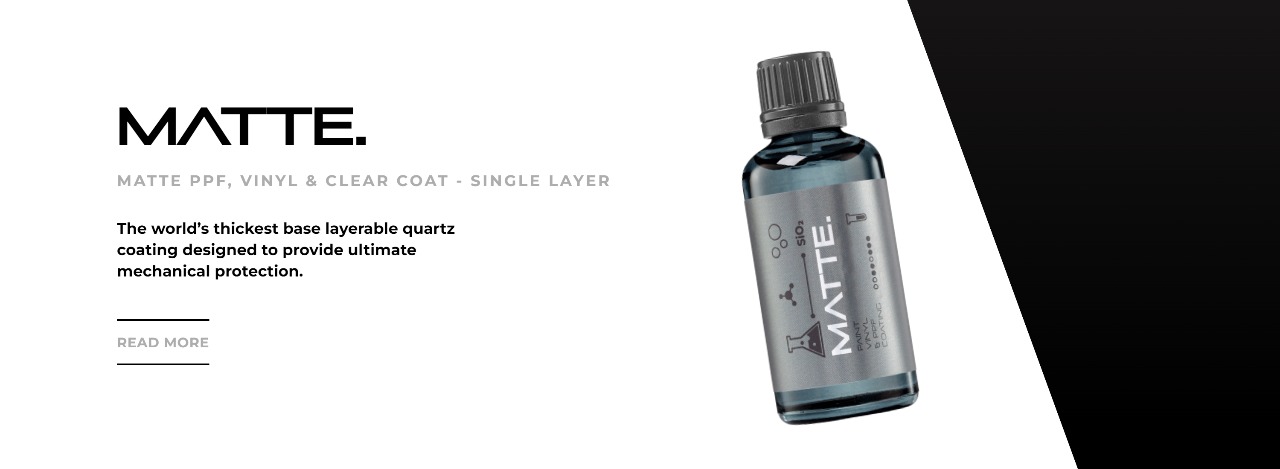
 MATTE & SATINMATTEProtection that respects the finish.Discover
 GLASSWINDOWSExplore dedicated glass protection.Discover
 WHEEL PROTECTIONWHEELSA dedicated coating for your wheels.Discover
 TRIM PROTECTIONPLASTICProtection for plastic surfaces.Discover
Dedicated care for the surfaces inside.
 LEATHER SURFACESLEATHERDiscover NANOLAB leather protection.Discover PLASTIC SURFACESPLASTICProtection for interior plastic surfaces.Discover TEXTILE SURFACESFABRICExplore the latest fabric formulation.Discover
Spray protection, maintenance and upcoming wash products.
 MAINTENANCEBEAST 365Explore the BEAST maintenance range.Discover
Next in washing, cleaning & care.
Ceramic protection for boats and yachts.
An easy-to-apply ceramic coating with an established track record on boats and yachts around the world.
Results vary with surface preparation, exposure and maintenance.
Read 50 MARINE guides →Explore MARINEProtection for the surfaces you live with.
A look at what we’re developing.
From cutting and one-step correction to final finishing.
A wider range for professional vehicle care.
Taking shape alongside BEAST & MATRIX.
Practical guidance for your next coating project.
Explore all guides →
Build a practical routine for washing, drying and maintaining a ceramic-coated vehicle.
A cleaner that receives more brushing or wiping may appear more effective even when the liquid itself is not the reason. Record agitation effort separately so a product comparison shows how much work produced the final result.
If a detailing product has been left outside its stated storage conditions, appearance alone may not establish whether it remains suitable. Record what happened and ask the supplier for a product-specific disposition before returning uncertain stock to normal use.
Water hardness and alkalinity are not interchangeable, even when both are reported as calcium-carbonate equivalents. Identify which property a report measured before using it to explain wash results or select water-treatment equipment.
Two water samples can have similar pH values but different acid-neutralizing capacities. A pH reading alone therefore does not describe every aspect of how the water will behave in a cleaning process.
Visual clarity and dissolved-solids information answer different questions. Clear-looking water should not be assumed to have low dissolved content, and a turbidity reading should not be relabelled as a dissolved-solids result.
A conductivity display should not be treated as a complete analysis of every constituent in treated water. If silica is relevant to an investigation, ask the water-treatment specialist whether the monitoring plan addresses it appropriately.
A first-draw water sample and a sample collected after an agreed flush can represent different conditions. State which was collected when investigating wash-bay water or comparing results over time.
Water quality at the treatment outlet does not by itself describe water after storage and delivery. If a detailing operation uses a tank, include that stage in the sampling plan when investigating inconsistent rinse results.
A dilution instruction expressed by mass is not automatically equivalent to the same numerical ratio by volume. Preserve the basis stated by the manufacturer and use the appropriate measuring method for the product.
The time a cleaner remains on a surface is not the same as the total time spent on the cleaning job. Track the relevant exposure interval when assessing an approved process or investigating a surface change.
A surface that has dried is not necessarily a surface that was adequately rinsed. Treat rinse completion and drying as separate checks within the approved cleaning process, especially when investigating repeated residue or streaking.
Whether a surface should be pre-wet or dry is a product-specific application instruction. Do not carry the method used for one cleaner into another product merely because both target a similar soil.