






A full polishing range.
From cutting and one-step correction to final finishing.
Specialist chemistry. Expert application.
 QUARTZ99 / CERAMIC BASE COAT
The foundation of your coating system.
A layerable quartz base coat designed for mechanical protection. Pair it with a suitable top coat to create the final finish.
For application by NANOLAB certified installers only.
Four formulas. Extended working time. Find the coating for your finish.
Explore the BEAST family of ceramic coatings.
Find the coating for each exterior surface.
 PPF & VINYLGLOSSProtection for glossy films and wraps.Discover
 MATTE & SATINMATTEProtection that respects the finish.Discover
 GLASSWINDOWSExplore dedicated glass protection.Discover
 WHEEL PROTECTIONWHEELSA dedicated coating for your wheels.Discover
 TRIM PROTECTIONPLASTICProtection for plastic surfaces.Discover
Dedicated care for the surfaces inside.
 LEATHER SURFACESLEATHERDiscover NANOLAB leather protection.Discover PLASTIC SURFACESPLASTICProtection for interior plastic surfaces.Discover TEXTILE SURFACESFABRICExplore the latest fabric formulation.Discover
Spray protection, maintenance and upcoming wash products.
 MAINTENANCEBEAST 365Explore the BEAST maintenance range.Discover
Next in washing, cleaning & care.
Ceramic protection for boats and yachts.
An easy-to-apply ceramic coating with an established track record on boats and yachts around the world.
Results vary with surface preparation, exposure and maintenance.
Read 50 MARINE guides →Explore MARINEProtection for the surfaces you live with.
A look at what we’re developing.
From cutting and one-step correction to final finishing.
A wider range for professional vehicle care.
Taking shape alongside BEAST & MATRIX.
Practical guidance for your next coating project.
Explore all guides →
Build a practical routine for washing, drying and maintaining a ceramic-coated vehicle.
If the water supply stops during a car wash, prioritise the sections that already carry cleaner.
Whether a leftover rinseless wash solution can be reused depends on the product instructions and what has happened to that solution.
Before changing shampoo in a foam cannon, clean the bottle and product path according to the equipment instructions.
Fragrance and colour can make a car shampoo enjoyable and easy to recognise, but neither proves cleaning power, coating compatibility or safe dilution.
A trigger sprayer's output can vary with the nozzle setting, stroke length and condition of the mechanism.
If a wash mitt starts skipping or grabbing across coated paint, stop that pass.
A local wash can be sensible when contamination is confined to one panel, but the working area must include the path taken by cleaner, rinse water and released dirt.
Before driving away from a professional wash, inspect the result in the condition you will actually use it: dry, with doors closed and enough light to see remaining residue.
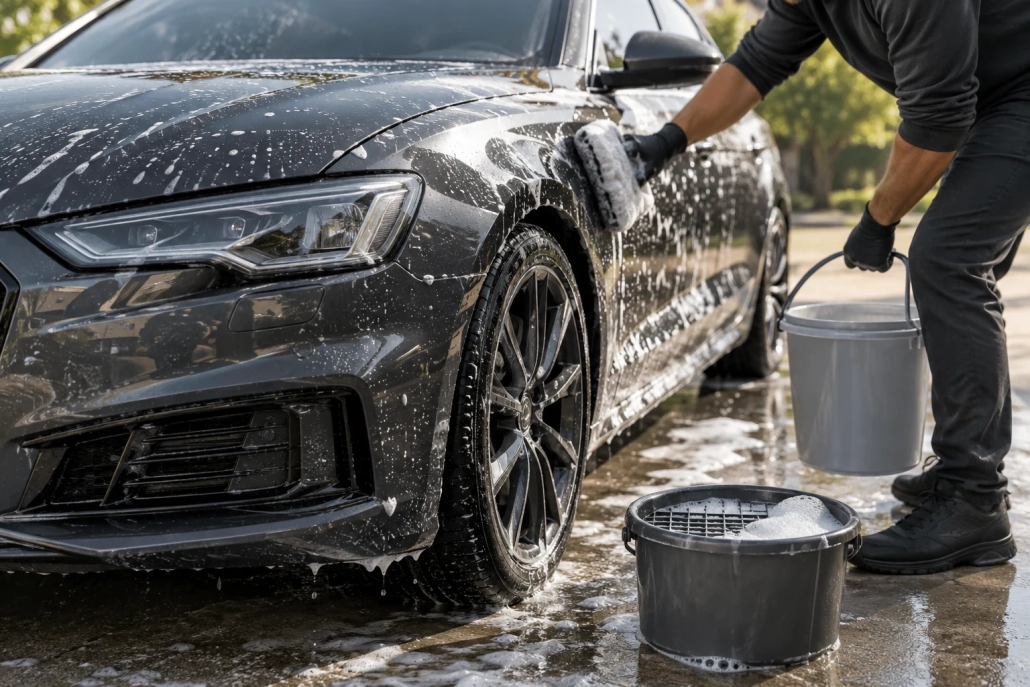
Build a gentle wash routine that removes loose grit before contact, keeps wheel tools separate and ends with careful rinsing and drying.
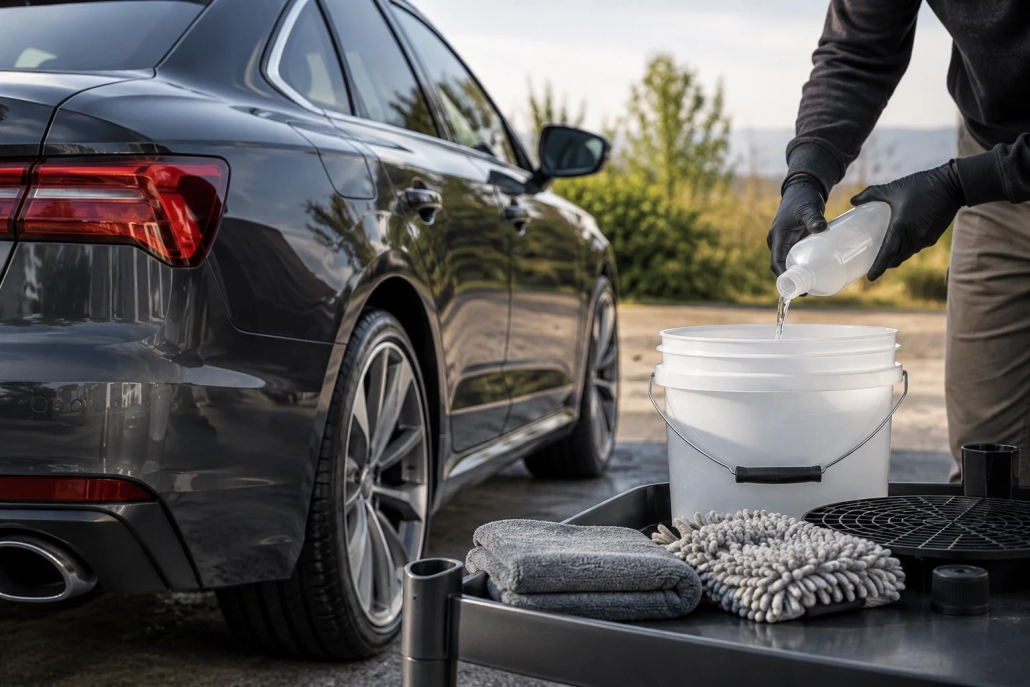
Use the installation's actual first-wash date and a gentle cleaning process without confusing wash readiness with full cure.
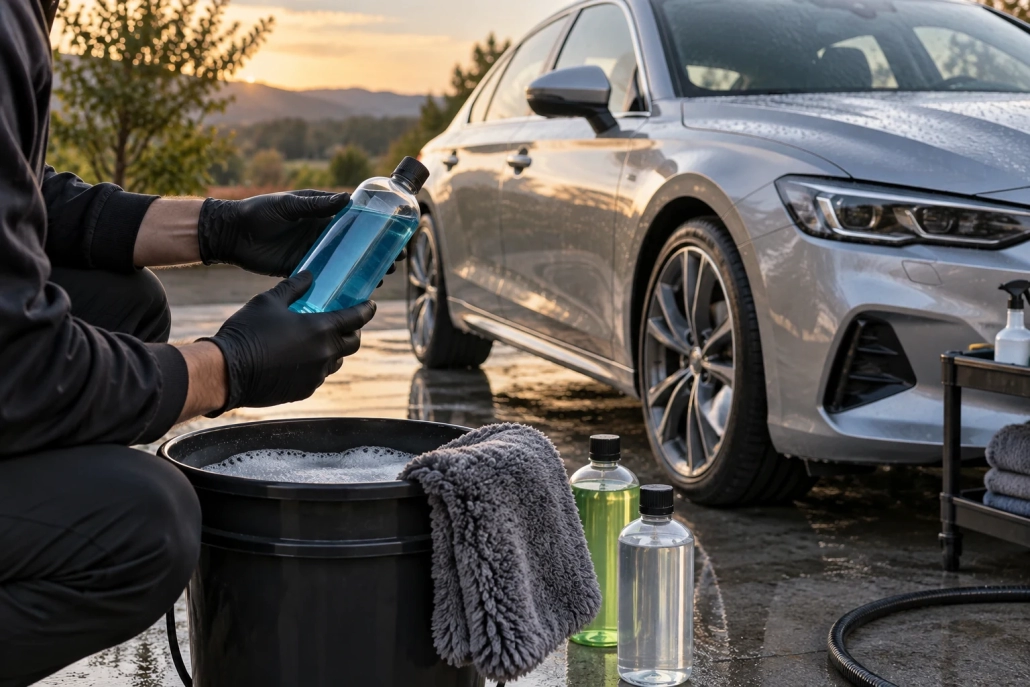
Choose a compatible wash product, use its dilution correctly and avoid judging cleaning suitability from a ceramic label or foam thickness alone.
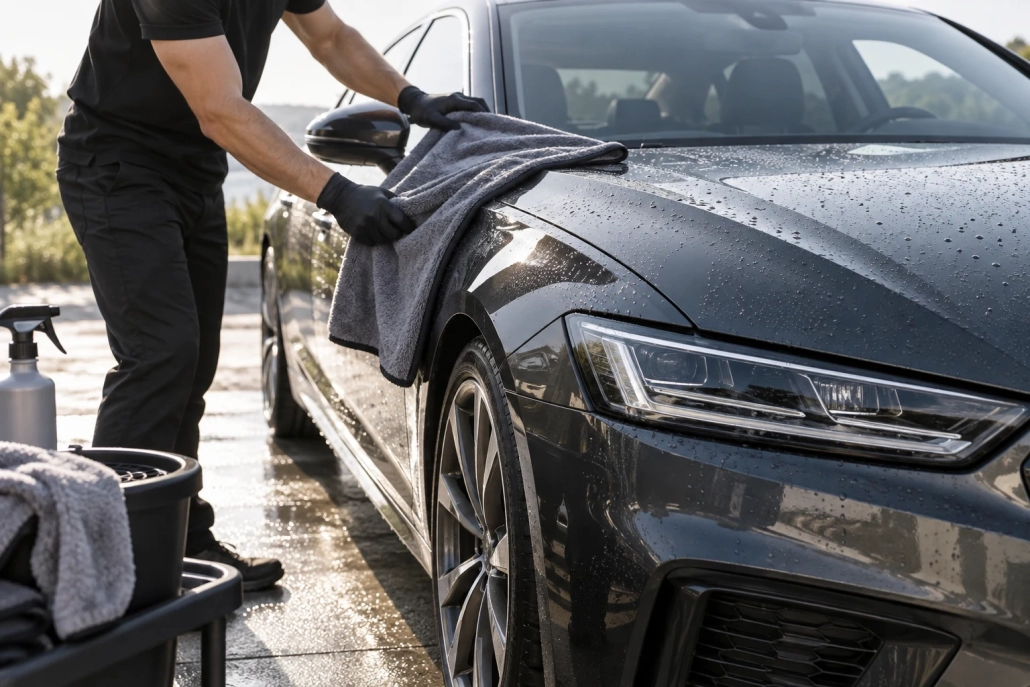
Reduce water spots and unnecessary contact by choosing clean drying tools and checking the places where retained water can escape later.