






A full polishing range.
From cutting and one-step correction to final finishing.
Specialist chemistry. Expert application.
 QUARTZ99 / CERAMIC BASE COAT
The foundation of your coating system.
A layerable quartz base coat designed for mechanical protection. Pair it with a suitable top coat to create the final finish.
For application by NANOLAB certified installers only.
Four formulas. Extended working time. Find the coating for your finish.
Explore the BEAST family of ceramic coatings.
Find the coating for each exterior surface.
 PPF & VINYLGLOSSProtection for glossy films and wraps.Discover
 MATTE & SATINMATTEProtection that respects the finish.Discover
 GLASSWINDOWSExplore dedicated glass protection.Discover
 WHEEL PROTECTIONWHEELSA dedicated coating for your wheels.Discover
 TRIM PROTECTIONPLASTICProtection for plastic surfaces.Discover
Dedicated care for the surfaces inside.
 LEATHER SURFACESLEATHERDiscover NANOLAB leather protection.Discover PLASTIC SURFACESPLASTICProtection for interior plastic surfaces.Discover TEXTILE SURFACESFABRICExplore the latest fabric formulation.Discover
Spray protection, maintenance and upcoming wash products.
 MAINTENANCEBEAST 365Explore the BEAST maintenance range.Discover
Next in washing, cleaning & care.
Ceramic protection for boats and yachts.
An easy-to-apply ceramic coating with an established track record on boats and yachts around the world.
Results vary with surface preparation, exposure and maintenance.
Read 50 MARINE guides →Explore MARINEProtection for the surfaces you live with.
A look at what we’re developing.
From cutting and one-step correction to final finishing.
A wider range for professional vehicle care.
Taking shape alongside BEAST & MATRIX.
Practical guidance for your next coating project.
Explore all guides →
A first-draw water sample and a sample collected after an agreed flush can represent different conditions. State which was collected when investigating wash-bay water or comparing results over time.
Updated · NANOLAB Knowledge
The sampling plan should reflect the question. Water that has remained in a hose or vessel may be relevant to the first vehicle of the day, while a steady operating sample may represent another stage. Neither should silently replace the other in a trend chart without explaining the change in sampling condition.
Illustrative example: a workshop's morning result differs from its midday result, but the records omit whether the hose had been used. The difference cannot be interpreted confidently until the collection conditions are known. A clearer record makes a targeted follow-up possible without blaming the coating or the water equipment prematurely.
Do not invent a universal flushing duration. The appropriate procedure depends on the system and investigation. Follow the equipment or laboratory guidance, and avoid presenting a convenience sample as a complete characterization of the water delivered throughout every job.
Ask NANOLAB about the exact product and intended use. Use the current product documentation for formulation-specific instructions.
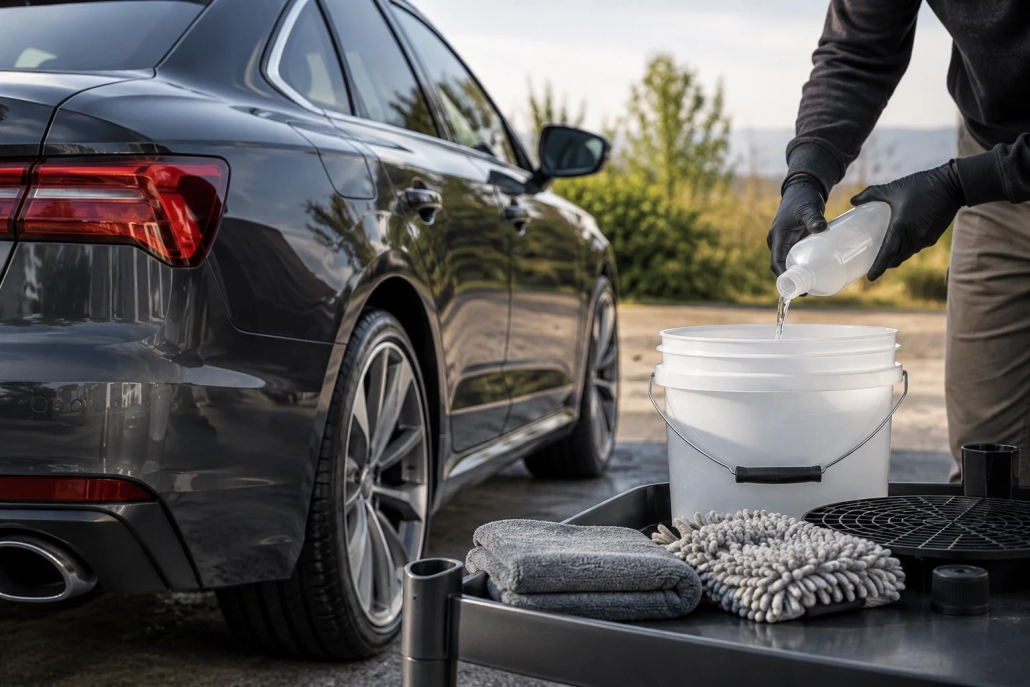
Use the installation's actual first-wash date and a gentle cleaning process without confusing wash readiness with full cure.
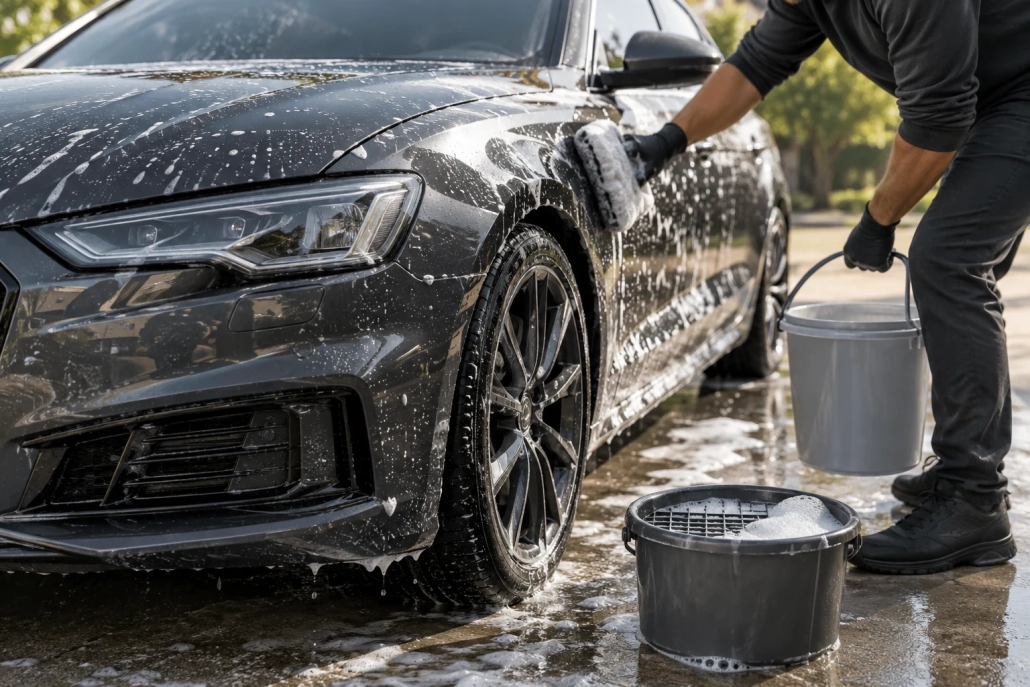
Consider panel temperature, cleaning instructions and rapid drying when choosing water conditions for washing a ceramic-coated vehicle.
Water quality at the treatment outlet does not by itself describe water after storage and delivery. If a detailing operation uses a tank, include that stage in the sampling plan when investigating inconsistent rinse results.