






A full polishing range.
From cutting and one-step correction to final finishing.
Specialist chemistry. Expert application.
 QUARTZ99 / CERAMIC BASE COAT
The foundation of your coating system.
A layerable quartz base coat designed for mechanical protection. Pair it with a suitable top coat to create the final finish.
For application by NANOLAB certified installers only.
Four formulas. Extended working time. Find the coating for your finish.
Explore the BEAST family of ceramic coatings.
Find the coating for each exterior surface.
 PPF & VINYLGLOSSProtection for glossy films and wraps.Discover
 MATTE & SATINMATTEProtection that respects the finish.Discover
 GLASSWINDOWSExplore dedicated glass protection.Discover
 WHEEL PROTECTIONWHEELSA dedicated coating for your wheels.Discover
 TRIM PROTECTIONPLASTICProtection for plastic surfaces.Discover
Dedicated care for the surfaces inside.
 LEATHER SURFACESLEATHERDiscover NANOLAB leather protection.Discover PLASTIC SURFACESPLASTICProtection for interior plastic surfaces.Discover TEXTILE SURFACESFABRICExplore the latest fabric formulation.Discover
Spray protection, maintenance and upcoming wash products.
 MAINTENANCEBEAST 365Explore the BEAST maintenance range.Discover
Next in washing, cleaning & care.
Ceramic protection for boats and yachts.
An easy-to-apply ceramic coating with an established track record on boats and yachts around the world.
Results vary with surface preparation, exposure and maintenance.
Read 50 MARINE guides →Explore MARINEProtection for the surfaces you live with.
A look at what we’re developing.
From cutting and one-step correction to final finishing.
A wider range for professional vehicle care.
Taking shape alongside BEAST & MATRIX.
Practical guidance for your next coating project.
Explore all guides →
Choose car polish, heavy cut compound, fine cut and finishing polish. Explore dual action techniques, pad selection, defect diagnosis and paint protection.
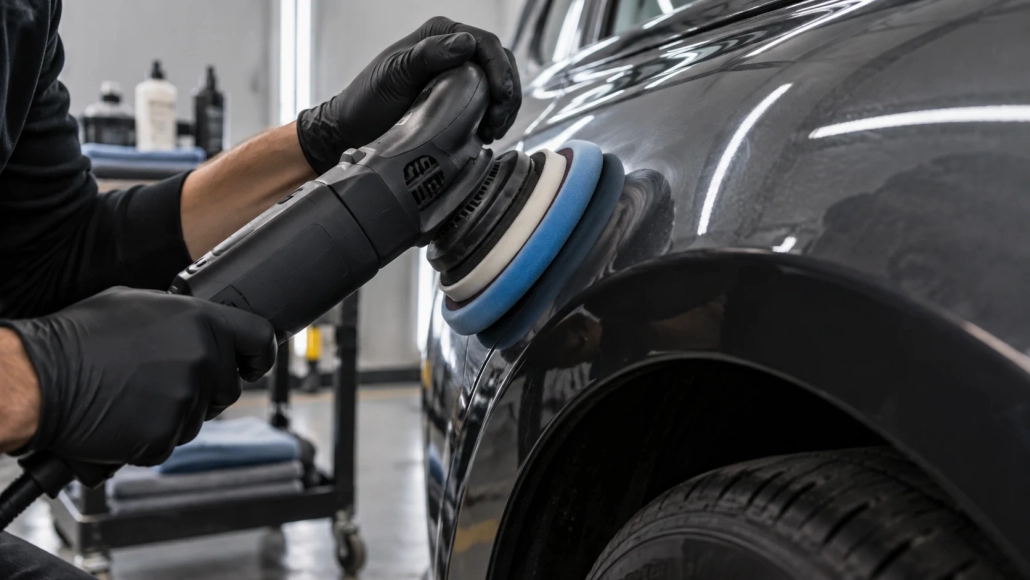
Choose a dual-action polish by machine movement, defect level and pad system, then validate correction and finish before working around the vehicle.
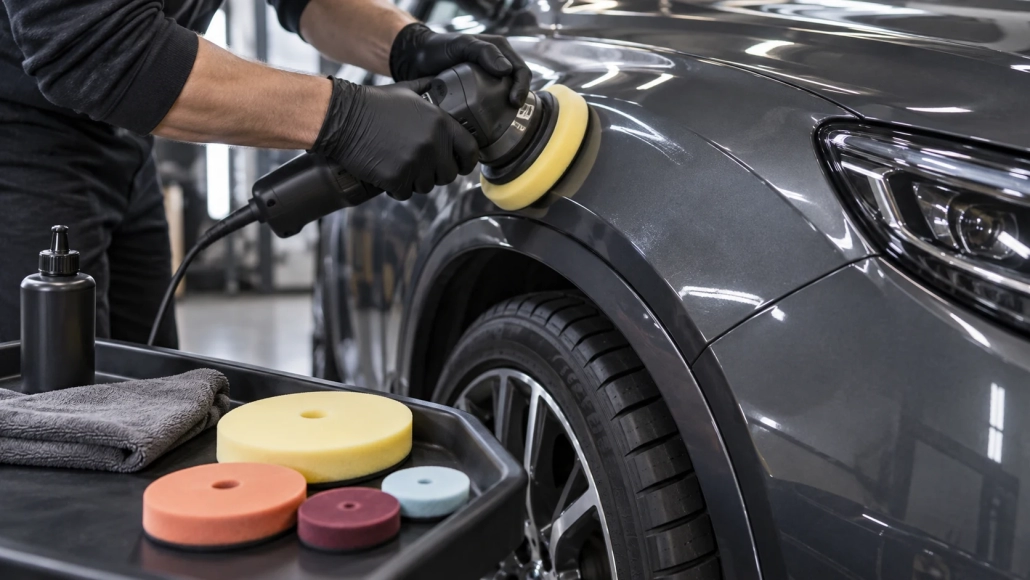
Compare rotary and DA movements by working characteristics, control and intended task without treating either machine as universally superior.
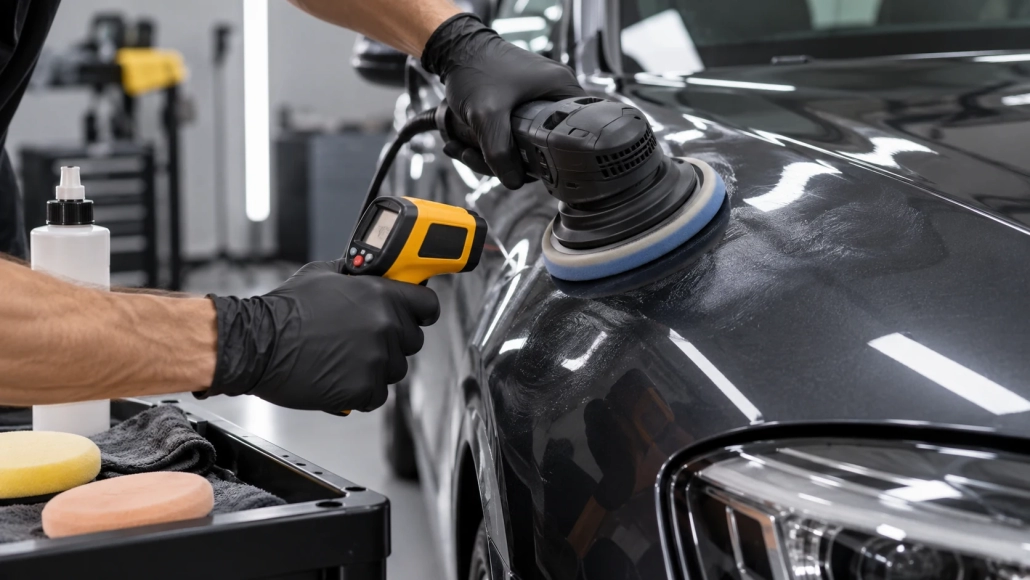
Understand how free-spinning and gear-driven DA movements respond to load and what that means for pad selection, handling and process records.
Choose a DA orbit size with panel shape, backing-plate system and handling in mind instead of assuming a longer throw is always better.
Plan small-area polishing around access, pad fit and blending so a mini DA solves a local problem without turning into uncontrolled spot abrasion.
Choose DA operating speed using the exact tool, pad and polish instructions, then inspect the result instead of copying another machine's dial number.
Understand why DA polishing pressure depends on the supported system and how excessive or inconsistent loading can undermine a repeatable result.
Plan a consistent polishing path and evaluate arm speed, overlap and coverage without relying on a universal seconds-per-pass rule.
Define a pass, section and working cycle clearly so polishing instructions and workshop records are understandable and repeatable.
Build beginner DA skills on an appropriate practice surface with a limited objective, supported equipment and an inspected test section.
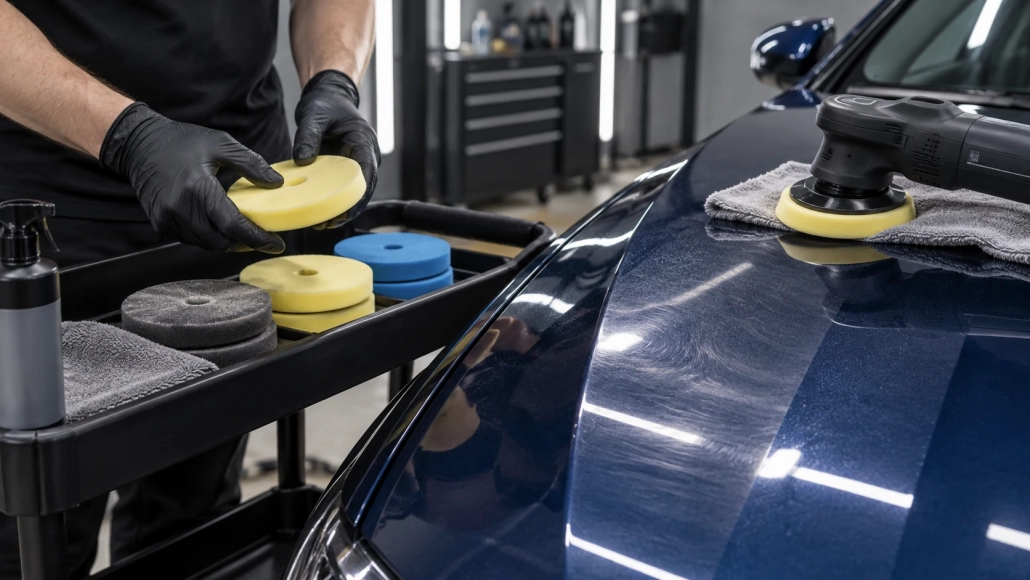
Compare polishing pad materials by their intended role, machine compatibility and maintenance needs before choosing a complete correction system.
Use microfiber cutting pads as part of a supported system and recognise when loaded fibres are changing correction or refinement requirements.