






A full polishing range.
From cutting and one-step correction to final finishing.
Specialist chemistry. Expert application.
 QUARTZ99 / CERAMIC BASE COAT
The foundation of your coating system.
A layerable quartz base coat designed for mechanical protection. Pair it with a suitable top coat to create the final finish.
For application by NANOLAB certified installers only.
Four formulas. Extended working time. Find the coating for your finish.
Explore the BEAST family of ceramic coatings.
Find the coating for each exterior surface.
 PPF & VINYLGLOSSProtection for glossy films and wraps.Discover
 MATTE & SATINMATTEProtection that respects the finish.Discover
 GLASSWINDOWSExplore dedicated glass protection.Discover
 WHEEL PROTECTIONWHEELSA dedicated coating for your wheels.Discover
 TRIM PROTECTIONPLASTICProtection for plastic surfaces.Discover
Dedicated care for the surfaces inside.
 LEATHER SURFACESLEATHERDiscover NANOLAB leather protection.Discover PLASTIC SURFACESPLASTICProtection for interior plastic surfaces.Discover TEXTILE SURFACESFABRICExplore the latest fabric formulation.Discover
Spray protection, maintenance and upcoming wash products.
 MAINTENANCEBEAST 365Explore the BEAST maintenance range.Discover
Next in washing, cleaning & care.
Ceramic protection for boats and yachts.
An easy-to-apply ceramic coating with an established track record on boats and yachts around the world.
Results vary with surface preparation, exposure and maintenance.
Read 50 MARINE guides →Explore MARINEProtection for the surfaces you live with.
A look at what we’re developing.
From cutting and one-step correction to final finishing.
A wider range for professional vehicle care.
Taking shape alongside BEAST & MATRIX.
Practical guidance for your next coating project.
Explore all guides →
Practical guides for vehicle care, boats, living spaces, shower glass, stainless steel and private-label coating projects.
Explore 3219 guides, covering surface preparation, product selection, application and everyday maintenance.

One centipoise equals one millipascal-second. The equal numerical value does not remove the need for matching test conditions.
A shear-thinning material's apparent viscosity changes with shear rate. A single informal pouring observation does not fully characterize that behaviour.
Time-dependent flow behaviour requires a time-defined method. An immediate reading and a later reading may answer different questions.
Entrained air can interfere with a test specimen's suitability. Sample preparation should follow the instrument and product method.
Residue or damage at the flow-cup opening can affect the test. Cleaning must preserve the calibrated geometry.
Some viscosity methods depend on the sample container and immersion arrangement. Changing the vessel can change the measurement conditions.

Visual appearance is one observation within a specification. It should not replace other agreed checks or be judged against an informal memory.
A sample's usefulness depends on how it was taken. Unapproved mixing or sampling can make it unrepresentative or alter the material.
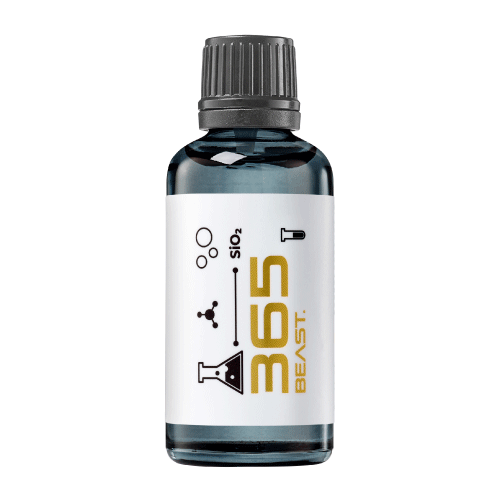
Visible settling needs product-specific interpretation. Some formulations have an approved preparation method; others require investigation.
Filtering a finished product can change its composition or conceal evidence of a problem. It is not a universal quality correction.
A density result depends on the specimen and measurement conditions. Temperature and entrained air need appropriate control.
A refractive-index reading does not automatically translate into coating concentration. A useful conversion needs an appropriate relationship for the actual material system.