






A full polishing range.
From cutting and one-step correction to final finishing.
Specialist chemistry. Expert application.
 QUARTZ99 / CERAMIC BASE COAT
The foundation of your coating system.
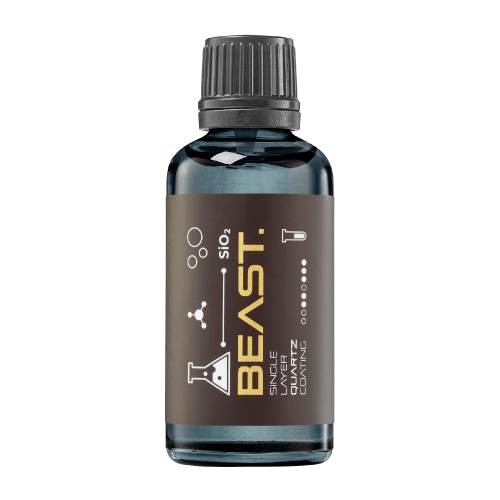
A layerable quartz base coat designed for mechanical protection. Pair it with a suitable top coat to create the final finish.
For application by NANOLAB certified installers only.
Four formulas. Extended working time. Find the coating for your finish.
Explore the BEAST family of ceramic coatings.
Find the coating for each exterior surface.
 PPF & VINYLGLOSSProtection for glossy films and wraps.Discover
 MATTE & SATINMATTEProtection that respects the finish.Discover
 GLASSWINDOWSExplore dedicated glass protection.Discover
 WHEEL PROTECTIONWHEELSA dedicated coating for your wheels.Discover
 TRIM PROTECTIONPLASTICProtection for plastic surfaces.Discover
Dedicated care for the surfaces inside.
 LEATHER SURFACESLEATHERDiscover NANOLAB leather protection.Discover PLASTIC SURFACESPLASTICProtection for interior plastic surfaces.Discover TEXTILE SURFACESFABRICExplore the latest fabric formulation.Discover
Spray protection, maintenance and upcoming wash products.
 MAINTENANCEBEAST 365Explore the BEAST maintenance range.Discover
Next in washing, cleaning & care.
Ceramic protection for boats and yachts.
An easy-to-apply ceramic coating with an established track record on boats and yachts around the world.
Results vary with surface preparation, exposure and maintenance.
Read 50 MARINE guides →Explore MARINEProtection for the surfaces you live with.
A look at what we’re developing.
From cutting and one-step correction to final finishing.
A wider range for professional vehicle care.
Taking shape alongside BEAST & MATRIX.
Practical guidance for your next coating project.
Explore all guides →
Practical guides for vehicle care, boats, living spaces, shower glass, stainless steel and private-label coating projects.
Explore 3219 guides, covering surface preparation, product selection, application and everyday maintenance.

A product range is easier to support when the intended relationships between products are explicit. Buyers need to know which items form an approved system, which are alternatives and which have separate uses.
Adding a coating variant creates more than another stock line. It also adds questions, documents, training and possible customer confusion. A small support pilot helps determine whether the extra choice solves a real need.

One micrometre equals one thousand nanometres. Preserve the unit when comparing a film-thickness result with a particle-size statement; the numbers may describe both different scales and different physical quantities.
A supplier's questions can reveal whether a recommendation is being matched to the project. Buyers should notice which assumptions are being checked before treating a proposed coating as a suitable choice.
A trial can produce conflicting feedback when the bottle and the liquid are judged as one experience. Separate dispensing, instructions and application observations so the next revision addresses the actual problem.
A pilot order should reduce uncertainty before the next purchase. If it is treated only as a small commercial order, the business may consume the stock without learning whether the product, package and support process are ready to scale.
A coating brief should describe the surface condition customers are likely to start with. A product demonstrated on a carefully prepared panel may create unrealistic expectations if the intended buyers usually work on neglected or previously treated surfaces.
A useful coating enquiry describes the exposed finish and the intended use, not just the object. Car, boat or kitchen tells the supplier where the surface is located, but it does not identify what the product will contact.
A sample comparison benefits from a clear distinction between performing the work and approving the business decision. The operator provides observations; the decision owner checks whether those observations answer the agreed question.
In thickness reporting, one mil is one thousandth of an inch, equal to 25.4 micrometres. It is not an abbreviation for a millimetre.
One percent equals ten thousand parts per million when both expressions use the same basis. Confirm that basis before converting an analytical result or comparing it with a specification.
Converting a temperature and converting a temperature change require different formulas. Keep the distinction clear when comparing product instructions or laboratory exposure records.