






A full polishing range.
From cutting and one-step correction to final finishing.
Specialist chemistry. Expert application.
 QUARTZ99 / CERAMIC BASE COAT
The foundation of your coating system.
A layerable quartz base coat designed for mechanical protection. Pair it with a suitable top coat to create the final finish.
For application by NANOLAB certified installers only.
Four formulas. Extended working time. Find the coating for your finish.
Explore the BEAST family of ceramic coatings.
Find the coating for each exterior surface.
 PPF & VINYLGLOSSProtection for glossy films and wraps.Discover
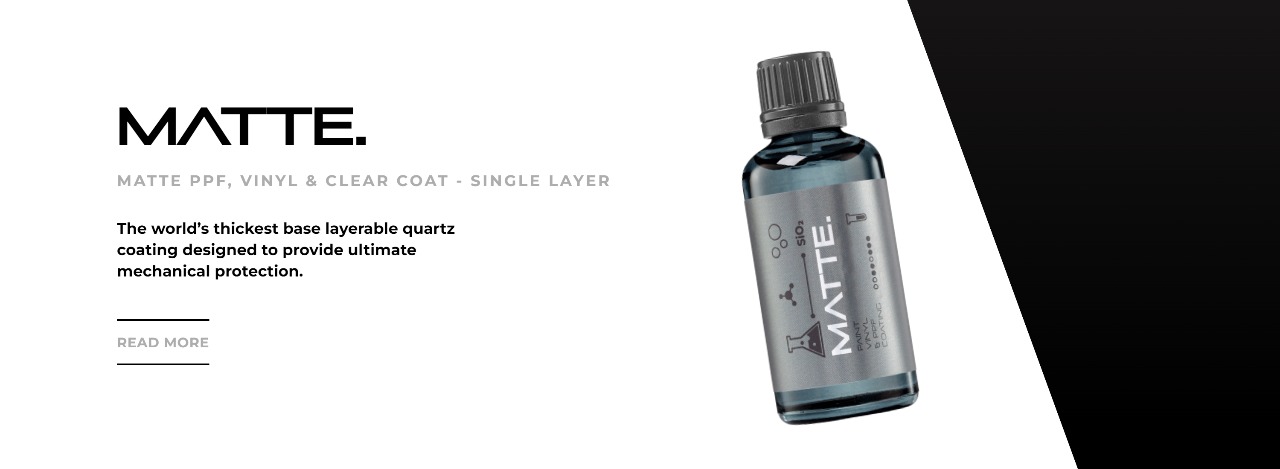
 MATTE & SATINMATTEProtection that respects the finish.Discover
 GLASSWINDOWSExplore dedicated glass protection.Discover
 WHEEL PROTECTIONWHEELSA dedicated coating for your wheels.Discover
 TRIM PROTECTIONPLASTICProtection for plastic surfaces.Discover
Dedicated care for the surfaces inside.
 LEATHER SURFACESLEATHERDiscover NANOLAB leather protection.Discover PLASTIC SURFACESPLASTICProtection for interior plastic surfaces.Discover TEXTILE SURFACESFABRICExplore the latest fabric formulation.Discover
Spray protection, maintenance and upcoming wash products.
 MAINTENANCEBEAST 365Explore the BEAST maintenance range.Discover
Next in washing, cleaning & care.
Ceramic protection for boats and yachts.
An easy-to-apply ceramic coating with an established track record on boats and yachts around the world.
Results vary with surface preparation, exposure and maintenance.
Read 50 MARINE guides →Explore MARINEProtection for the surfaces you live with.
A look at what we’re developing.
From cutting and one-step correction to final finishing.
A wider range for professional vehicle care.
Taking shape alongside BEAST & MATRIX.
Practical guidance for your next coating project.
Explore all guides →
Practical guides for vehicle care, boats, living spaces, shower glass, stainless steel and private-label coating projects.
Explore 3219 guides, covering surface preparation, product selection, application and everyday maintenance.
Understand the different roles of chelating agents and surfactants, then evaluate the complete cleaner against the intended soil and surface.

Use rinse-water conductivity as a process observation while recognizing why it cannot prove that every detergent residue is absent.

Separate statistical detectability from operational value when deciding whether a measured coating-process improvement matters.
Distinguish instrument resolution from measurement uncertainty and avoid ranking coatings by differences the test cannot reliably resolve.
Keep each coating sample paired with its own baseline and report both the size and consistency of before-and-after changes.
Compare mean and median cleaning times, retain legitimate difficult jobs, and choose a summary that matches the operational question.
Calculate relative percent changes and percentage-point changes correctly, with counts and consistent outcome definitions.
Calculate gloss retention, preserve the initial and final readings, and avoid hiding baseline differences behind a percentage.
Compare the mean of job-level coating rates with total consumption per total area, using a worked example with unequal job sizes.
Report missing coating-trial follow-ups as unknown outcomes and keep enrolled, inspected and passing sample counts visible.
Track samples that leave a coating trial and avoid presenting only surviving vehicles as representative durability evidence.
Record right-censored durability observations correctly when a coating still meets the criterion at the end of a study.