






A full polishing range.
From cutting and one-step correction to final finishing.
Specialist chemistry. Expert application.
 QUARTZ99 / CERAMIC BASE COAT
The foundation of your coating system.
A layerable quartz base coat designed for mechanical protection. Pair it with a suitable top coat to create the final finish.
For application by NANOLAB certified installers only.
Four formulas. Extended working time. Find the coating for your finish.
Explore the BEAST family of ceramic coatings.
Find the coating for each exterior surface.
 PPF & VINYLGLOSSProtection for glossy films and wraps.Discover
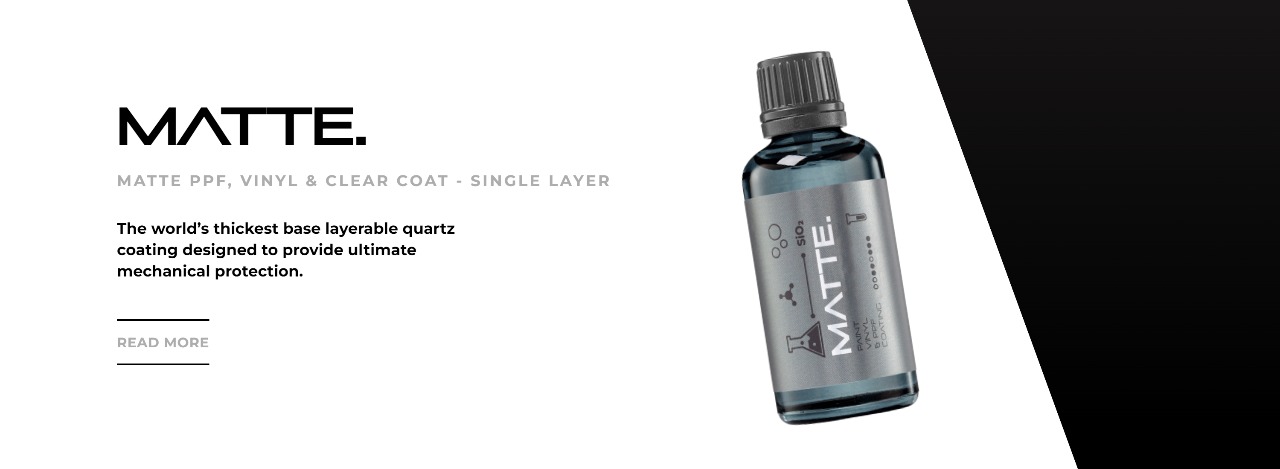
 MATTE & SATINMATTEProtection that respects the finish.Discover
 GLASSWINDOWSExplore dedicated glass protection.Discover
 WHEEL PROTECTIONWHEELSA dedicated coating for your wheels.Discover
 TRIM PROTECTIONPLASTICProtection for plastic surfaces.Discover
Dedicated care for the surfaces inside.
 LEATHER SURFACESLEATHERDiscover NANOLAB leather protection.Discover PLASTIC SURFACESPLASTICProtection for interior plastic surfaces.Discover TEXTILE SURFACESFABRICExplore the latest fabric formulation.Discover
Spray protection, maintenance and upcoming wash products.
 MAINTENANCEBEAST 365Explore the BEAST maintenance range.Discover
Next in washing, cleaning & care.
Ceramic protection for boats and yachts.
An easy-to-apply ceramic coating with an established track record on boats and yachts around the world.
Results vary with surface preparation, exposure and maintenance.
Read 50 MARINE guides →Explore MARINEProtection for the surfaces you live with.
A look at what we’re developing.
From cutting and one-step correction to final finishing.
A wider range for professional vehicle care.
Taking shape alongside BEAST & MATRIX.
Practical guidance for your next coating project.
Explore all guides →
Practical guides for vehicle care, boats, living spaces, shower glass, stainless steel and private-label coating projects.
Explore 3219 guides, covering surface preparation, product selection, application and everyday maintenance.
Separate refractive index, transparency, haze and gloss when evaluating a clear coating on appearance-sensitive surfaces.
Distinguish flash point, boiling point and approved application temperature when reading coating safety and technical documentation.
Understand missing or method-specific pH values in nonaqueous coatings and avoid treating an unspecified value as proof of neutrality.

Compare coating viscosity at consistent sample temperatures and distinguish ordinary flow changes from possible storage damage.
Learn why a clear mixture does not establish coating compatibility and how to prevent unintended mixing through tools and application methods.

Distinguish a batch certificate of analysis from a technical data sheet, check acceptance limits, and keep product revisions traceable.
Choose suitable pH calibration buffers, define the cleaner sample correctly, and keep calibration separate from compatibility assessment.
Convert water hardness between mg/L as CaCO3 and grains per US gallon while avoiding confusion with calcium-only or TDS readings.
Convert conductivity between microsiemens and millisiemens, preserve meter settings, and prevent thousandfold errors in rinse-water records.
Understand how conductivity-to-TDS conversion factors can make two meters disagree, and align settings before judging water-treatment performance.
Read automatic temperature-compensation settings correctly and separate temperature effects from contamination or sampling errors.
Compare reverse osmosis and deionization for detailing by water quality, throughput, maintenance and cost per usable litre.