






A full polishing range.
From cutting and one-step correction to final finishing.
Specialist chemistry. Expert application.
 QUARTZ99 / CERAMIC BASE COAT
The foundation of your coating system.
A layerable quartz base coat designed for mechanical protection. Pair it with a suitable top coat to create the final finish.
For application by NANOLAB certified installers only.
Four formulas. Extended working time. Find the coating for your finish.
Explore the BEAST family of ceramic coatings.
Find the coating for each exterior surface.
 PPF & VINYLGLOSSProtection for glossy films and wraps.Discover
 MATTE & SATINMATTEProtection that respects the finish.Discover
 GLASSWINDOWSExplore dedicated glass protection.Discover
 WHEEL PROTECTIONWHEELSA dedicated coating for your wheels.Discover
 TRIM PROTECTIONPLASTICProtection for plastic surfaces.Discover
Dedicated care for the surfaces inside.
 LEATHER SURFACESLEATHERDiscover NANOLAB leather protection.Discover PLASTIC SURFACESPLASTICProtection for interior plastic surfaces.Discover TEXTILE SURFACESFABRICExplore the latest fabric formulation.Discover
Spray protection, maintenance and upcoming wash products.
 MAINTENANCEBEAST 365Explore the BEAST maintenance range.Discover
Next in washing, cleaning & care.
Ceramic protection for boats and yachts.
An easy-to-apply ceramic coating with an established track record on boats and yachts around the world.
Results vary with surface preparation, exposure and maintenance.
Read 50 MARINE guides →Explore MARINEProtection for the surfaces you live with.
A look at what we’re developing.
From cutting and one-step correction to final finishing.
A wider range for professional vehicle care.
Taking shape alongside BEAST & MATRIX.
Practical guidance for your next coating project.
Explore all guides →
Understand the different roles of chelating agents and surfactants, then evaluate the complete cleaner against the intended soil and surface.
Updated · NANOLAB Knowledge
Surfactants and chelating agents can support cleaning in different ways. Surfactants influence interfaces and help the formulated cleaner interact with soils and surfaces. Chelating agents bind certain metal ions. Their presence does not make every cleaner interchangeable or suitable for every coating.
An ingredient's technical description is not a performance specification for the finished product. Concentration, pH, other ingredients and the application procedure matter. A cleaner containing a chelant is not automatically a dedicated mineral-deposit remover, and a surfactant-containing liquid is not automatically safe on every finish.
For purchasing, ask what the product is designed to remove and which surfaces it is approved to contact. That question is more useful than selecting a cleaner solely because a familiar ingredient appears in its description.
Oily residue, mineral scale and loose dust present different challenges. A fair comparison should define the soil and the cleaning endpoint. Do not compare one product on fresh loose dirt with another on an aged mineral deposit and attribute the difference to the ingredient category.
An illustrative trial can use matched compatible test areas with the same contamination, approved dilution, contact time and rinsing. Record the dry appearance and any additional passes. Keep chemical exposure within the supplier's instructions.
Do not add a standalone chelant or another cleaner to a commercial product to strengthen it. A mixture that looks normal can still alter performance, handling and surface compatibility. Ask for a product designed for the intended task.
For coating care, preserve the distinction between removing contamination and changing the coating itself. Use the coating manufacturer's compatible cleaning process and investigate persistent deposits before escalating to a stronger treatment.
Technical references: BASF: Trilon G chelating-agent technical context.
For product-specific application instructions, consult NANOLAB technical documentation or ask about your surface and intended use.
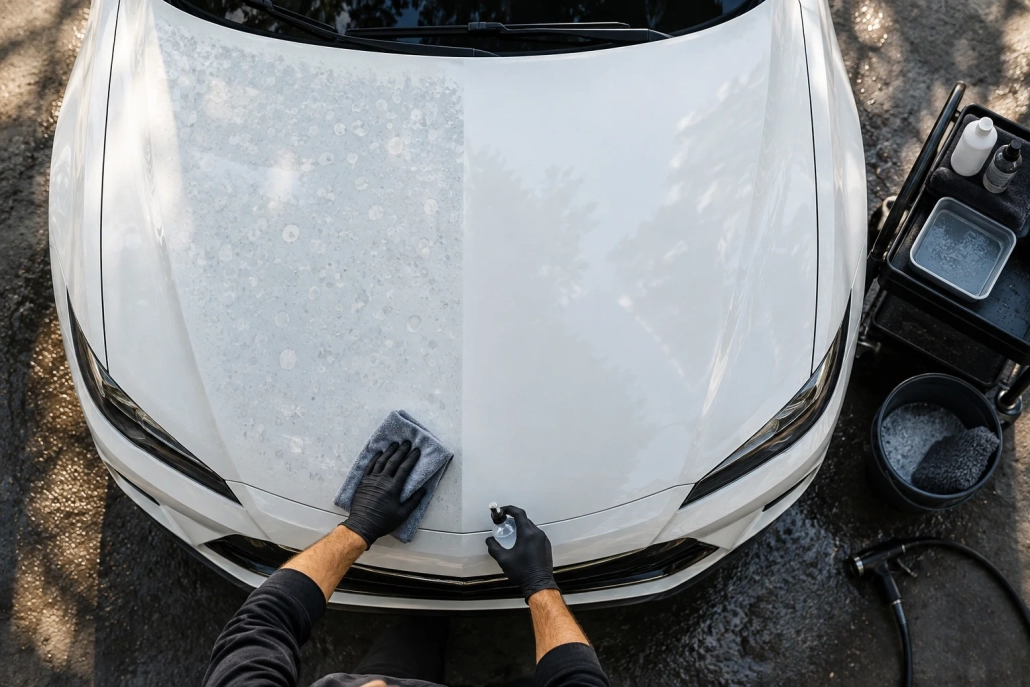
Understand why softened water and deionised rinse water are different when planning washing and drying for a ceramic-coated car.
A TDS display can help monitor a water-treatment system, but it does not describe every contaminant or guarantee that drying will leave no marks.
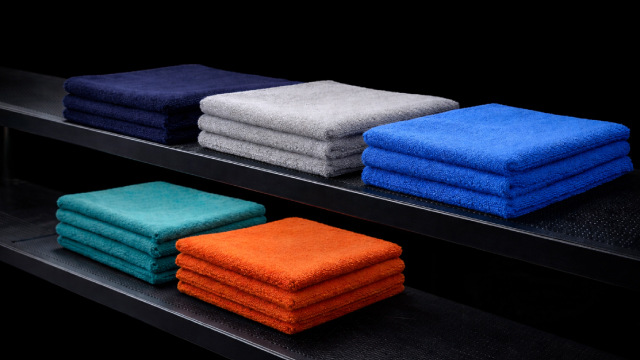
Use rinse-water conductivity as a process observation while recognizing why it cannot prove that every detergent residue is absent.