






A full polishing range.
From cutting and one-step correction to final finishing.
Specialist chemistry. Expert application.
 QUARTZ99 / CERAMIC BASE COAT
The foundation of your coating system.
A layerable quartz base coat designed for mechanical protection. Pair it with a suitable top coat to create the final finish.
For application by NANOLAB certified installers only.
Four formulas. Extended working time. Find the coating for your finish.
Explore the BEAST family of ceramic coatings.
Find the coating for each exterior surface.
 PPF & VINYLGLOSSProtection for glossy films and wraps.Discover
 MATTE & SATINMATTEProtection that respects the finish.Discover
 GLASSWINDOWSExplore dedicated glass protection.Discover
 WHEEL PROTECTIONWHEELSA dedicated coating for your wheels.Discover
 TRIM PROTECTIONPLASTICProtection for plastic surfaces.Discover
Dedicated care for the surfaces inside.
 LEATHER SURFACESLEATHERDiscover NANOLAB leather protection.Discover PLASTIC SURFACESPLASTICProtection for interior plastic surfaces.Discover TEXTILE SURFACESFABRICExplore the latest fabric formulation.Discover
Spray protection, maintenance and upcoming wash products.
 MAINTENANCEBEAST 365Explore the BEAST maintenance range.Discover
Next in washing, cleaning & care.
Ceramic protection for boats and yachts.
An easy-to-apply ceramic coating with an established track record on boats and yachts around the world.
Results vary with surface preparation, exposure and maintenance.
Read 50 MARINE guides →Explore MARINEProtection for the surfaces you live with.
A look at what we’re developing.
From cutting and one-step correction to final finishing.
A wider range for professional vehicle care.
Taking shape alongside BEAST & MATRIX.
Practical guidance for your next coating project.
Explore all guides →
Understand why softened water and deionised rinse water are different when planning washing and drying for a ceramic-coated car.
Updated · NANOLAB Knowledge
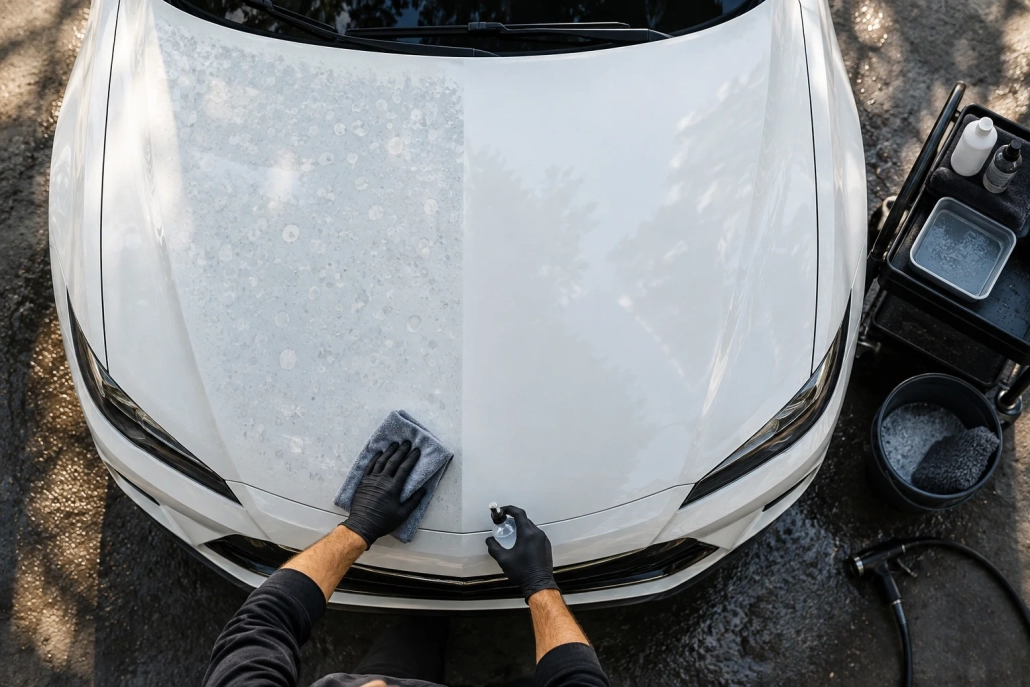
Softened water and deionised water describe different treatments. Neither term should be used as a shortcut for ‘the car can always dry itself’. When caring for ceramic coating, the practical questions are what remains in the rinse water and whether the final drying process removes it from the surface.
A conventional ion-exchange softener replaces hardness ions rather than removing all dissolved material. Deionisation aims to remove dissolved ions, but its effectiveness depends on the system and its condition. Equipment capacity, incoming water and maintenance affect the water actually delivered.
Read the water-treatment equipment instructions and assess the output using an appropriate method. A hardness measurement and a total-dissolved-solids reading answer different questions. Do not interpret a low reading from one test as proof of complete purity or freedom from every contaminant.
Rinse water can pick up shampoo left in seams or contamination from hoses and containers. If treated water is used only for the final rinse, complete earlier cleaning and rinsing thoroughly. Check mirrors, handles and trim for later drips from untreated water.
Work under suitable conditions and follow the coating’s care instructions. Drying remains a useful control when water quality or cleanliness is uncertain. Beading does not prevent a droplet from leaving material behind as it evaporates.
If spotting continues, compare incoming water, final rinse quality, detergent removal and drying technique. Change one factor at a time on comparable panels. Do not immediately diagnose coating failure.
Keep equipment maintenance in the wash routine and consult NANOLAB documentation for coating-specific care. The useful outcome is a repeatable clean rinse and dry finish, not reliance on a water-treatment label alone.
Understand why mineral-bearing water can mark a hydrophobic finish and how rinsing, drying and water management reduce repeated deposits.
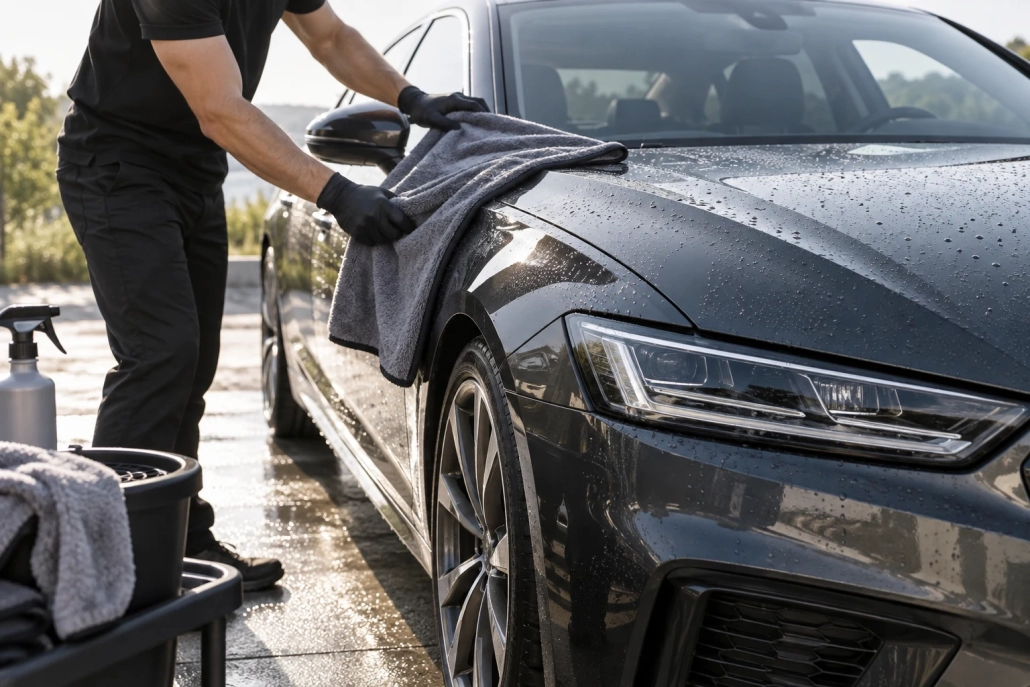
Assess stored rainwater, sediment and final rinsing before using collected water to wash a ceramic-coated vehicle.
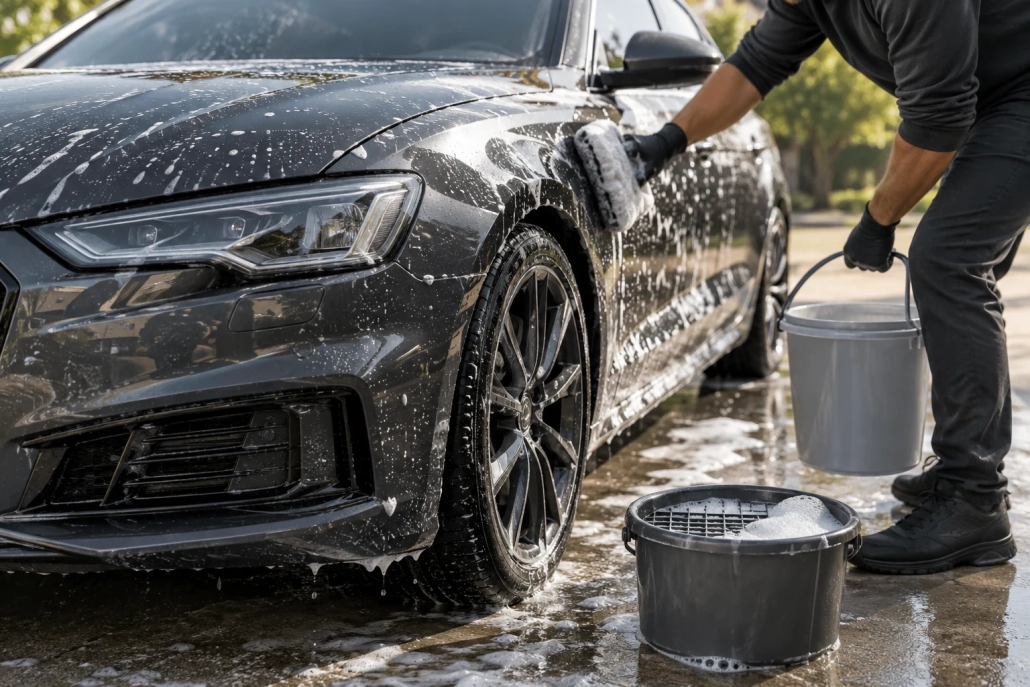
Decide whether contamination and product instructions support waterless cleaning, and distinguish it from a rinseless wash process.

 Ceramic Coating Care with Collected Rainwater