






A full polishing range.
From cutting and one-step correction to final finishing.
Specialist chemistry. Expert application.
 QUARTZ99 / CERAMIC BASE COAT
The foundation of your coating system.
A layerable quartz base coat designed for mechanical protection. Pair it with a suitable top coat to create the final finish.
For application by NANOLAB certified installers only.
Four formulas. Extended working time. Find the coating for your finish.
Explore the BEAST family of ceramic coatings.
Find the coating for each exterior surface.
 PPF & VINYLGLOSSProtection for glossy films and wraps.Discover
 MATTE & SATINMATTEProtection that respects the finish.Discover
 GLASSWINDOWSExplore dedicated glass protection.Discover
 WHEEL PROTECTIONWHEELSA dedicated coating for your wheels.Discover
 TRIM PROTECTIONPLASTICProtection for plastic surfaces.Discover
Dedicated care for the surfaces inside.
 LEATHER SURFACESLEATHERDiscover NANOLAB leather protection.Discover PLASTIC SURFACESPLASTICProtection for interior plastic surfaces.Discover TEXTILE SURFACESFABRICExplore the latest fabric formulation.Discover
Spray protection, maintenance and upcoming wash products.
 MAINTENANCEBEAST 365Explore the BEAST maintenance range.Discover
Next in washing, cleaning & care.
Ceramic protection for boats and yachts.
An easy-to-apply ceramic coating with an established track record on boats and yachts around the world.
Results vary with surface preparation, exposure and maintenance.
Read 50 MARINE guides →Explore MARINEProtection for the surfaces you live with.
A look at what we’re developing.
From cutting and one-step correction to final finishing.
A wider range for professional vehicle care.
Taking shape alongside BEAST & MATRIX.
Practical guidance for your next coating project.
Explore all guides →
Decide whether contamination and product instructions support waterless cleaning, and distinguish it from a rinseless wash process.
Updated · NANOLAB Knowledge
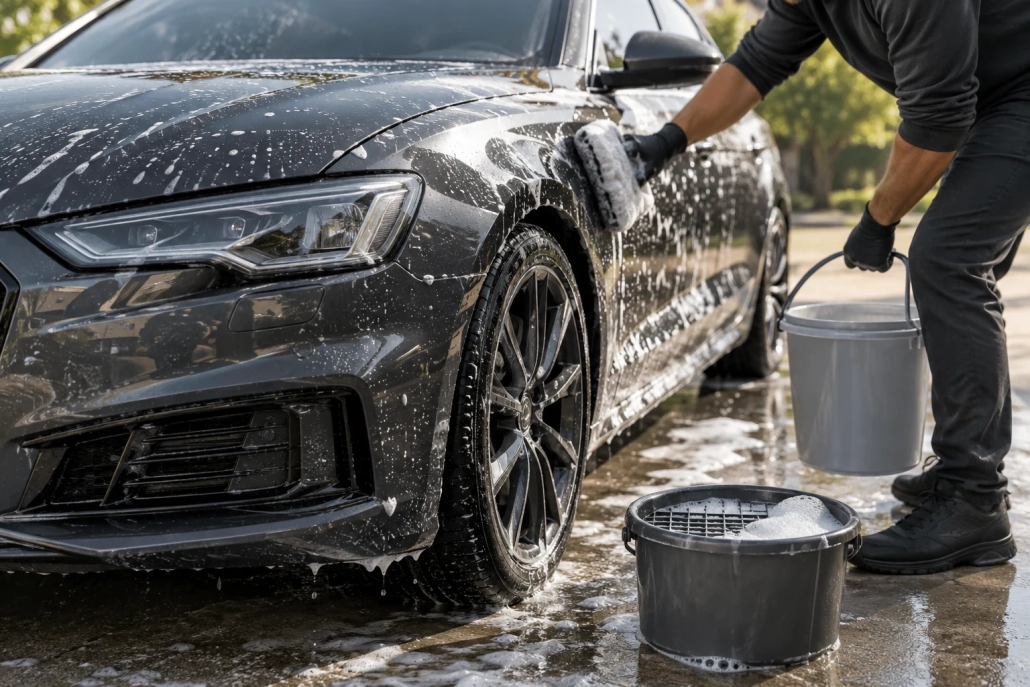
A waterless cleaning product and a rinseless wash are not necessarily used in the same way. For a ceramic-coated car, the decision starts with contamination and the selected cleaner’s instructions. Ceramic protection does not make dry grit safe to wipe across paint.
Inspect lower panels, the rear of the car and horizontal surfaces before choosing the method. Mud, sand and bonded deposits require a different response from light contamination within a product’s stated scope. If the surface exceeds that scope, use a suitable wash process with an appropriate pre-rinse.
Confirm cleaner compatibility with the coating and its curing stage. A convenience claim on a bottle does not override the coating’s first-wash restrictions or the need to protect delicate finishes.
Follow the cleaner’s instructions for application, dwell and wiping. Keep ample clean, suitable towels available and retire contaminated faces from contact. Do not use the same loaded towel to stretch the process over an entire vehicle.
Separate wheels, lower dirty areas and paint tools. Work in conditions that keep the product within its intended use. If a panel begins to drag or leave marks, stop and reassess instead of increasing pressure.
Check for smearing, remaining dirt and altered appearance in good light. Some cleaners leave their own protection or finishing ingredients, which may influence immediate water behaviour. That observation alone does not demonstrate a change in the underlying coating.
Use NANOLAB documentation to confirm the selected system’s maintenance requirements. A waterless method is a conditional process for an appropriate situation, not an automatic replacement for every maintenance wash.
Assess product compatibility, contamination and towel control before choosing a rinseless maintenance wash for a ceramic-coated vehicle.
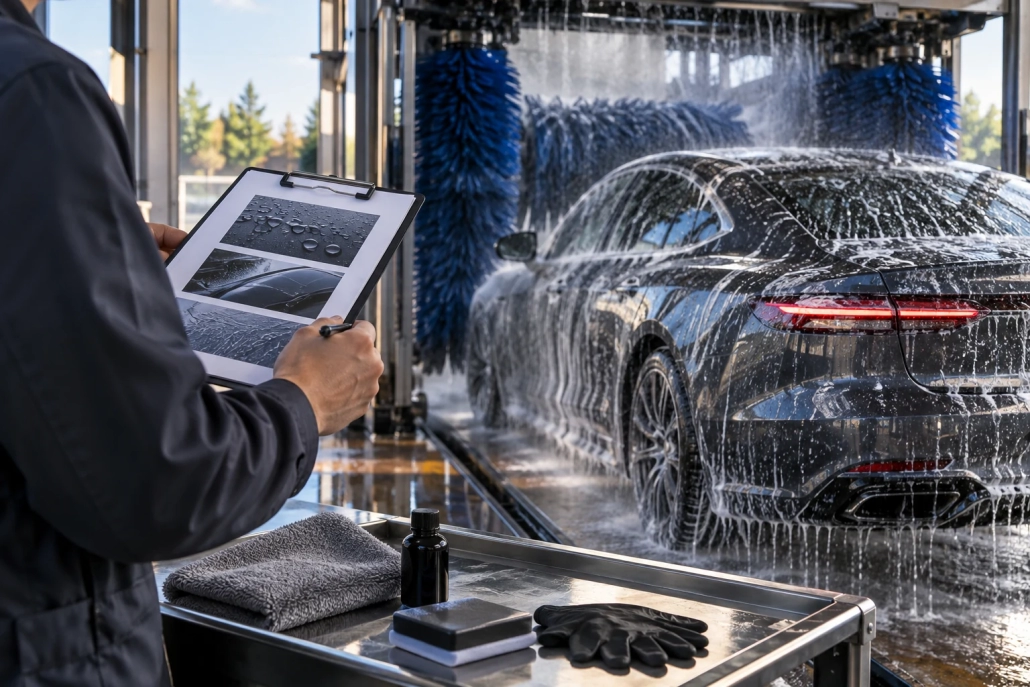
Assess an unexpected tunnel wash by checking the actual service, paint condition and finishing residue before renewing protection.
Consider panel temperature, cleaning instructions and rapid drying when choosing water conditions for washing a ceramic-coated vehicle.

 Pump Sprayers for Ceramic Coating Maintenance Washes