






A full polishing range.
From cutting and one-step correction to final finishing.
Specialist chemistry. Expert application.
 QUARTZ99 / CERAMIC BASE COAT
The foundation of your coating system.
A layerable quartz base coat designed for mechanical protection. Pair it with a suitable top coat to create the final finish.
For application by NANOLAB certified installers only.
Four formulas. Extended working time. Find the coating for your finish.
Explore the BEAST family of ceramic coatings.
Find the coating for each exterior surface.
 PPF & VINYLGLOSSProtection for glossy films and wraps.Discover
 MATTE & SATINMATTEProtection that respects the finish.Discover
 GLASSWINDOWSExplore dedicated glass protection.Discover
 WHEEL PROTECTIONWHEELSA dedicated coating for your wheels.Discover
 TRIM PROTECTIONPLASTICProtection for plastic surfaces.Discover
Dedicated care for the surfaces inside.
 LEATHER SURFACESLEATHERDiscover NANOLAB leather protection.Discover PLASTIC SURFACESPLASTICProtection for interior plastic surfaces.Discover TEXTILE SURFACESFABRICExplore the latest fabric formulation.Discover
Spray protection, maintenance and upcoming wash products.
 MAINTENANCEBEAST 365Explore the BEAST maintenance range.Discover
Next in washing, cleaning & care.
Ceramic protection for boats and yachts.
An easy-to-apply ceramic coating with an established track record on boats and yachts around the world.
Results vary with surface preparation, exposure and maintenance.
Read 50 MARINE guides →Explore MARINEProtection for the surfaces you live with.
A look at what we’re developing.
From cutting and one-step correction to final finishing.
A wider range for professional vehicle care.
Taking shape alongside BEAST & MATRIX.
Practical guidance for your next coating project.
Explore all guides →
Practical guides for vehicle care, boats, living spaces, shower glass, stainless steel and private-label coating projects.
Explore 3219 guides, covering surface preparation, product selection, application and everyday maintenance.

Choose a fixed observation window for evaporating water drops and preserve the time sequence when assessing ceramic-coating wetting behaviour.
Record tilt rate and waiting time in water-shedding tests so delayed movement is not confused with permanent drop retention.
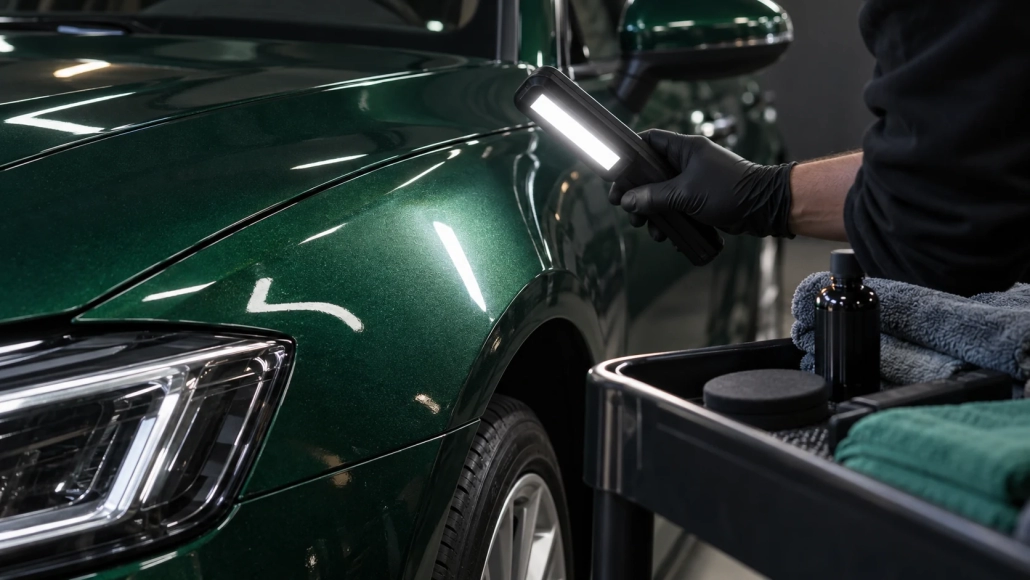
Control vibration and unintended shocks when comparing water shedding, particularly when droplets appear to release only after a panel is touched.
Keep dry storage and active exposure separate in a coating durability record when a trial pauses for transport, weather or equipment downtime.
Use shared reference specimens and matched reporting fields when two laboratories disagree about a ceramic-coating measurement.
Build a simple uncertainty budget for a coating measurement and distinguish standard uncertainty from repeatability or instrument resolution.
Control water storage bottles, caps and transfer tools when comparing coating wetting behaviour so container contamination does not bias the result.
Plan the measurement queue so coating samples are compared at similar ages after preparation rather than at different stages of development.
Distinguish first-contact water behaviour from repeated wetting when assessing a coating, and keep drying and cleaning between cycles documented.
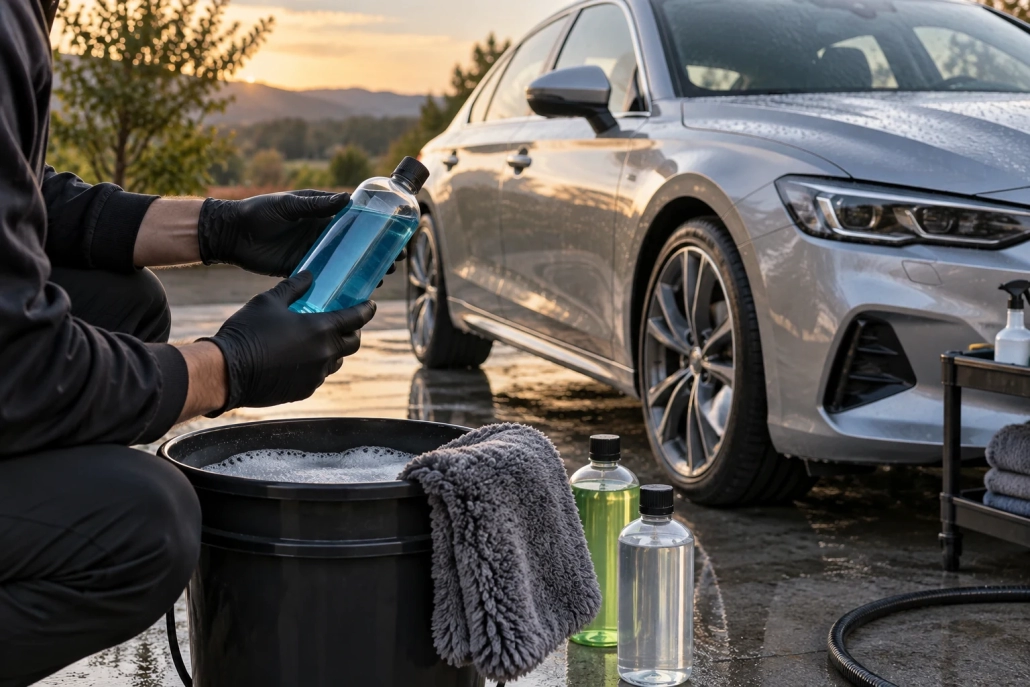
Compare municipal water information with samples from the actual wash nozzle before assigning a spotting problem to the public supply.
Check for conductivity-probe carryover when switching from high-salt water to low-conductivity rinse samples during detailing-water checks.
Use matched feed and product-water measurements to track a reverse-osmosis rinse system, while keeping operating conditions and absolute water quality visible.